
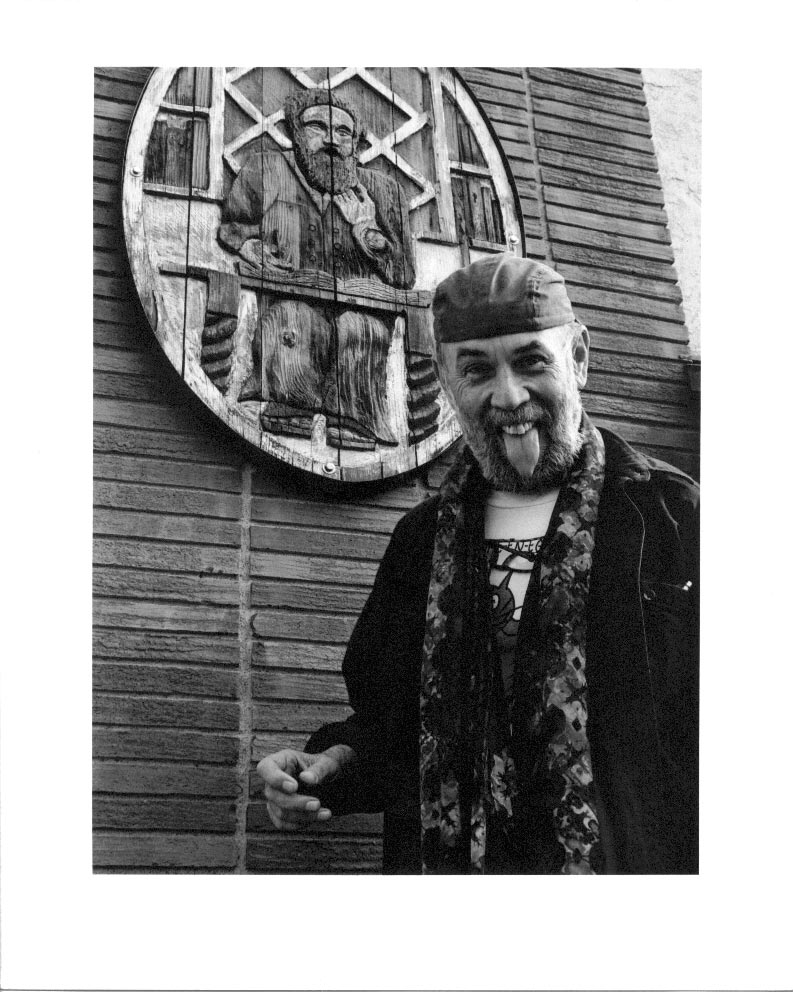
A Chronology
Excavated by Nicole Blaisdell Ivey
“This is the West, sir. When legend becomes fact, print the legend.”
–from John Ford’s classic 1962 western film, The Man Who Shot Liberty Valance.
Gus’s life was like jazz, the improvisation depended greatly on the depth of the cats he was playing with and the audience of the moment. Besides being a philosopher, poet, publisher, editor, essayist, critic and teacher Gus Blaisdell was a collector. He collected stamps, comics, autographs, ideas, experiences, quotes, books, music, art, and friends. And he took notes on all of them. His complexity and the improvisational quality of his life make it hard to know what he would deem most important. He thought of life (books, art, film, friends, wives, children) as moments and serendipitously interconnected pieces on his path from here to there. In a letter to his son Luc he writes, “… if I could give you anything I would give you my luck. But luck, it now occurs to me is not passive. Good sense can be made out of believing we have a hand in our luck, we help make it happen, get ourselves in shape for it and ready ourselves to receive it.”
Luck would have it that after Gus died I moved back to Albuquerque and became the guardian of his forty-plus boxes of papers. Boxes filled with friend’s manuscripts, screenplays, poems, and stories; his own manuscripts, letters, and journals; writings of and on Basho, Monk, and Wittgenstein, Altman, Matisse, Utamaro, Blake, and Bruebeck. Within this paper life live several different threads of Gus Blaisdell’s life from which I weave this one semi-chronological interpretation. There are no straight lines here. He writes, “The past is there, flat as an overturned headstone, bearing no legend, and as smooth.”
A favorite and fitting quote from Gus’s archive is by Charles Olson on Melville:
“His reading is a gauge of him, at all points of his life. He was a skald, and knew how to appropriate the work of others. He read to write.”
1935 Born Charles Augustus Blaisdell II in San Diego, California on September 21, the only child of Captain (later, Commander) Norman Earl Blaisdell of Foxboro, Massachusetts, a graduate of the U.S. Naval Academy, and Mary Ann Hebert, an amateur pianist and a Bachelor of Arts graduate from Mount Saint Mary’s College, Brentwood Hills, Los Angeles. The couple is often mentioned in the San Diego Union Society pages as entertaining “at the cocktail hour for their many friends.”
1937 — 40 Norman moves the family to Arlington, Virginia, where he becomes Communications Officer on the USS Craven. In 1939 he studies at the Post Graduate School in Annapolis in Applied Communication. In Mary’s scrap book, along with photos of a happy Gus and his parents rolling Easter eggs on the White House lawn, is an invitation which reads: “Mrs. Roosevelt requests the pleasure of the company of Lieutenant and Mrs. Blaisdell on Monday afternoon December the ninth [1940] at four o’clock. Music: Miss Virginia Lewis, Soprano / Mr. Mieczyslwa Munz, Pianist / Mr. William L. King, Accompanist.”
1941 – 42 When World War II breaks out Captain Blaisdell is immediately deployed. He eventually serves in the Pacific as Fleet Communications Security Officer on the staff of Admiral Chester W. Nimitz. Later Gus writes, “My father, a career officer in the Navy, disappears from my life simply by reporting for duty.” So Mary drives young Gus from Virginia back to San Diego to live with her Irish Catholic mother and French Protestant father. Gus is allowed to take his comic book collection which fills the back seat and foot wells of their car.
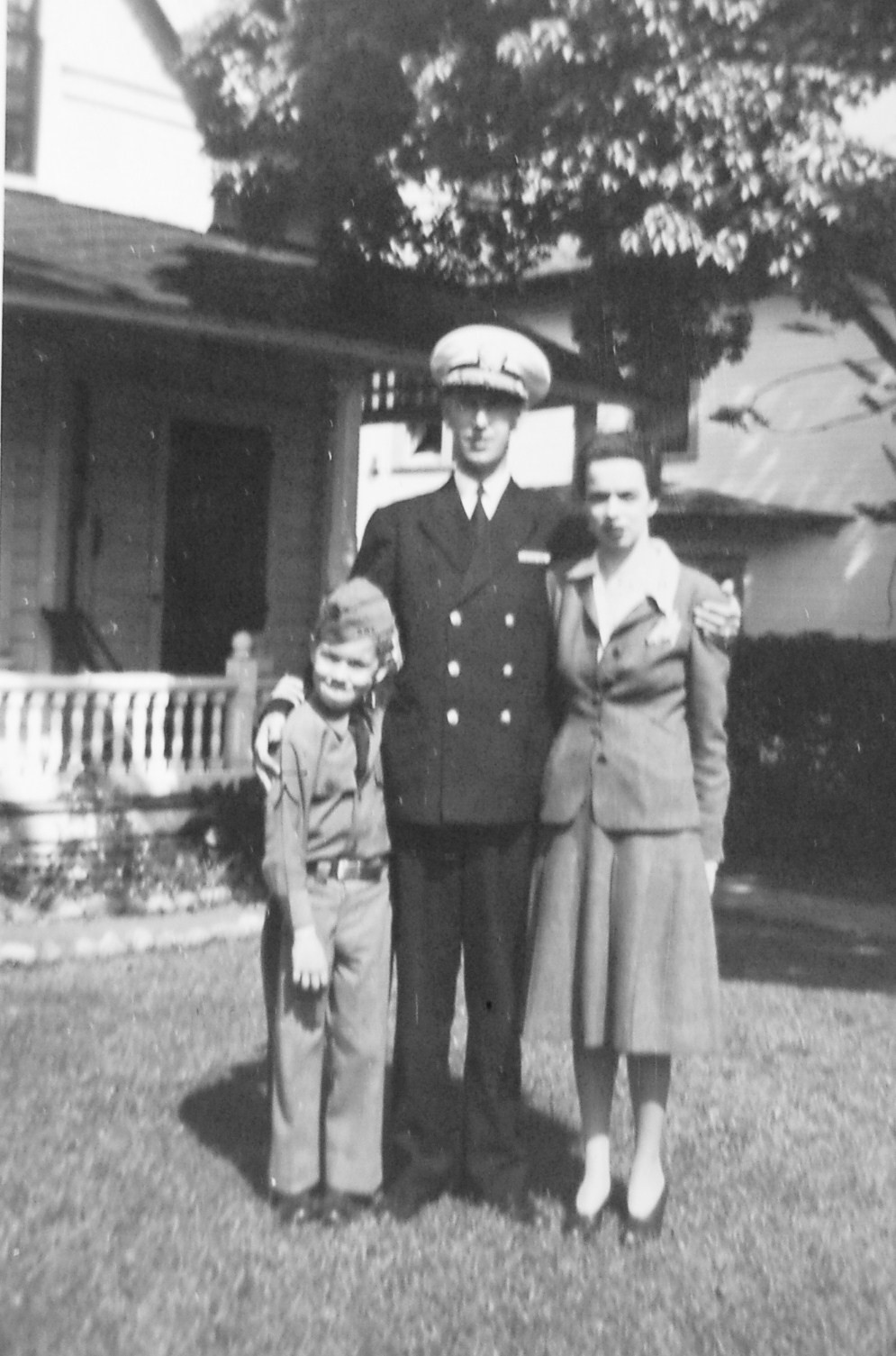
1943 – 45 Mary sends Gus at age eight to boarding school at Brown Military Academy (against his father’s wishes) while she joins the Red Cross. Gus is known as a good “little soldier” until he leaves Brown and starts public school three years later. He sees his father once during the war when Kamikazes damage his ship and it returns for repairs. When the war is over his father does not return. He becomes part of the occupying forces sent to Japan under Admiral Nimitz.
1947 Gus receives a reply from Commander Edwin T. Layton answering questions about the sword maker and the history of the Japanese samurai sword that Gus’s father brought back to him from the Pacific. “Your Dad’s Japanese samurai sword is indeed an old one, made by a fine sword smith, favored for fine blades. He was of the famous metal-smith and sword-smith family called Myochin.”
Fascinated with all things Japanese Gus later writes, “I bought my first Japanese print, Hiroshige’s famous Atake, A Sudden Summer Shower on the Great Bridge over the Sumida a couple of years after the Second World War ended. I was 12 or 13. . . . News of my purchase reached an elderly lady who collected prints under the tutelage of another collector. She invited me over. . . I recall going through a history of woodblock prints, beginning with Moronobu and ending with Goyo, three hundred years of an art. I left late in the evening with my second print, a Kuniyoshi of one of the Ronin dying.”
1949 Gus’s parents divorce and his beloved grandfather Luc dies. Gus is expelled from San Diego High School for hitting a teacher. His mother, now a social worker, sends Gus for a stay at the Anthony Home for delinquent, abandoned, and disturbed youth.
With public school no longer an option, Mary sends Gus to Saint Augustine’s High School where he says that the priests whipped him into shape. Besides the beach, Gus hangs out at Warhenbrocks Bookstore on Broadway and The Book Center at 5th and Ash owned by Lafayette Young, a good friend of Henry Miller. (He is the addressee of the “Letter to Lafayette” in Miller’s Air-Conditioned Nightmare.) Lafe becomes a “spiritual father” and mentor to Gus. “When I was a kid it was Lafe Young who first turned me on to Neruda; as well as Celine, Barnes (Djuna), Stevens, and Lowry.” In a later journal Gus writes, “My mother divorced my father after Korea. He had been at best intermittent during my childhood, disappearing immediately at Pearl Harbor, returning exhausted and raving only once during the war. . . .”
1951 His mother marries James William Casey, a probation officer and kind stepfather to Gus.
Gus writes a letter to his father Norman, “I started collecting books about three years ago. . . . Favorite contemporary authors are Waugh, Graham Greene, G. K. Chesterton and Hillaire Belloc. I am also trying (in vain) to obtain the ‘novels in woodcuts’ by Lynd Ward.” Gus corresponds with science-fiction writer Ray Bradbury about their respective comic book collections. Jane, Gus’s high school girlfriend writes, “When I met Gus, in high school, he was a passionately devout Catholic and was largely responsible for my conversion to that faith.”
1953 After graduating from Saint Augustine’s Gus spends one semester at Santa Clara Jesuit College intent on becoming a priest. Years later he writes that he left the school and the church because of their restrictive views on women and gays and because he read Stanford professor Yvor Winters’s essay on Wallace Stevens.
With financial help from his father, Commander Blaisdell, Gus is enrolled at Stanford University to study with Yvor Winters. Some friends and notable writers working under Winters in poetry or in Creative Writing under Wallace Stegner at this time were N. Scott Momaday, Thomas McGuane, Ernest Gaines, Ken Kesey, Thom Gunn, Frances McCullough, Larry McMurtry, Luis Harss, Robert Stone, and Wendell Berry, among others.
1955 Longtime San Diego friend Gina writes, “While at Stanford, I wore cashmere sweaters and white bucks. . . . I went to the symphony, the opera, and the “The Flicks,” but mostly I went to the library. Gus took me to a seedy little bar on Broadway to hear Dave Brubeck play, to a tiny Japanese restaurant in a dark basement somewhere, and to Foreign Movies with nudity and subtitles.”
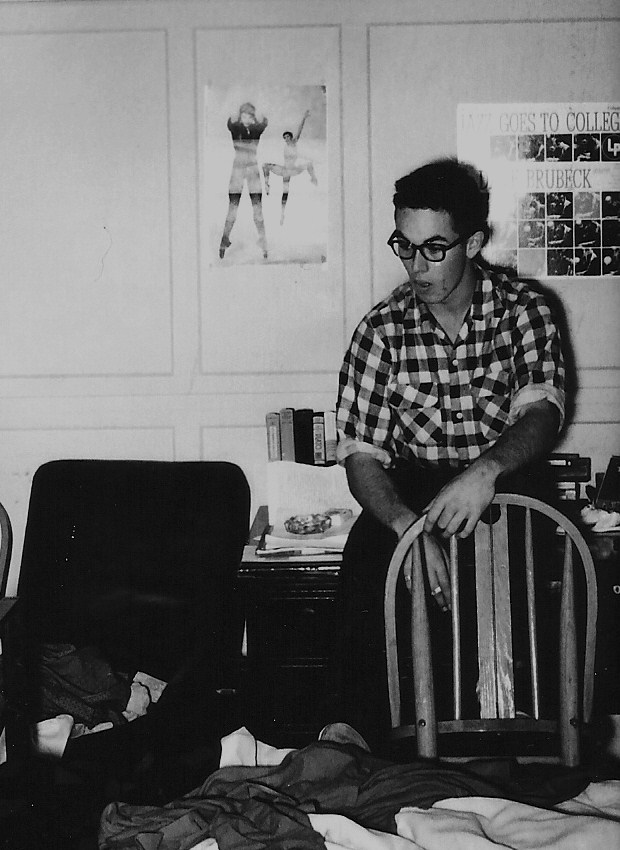
A letter to Gus from Charles Mingus [New York] May 23, 1955:
“Dear Gus, Sorry I’m so long in answering your letter, but I have little enough time writing music, let alone letters!
“As far as telling you what I felt and feel about Bird, that’s almost impossible. I have never sorted out my thoughts enuf to put them down on paper. Most of what was commonly known about him has already appeared in the music magazines; the rest is mostly not for publication; and the main thing I had with Bird is too personal to try to tell about. As for music, he was just the biggest figure we’ve seen in the past 15 years and completely upset the music world. To enlarge on that I’m enclosing an article I wrote for a Paris Jazz magazine a couple of years ago–but it still fits, especially since the advent of Brubeck and jazzwestcoast. Incidentally, you should exclude Mulligan out of the category of Brubeck and Rogers– Gerry’s fresh and a creator.
“Sorry, I can’t be of more help but I’m hung up with this record company and getting ready to go on the road so I’m pretty busy. Incidentally, you ain’t heard nothing ’til you hear Thad’s [Thad Jones’] newest album. That’s it! And then, sometimes he even blow better–
“Later–best regards.
Chas”
1956 Sequoia, Stanford’s literary magazine, publishes a short story, “A-Talionis” by Gus Blaisdell, which begins, “This the Philosopher says: That a man should write one hour before he dies; even then it is too soon.”
1957 Gus graduates from Stanford with an English degree, philosophy minor. Anxious about his future, he gets engaged to Glennis George, a Stanford junior, “because he didn’t know what else to do since he was graduating,” he later wrote in third person; “All he knew was he didn’t want to make the army scene.”
After graduation, at which Herbert Hoover gave the commencement address and Gus wore sandals, he drives to Aspen, Colorado, where Glennis’s parents are wealthy socialites and where she and Gus marry in June. He writes that “Ivan Abrams and I arrived in Aspen. Ivan had quit his doctoral program in comparative literature at Stanford in 1956, saying that he’d rather wind up on the Bowery than teach.” Ivan eventually opens the Quadrant Bookstore in Aspen. Other friends of Gus’s in Aspen over the years range from philosopher Irving Thalberg (son of actress Norma Shearer and Hollywood mogul Irving, Sr.) to writer Hunter S. Thompson, physicist Sterling Colgate, silk-screen artist Thomas Benton, and restaurateur Herbie Balderson.
1958 In the fall Gus and Glennis (“pregnant with my draft excuse and my reason for deciding on being a C. O.”) return to Stanford. With a John Locke Tuition Scholarship in Philosophy Gus does doctoral work in philosophy with Arnold Isenberg in aesthetics, Donald Davidson in theory of meaning, Herbert Morris in philosophy of law, Montgomery Furth in epistemology, and Daniel Bennett in philosophy of action. “It was Bennett who introduced me to [Stanley] Cavell through ‘Must we mean what we say?’ 1957.” (Cavell had presented an early version of his essay at a Stanford symposium that year.)
Gus works as a research aide at the Center for Advanced Studies in the Behavioral Sciences. Gus had met Ken Kesey as an undergraduate on the Stanford wrestling team, and now became a regular visitor to Kesey’s house at 9 Perry Lane. Painter Robert Stark writes, “He loved to tell stories about him and Kesey being guinea pigs for mind-altering drug experiments for the military at Stanford. When I met Ken Kesey in Big Sur all Ken could talk about was Gus and what a wild and brilliant man he was.” Longtime Stanford friend and correspondent Nicholas Brownrigg writes, “When I first met [Gus] at Stanford after I got out of the Navy, he was a breath of reason, of sanity, and helped me. . . . He’d point out wonderful books, Max Frisch, Mann, the Germans, the French, and talked endlessly of them.” At this time Gus also meets classical guitarist, painter and sculptor, Joe Bacon; and the editor, writer, and Peter Handke translator, Michael Roloff.
1959 In his notebooks Gus makes several references to “encounters with the Ø’s [philosophers] at Kepler’s,” the renowned Menlo Park counterculture bookstore. Ira Sandperl, a Gandhi scholar, pacifist, and fixture at Kepler’s, said that Gus was quite charming and that he used to lend Gus books. (The under-the-counter lending of books from the bookstore shelves to needy and trustworthy friends would be a generosity that Gus would continue to provide in his own bookselling business, along with selling books to them at cost.)
In a letter to Joe Bacon, who had left Stanford, Gus writes about Philosophy department happenings:
“I am sad to say that, in general, the Quine lectures were very disappointing. . . . The last was a mess which both Kreisel and I found insane.
“After one of the lectures Kreisel, Quine, and I had a three-hour discussion on the problem of fictionals. I pointed out that it would be quite difficult to quantify statements such as ‘There are fictional characters!’, meaning by this that one could quantify them, i.e., put them into symbols, but that the problem of interpretation was another thing entirely. Quine liked that and we started to talk about what the values of the variables would be in such cases. Kreisel talked about fictional variables, drooled on his white shirt (open at the neck, of course), and ran his hand around in that hairpiece of his which, for all the world, reminds me of a moist and frazzled snatch! Quine’s a nice man; he’s also a good philosopher—or so I’m told—; but I’m not overly impressed. Another of my basic problems: I am hardly ever overly impressed. . . . I could only too well sympathize with you if you did not come back here. . . .”
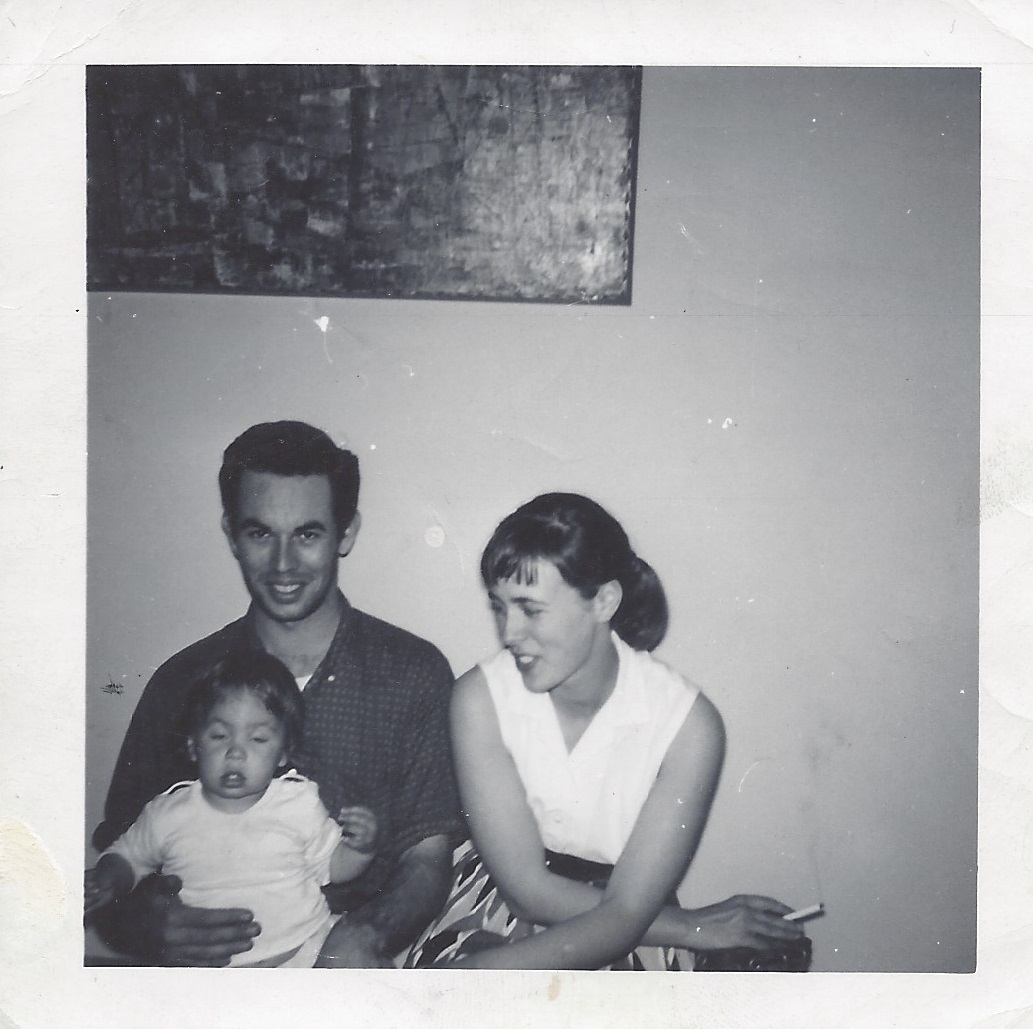
Glennis graduates in June with a degree in Sociology and their daughter Brenna is born in July.
1960 Gus writes, “I was twenty-five, a graduate student making myself miserable by trying to find in positivism and mathematical logic something I might call philosophy.” He walks out on his preliminary exams. Back in Aspen his friend Irving Thalberg asks him, “Is there a distinction between reject and renounce?”
Gus is tormented by a desire to write. “‘Write, Write, Write! Motherfucker!’ a little wheedley voice kept chanting to me during the months preceding the exams,” he writes to Nick Brownrigg. “In the seasons of my self (soul) the time was out of joint–had been for years. . . . Am I penitent? Hardly. Just sort of blank, the world’s kaleidoscope whirling insignificantly by past the grid of my eye, me turning its spectre, to my ghost, sliding it up into memory’s tube.”
In July he writes, “We lost our little pad in Palo Alto…the garden held too many pitfalls for a lumbering and curious child…Me and Stanford? I believe we are quits, kaput.” And in an August letter he confesses an expanding emotional turmoil, his marriage is coming apart and he’s met and fallen for “a girl named Sally” in Denver.
During this difficult period Gus travels from Aspen to Denver to Washington, D.C. (where he reconnects with his father) and to New York (where he stays with John Benedict, a new editor at Norton; meets Anatole Broyard; and makes his first brief contact with Allen Ginsberg, James Baldwin, and others on the Greenwich Village scene); he journeys afterward to Mexico City, where Sally is spending a semester studying Spanish.
He writes to Nick Brownrigg, “On the day I was leaving NYC for Mexico I got a letter from Monty Furth that absolutely tore me limb from limb. His criticisms and ‘analyses’ of me were excellent, astute, and in a sort of brutal, backhanded fashion, ‘pleasant.’ All the way down to Mexico I sat in a sort of numb silence: I felt like the Medusa who’d seen her own reflection for the first time–I too was turned to stone.”
1961 Still unsettled, Gus decries “this horrible restlessness inside me;” he explains to Nick: “I wanted to go, to move–but not to wander aimlessly. I was writing and some of the stories are fine; Broyard is peddling them for me; and because I had ceased my Bartleby moods, I was happy that pen hit paper and things cooked away. But something was amiss. . . . I was sick shit of living what I unlovingly now refer to as a ‘first-draft existence.’ I wanted terribly to finish something. . . . So, chin in hot palm, I decided to return here [San Diego], get a job, write like a maniac, and finish my philosophy. I intend to take the exams this May. . . .”
In April he is in Denver with Sally and studying hard at mathematics; and in May he goes
back to Stanford. Again, he blows off the exams. He describes it to Nick:
“Now, about Gus. Palo Alto was, at the time of the exams, one of the worst periods I’ve ever been through. It was, I thought, a new beginning; but after a few days I realized it was the lees and dregs of the end of a little world. To preserve this world in some way, I screwed, turned on, etc. because these were ways of then preserving myself, my tenuous identity. The finishing one thing business was intellectualizing a need: viz, the realization that I was indifferent, that I wanted to care about exams and people, but that I did not or could not or would not. The chances were there, so probably all these are true. There was no drive, except destructive ones: and this came out in abominable fucks, bennies (taken to study), sleeping with a vengeance, and endless talking, running round, until at last I came up against the little grunting solipsist inside the outer man, failed the exams, realized my brutality, and split to the land of the lotus eaters, hoping to avoid the final apotheosis of Aspen but sinking deeper into it than I had ever been before. That was the bottom of the barrel, then everything I touched turned to shit. Guilt? Not really, because there is nothing that can be remade out to those times; just call it a gnaw in the conscience, a memory unfaded, that seems always bright, and with which I confront myself time and again.”
His first marriage ends.
During the summer and fall in Aspen he writes that he is attempting to finish a semi-autobiographical novel and concentrating on poetry with mixed results, while working odd jobs (including dishwasher, surveyor, and a short stint as unit manager and assistant to the director for a U.S.I.A. film crew doing a cultural documentary on Aspen).
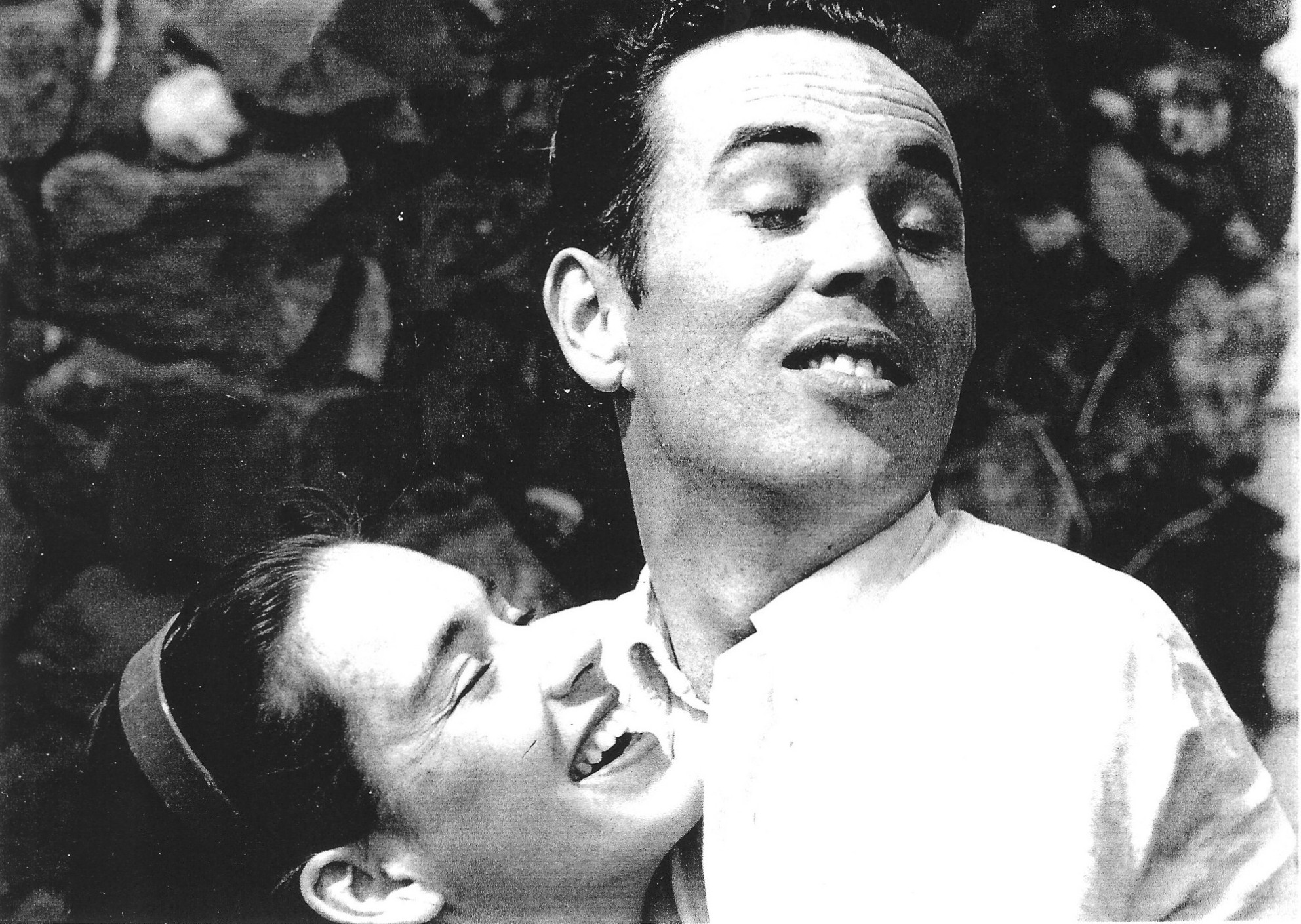
1962 Gus and Sally (Nelson) marry in January in Aspen. He adopts her three year old daughter Shawn. Sally says, “The first night that I met Gus [in Denver in 1960] he took me to see the strip tease artist Tempest Storm. I don’t recall much about her but afterwards he drove me down to Larimer Street and recited Allen Ginsberg’s Howl.”
They move to Denver where Gus gets a job at Stanley Aviation with his friend photographer/engineer Arnold Gassan. Arnold arranges for the photographer Minor White to teach a one-week intensive photography workshop in Denver.
Gus writes to Nick Brownrigg, “I went to a lecture last night by an avant-garde photographer named Minor White, and it was one of the most fantastic experiences I have ever had in a public lecture. His photos, often terrifying in a revelationary way, were there for me–I looked at them and said yes, I’ve been there; or yes, it is still in me. . . . I spent most of last night with him talking and listening. He has a sequence of pictures called The Sound of One Hand–they will tear your head off. . . .”
According to Robert Stark, a workshop participant, Gus (who is just hanging out) is the most insightful and articulate critic of Minor’s work. Stark writes, “Jim Milmoe, later to become the editor of Aperture, also participated in that workshop. Minor White and Gus frequently got into heated discussions over Minor’s photographs. Gus would chide Minor over his involvement with mysticism and Gurdjieff.” In a letter to Minor White, Gus writes: “M., I want you to give me an exercise on the following puzzle. How can I stop taking my writing so deadly seriously, make it become less of a painful war between myself, the paper, the pen. . . . It is like strangling something or performing an appendectomy on oneself with a rusty sardine lid. . . . I feel like a crazy Jivaro shrinking his own confused head!” It is Minor White who encourages Gus to write in a journal every day, through all of his moods, which Gus does, for the next 41 years.
Arnold Gassan is also making short experimental films at this time which Gus collaborates on.
Gus is studying for a masters in mathematics at Denver University. “I have been out of work for a while, the job at Stanley ending in a lay-off. . . . The last week has been spent with mathematical hammer and tongs in hand, forging away at a set of differential equations that nobody knows a damned thing about.”
While looking for work with another Defense Department contract firm in Denver, Gus finds he’s been blacklisted. He writes to Nick: “I told you the government blacklisted me. They refuse to give me a security-clearance. . . . It is probably McCarthy’s ghost with his ‘ . . . we have it from a reliable source that . . .’ You feel a little proud, a little scared because you are debarred from the work you’ve chosen, and a little sad because a country like this one is running so damned scared.”
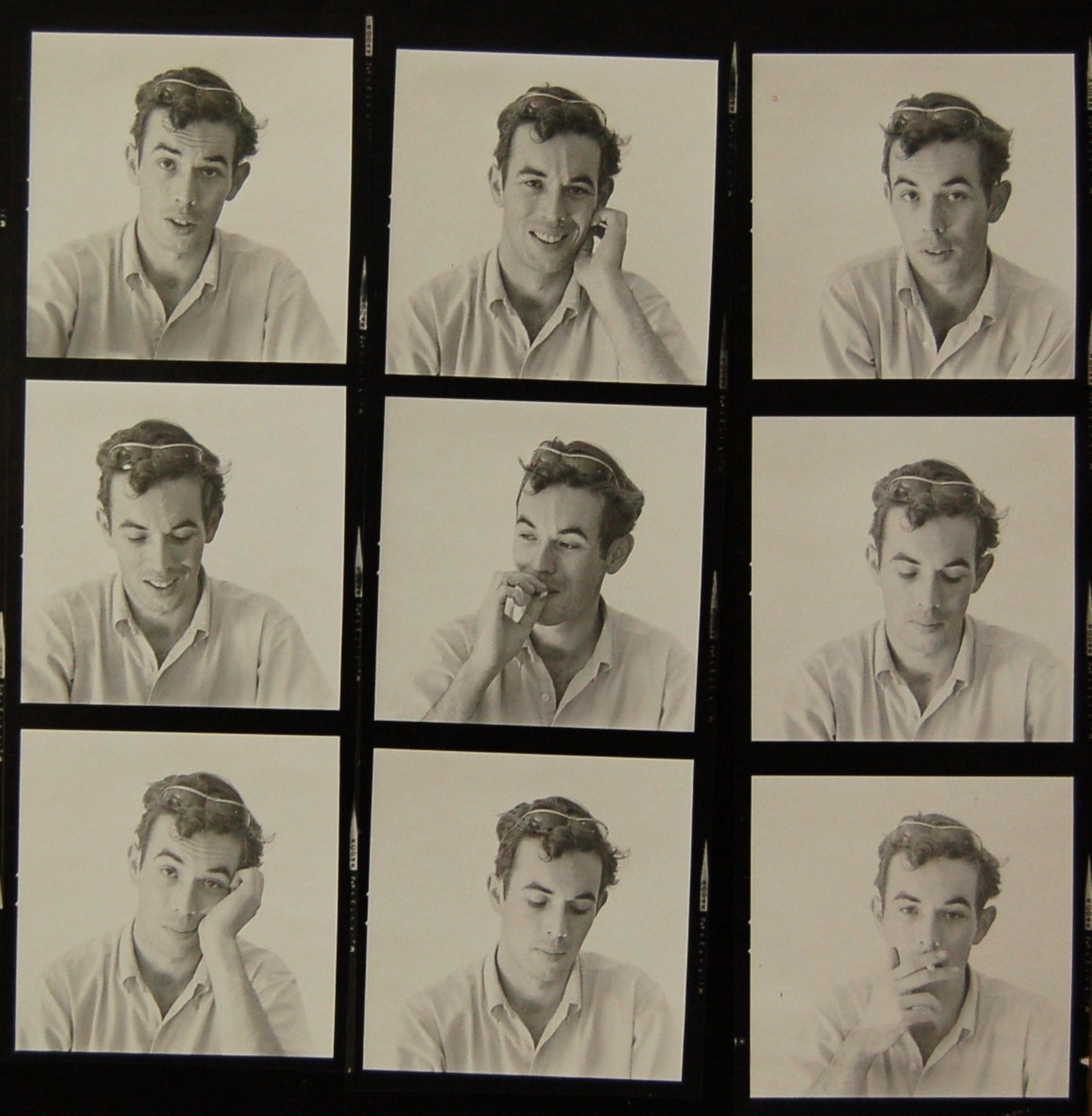
From another letter to Nick: “I just finished three days in Aspen. I met Jonathan Williams while there and he knew about me thru you and [Kenneth] Rexroth. He is charming, sharp, fun, etc.; and I also like his ‘companion’ Ron Johnson . . . a damned intelligent guy.”
In Denver Gus works part time as a contributing editor and distributor for the literary Alan Swallow Press, Yvor Winters’ publisher. He writes, “The last couple of weeks I’ve been reading Mss for Swallow. . . . Another poet I pray Alan will soon publish is named William Pillin. . . . His ms, Pavanne for a Fading Memory, . . . is one of the most accomplished and exciting books of verse I’ve read in years . . . doubly exciting in ms, the undiscovered poet, never collected in a big edition.” At one point Alan Swallow says of Gus to Sally, “All that education and brilliance and he is practically unemployable.” Alan refers Gus to a friend writing at the Denver Post.
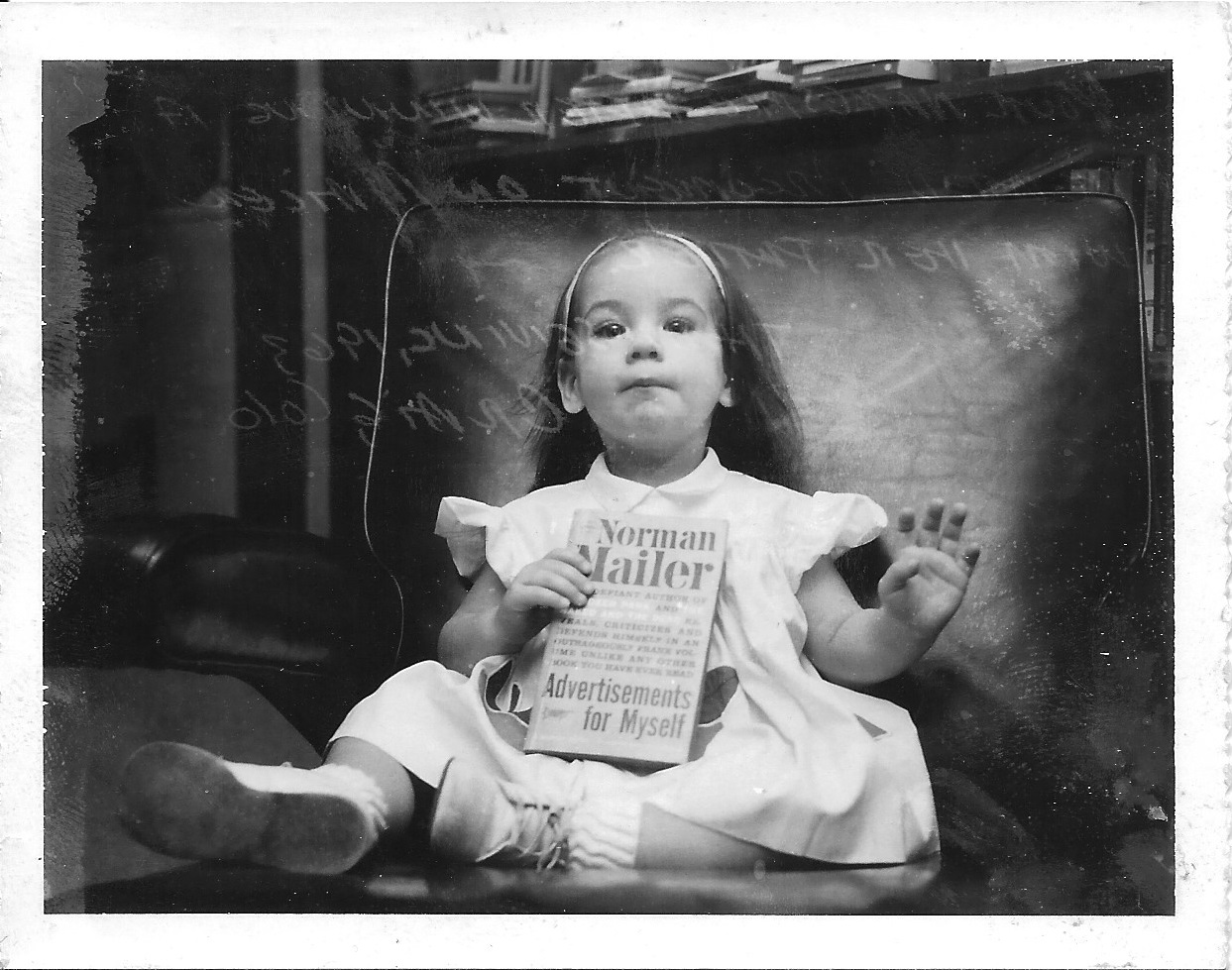
Daughter Nicole is born in August.
1963 Gus becomes a freelance reviewer of books and films for the Denver Post; a Denver Exchange Booker (of films) and advertising copy editor for Metro Goldwyn Mayer; as well as a contributing editor to Author and Journalist, a new periodical published by Swallow. Gus writes three pieces for Author and Journalist that year: one on Alan Swallow, another on Ken Kesey, and an interview/essay on James Baldwin.
From a letter to Nick, “It is fucking hard to let others love you whether you return that affection or not. It is much easier to love other people in the secret depths of your soul. Like Mary after the annunciation–to ponder these things in your heart. Love? Jimmy Baldwin knows what love is, what it demands and what it takes away in reprisal. Listen to that soft voice, with its warmth and desire. It will break your heart, perhaps it will break a few national hearts.” Baldwin is touring the country on behalf of C.O.R.E. and Gus’s article/interview with him will be reprinted in the Negro Digest the following year.
Gus writes a Denver Post book review of The Blind written by his Stanford friend Luis Harss, the Chilean born, Argentine writer.
While reading manuscripts for Swallow Press (Frank Waters, Phil Reno, William Eastlake, and Leland C. Wyman) Gus becomes fascinated with anthropology, the Hopi, the Navaho, and New Mexico. He corresponds with William Burroughs in Tangiers at this time about comic books and Swallow possibly publishing Burroughs’ work.
Luc Alan Blaisdell is born in August.
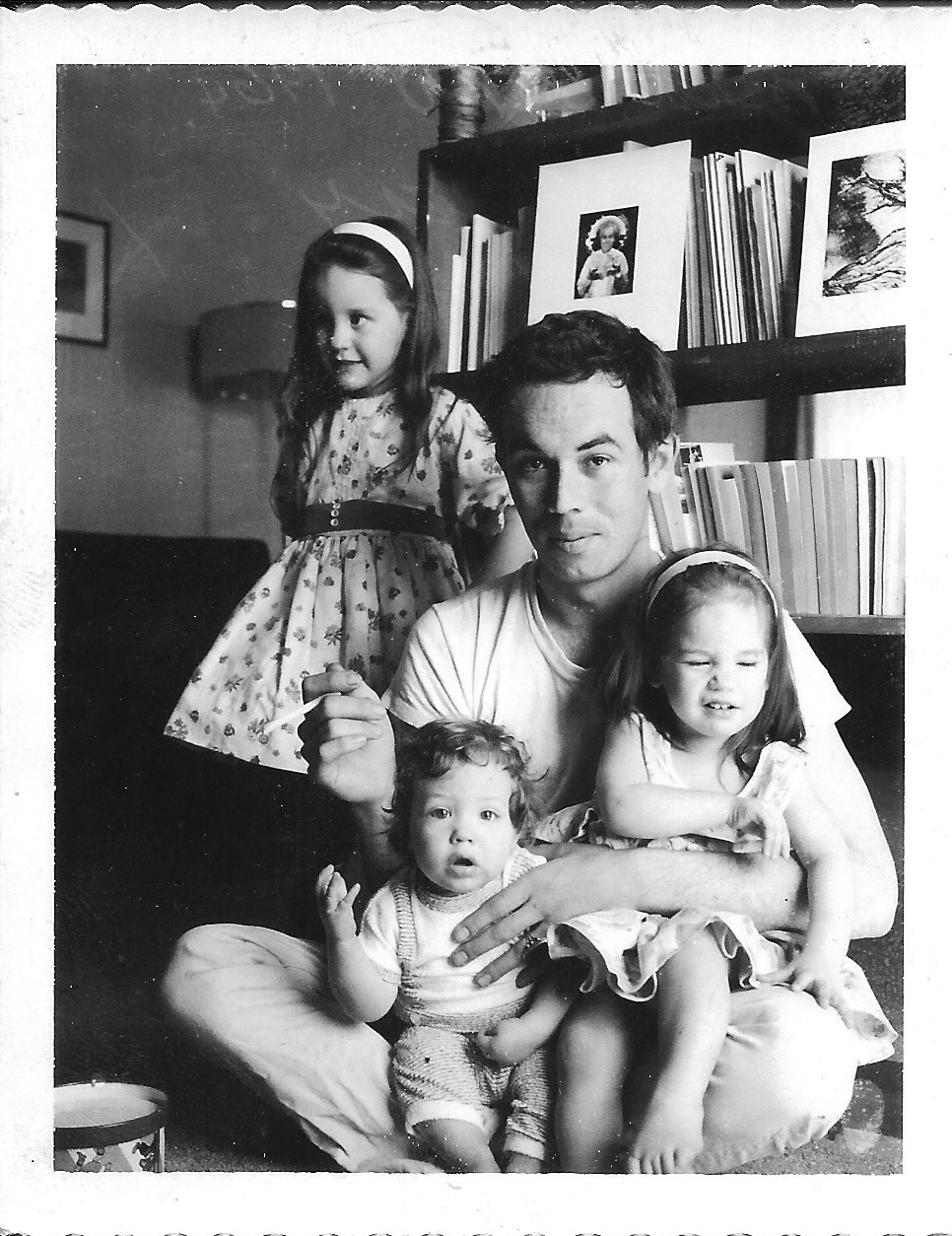
Gus moves the family to Craig, Colorado to manage the West Theater.
1964 A correspondence with Navaho scholar Leland C. Wyman at Boston University begins. Wyman gives Gus information and readings on Navaho culture, shamanism, and religion, and also on the few PhD programs available in anthropology–one of which is at the University of New Mexico. Gus passes along information on Navaho Ways from Wyman to Burroughs. Burroughs mentions that while at Harvard he studied under Prof. Clyde Gluckhohn, a Navaho expert.
From Craig, Colorado Gus writes to Jonathan Williams, “I am heading down to NM to see [William] Eastlake, live in a Hogan with a big-shot singer called Billy Norton, and pick the brain of my friend Leland C. Wyman, last of the big-time big-shots to the Navaho.” In one letter Wyman asks Gus why all the interest in sex: “Your catechism last summer consisted almost entirely of the sexier side of Navaho-ology. How come?” Wyman later thanks Gus for his responding discourse on sex vs. pornography, vs. eroticism. Wyman says that he’s read it several times and hopes that eventually he will understand it all.
Gus decides to move the family to Albuquerque to study anthropology at the University of New Mexico, where earlier Sally had earned a degree in Latin American studies. Another draw is New Mexico’s literary climate (William Eastlake, Edward Abbey, and poet Robert Creeley are working there). Gus writes that on first meeting Creeley they drank all day, talked, argued, and then got into a fist fight.
After one semester at UNM, Gus abandons his anthropology studies.
1965 In a January letter to Joe Bacon he writes, “Well, withdrew from UNM, an enormous sense of relief. Had more than enough of pisspots, potshards and prehistoric arrow points. Then, my usual bad Karma rearing its ugly head, I was laid off till April when the drive-in theatres will supposedly reopen.” Gus was manager of Albuquerque’s Silver Dollar drive-in theater, but is desperate to find a better job to support his family.
Gus joins the University of New Mexico Press. Over time he works his way up from assistant editor to acquiring editor for scholarly books and co-editor of the New Mexico Quarterly, a literary journal published by UNM Press.
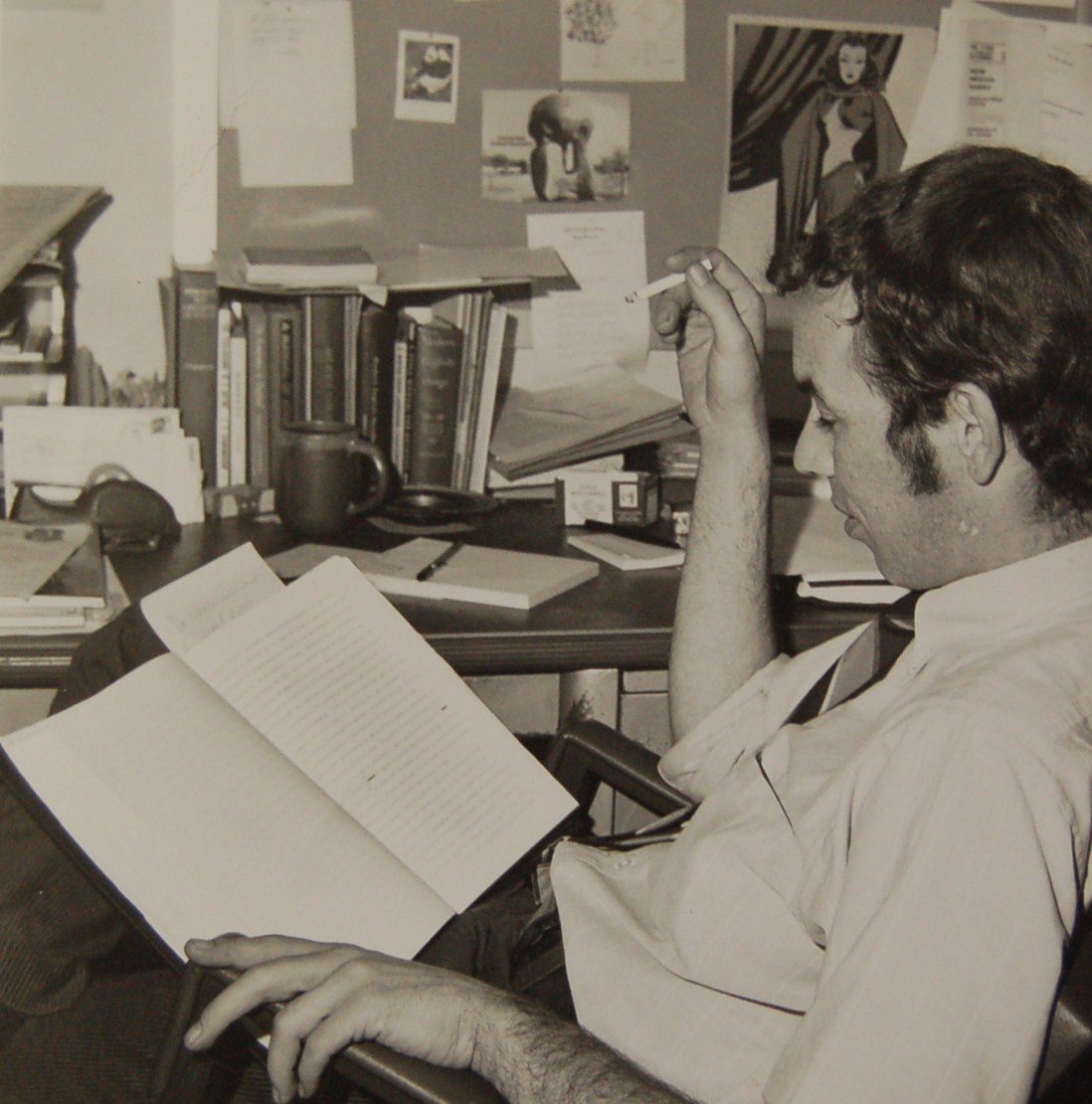
Correspondence begins with Evan Connell. Gus writes, “I want to do an extended article on your work. . . . I did the essay for Author and Journalist . . . but A&J immediately folded—perhaps on receiving another essay by me!”
Poems 1965 by Gus Blaisdell is published by Howard McCord’s Tribal Press.
1966 Gus publishes Luis Harss’s essays on Latin American writers (Juan Rulfo, Carlos Fuentes, and Julio Cortázar) in the New Mexico Quarterly, essays that will be included in Harss’s important book Into the Mainstream: Conversations with Latin American Writers.
“I met Luis at Stanford sometime in 1954, in a labyrinthian complex of clapboard barracks that had been a military hospital in WWII and were then used for student housing. I remember that the barracks were heated by steam: in summer they smelled of old wounds; in winter, of cold bandages and antiseptic…Luis, with his precise diction and incisive perceptions, was a single light in that otherwise acrid environment.”
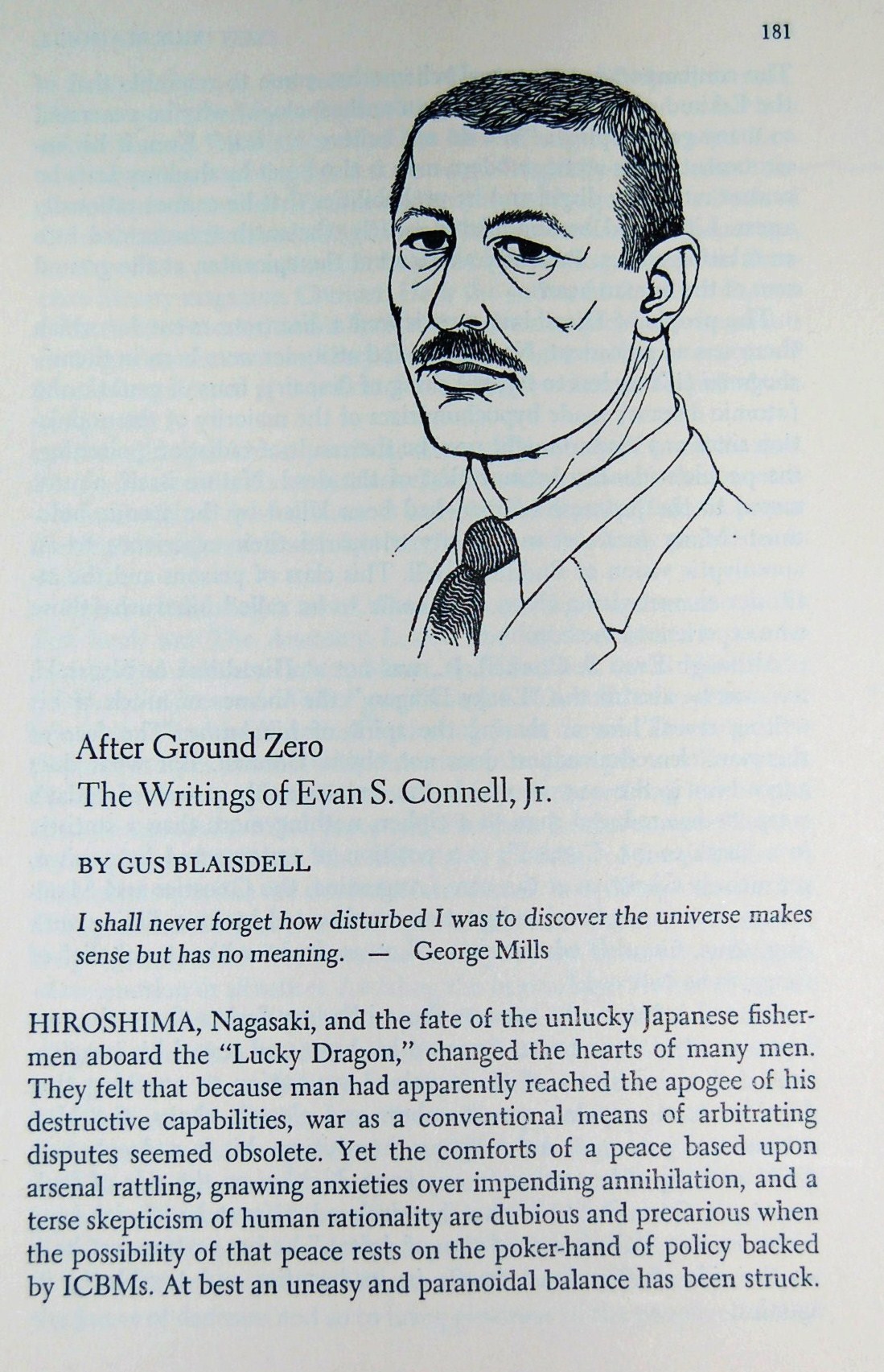
Gus’s extended essay entitled “After Ground Zero” on Evan S. Connell’s work appears in the Summer issue of New Mexico Quarterly.
In November, while at UNM Press, Gus receives a telegram saying that his publishing mentor and friend, Alan Swallow, has died of a heart attack at his typewriter. Gus writes a short tribute, “Bio of a Swallow,” and publishes it in the Winter issue of New Mexico Quarterly along with Alan’s autobiographical essay, “Story of a Publisher.”
In a letter Gus writes, “I began commuting to Denver on weekends to help with running Swallow Press and it happened that my great teacher Yvor Winters’ last two books, Forms of Discovery and its companion anthology, Quest for Reality, were mine to design and edit.” In a letter to one of the lawyers during the chaos after Alan’s death, Winters writes that, “Gus Blaisdell undertook this job with no payment from the company and at considerable financial sacrifice to himself. He has done this out of admiration for Alan and myself and out of loyalty to Mae [Alan Swallow’s wife].” Gus also refused Winters’ offer of payment.
To Swallow’s wife Winters writes that “Alan was an odd genius. . . . He had a gift which is restricted usually to good poets: He could recognize good writing and recognize it at once (he recognized the same gift in Gus, and so do I). It was this that made him a success as a publisher, this plus the energy of three bull-mastiffs. He was almost ready to take Gus on, before he died, as a junior partner; but he had been a lone wolf for so long that he couldn’t bring himself to it.”
1967 To his poet friend and the publisher of Jargon, Jonathan Williams, Gus writes, “Things are hellish and hectic, the work of both presses really pressing in on me on all sides.” The pressure of events following Swallow’s death seems to trigger a manic streak in Gus’s behavior, escalating toward self-destruction. Good friend and Placitas poet, Bill Pearlman, writes about the time, “. . . it was our treasure, our folly, our unregenerative space-out. 1967. Files of breakdowns, overdoses, splendors. . . . Nobody could have predicted how it would go. We were able to feel the insurrection, the rebellion, and the [Vietnam] war was our nemesis. After [Robert] Kennedy’s murder, we were in a fit and nothing could stop us. . . . Allen Ginsberg gave a reading at UNM April 28, 1967 and it was a huge circus event. Afterward, we all [including Gus] went out to the Thunderbird [bar] in Placitas . . . [and] proceeded to the Lower Farm . . . the scene of a several day acid high. . . . We kicked up the dust, did several scenes from King Lear and pitched 40 pound boulders into the nearby arroyo. [Ginsberg] had arrived in New Mexico from LA . . . with 100 hits of Owsley acid, Purple Domes and White Lightning.”
The Albuquerque vice squad arrests Phil Mayne, the owner of The Grasshopper Bookstore that Gus frequents, for carrying “obscene material” (Henry Miller’s Tropic of Cancer and William Burroughs’ Naked Lunch, among others).
In a June letter to Winters, dealing with final publishing details for Forms of Discovery, Gus writes, “From July 18 – 23 I’ll be in Aspen, Colorado, as a delegate to the International Design Conference.” In August Gus becomes a consultant during the difficult transition from Alan Swallow Press of Denver to Swallow Press, Inc. of Chicago, while still working at UNM Press.
N. Scott Momaday’s parents leave a copy of The Journey of Tai-Me (The Way to Rainy Mountain) for Gus to read. Gus has to fight hard and creatively for two years to get it published. While at UNM Press Gus aids in the recognition of Native American writers, publishing N. Scott Momaday, Leslie Marmon Silko, and Simon Ortiz in the New Mexico Quarterly.

Four of Gus’s poems are included in Drum Book, published by Howard McCord’s Tribal Press.
Daughter Casey Noel Blaisdell is born in December.
1968 In January Yvor Winters dies. In April Gus stops drinking for a month.
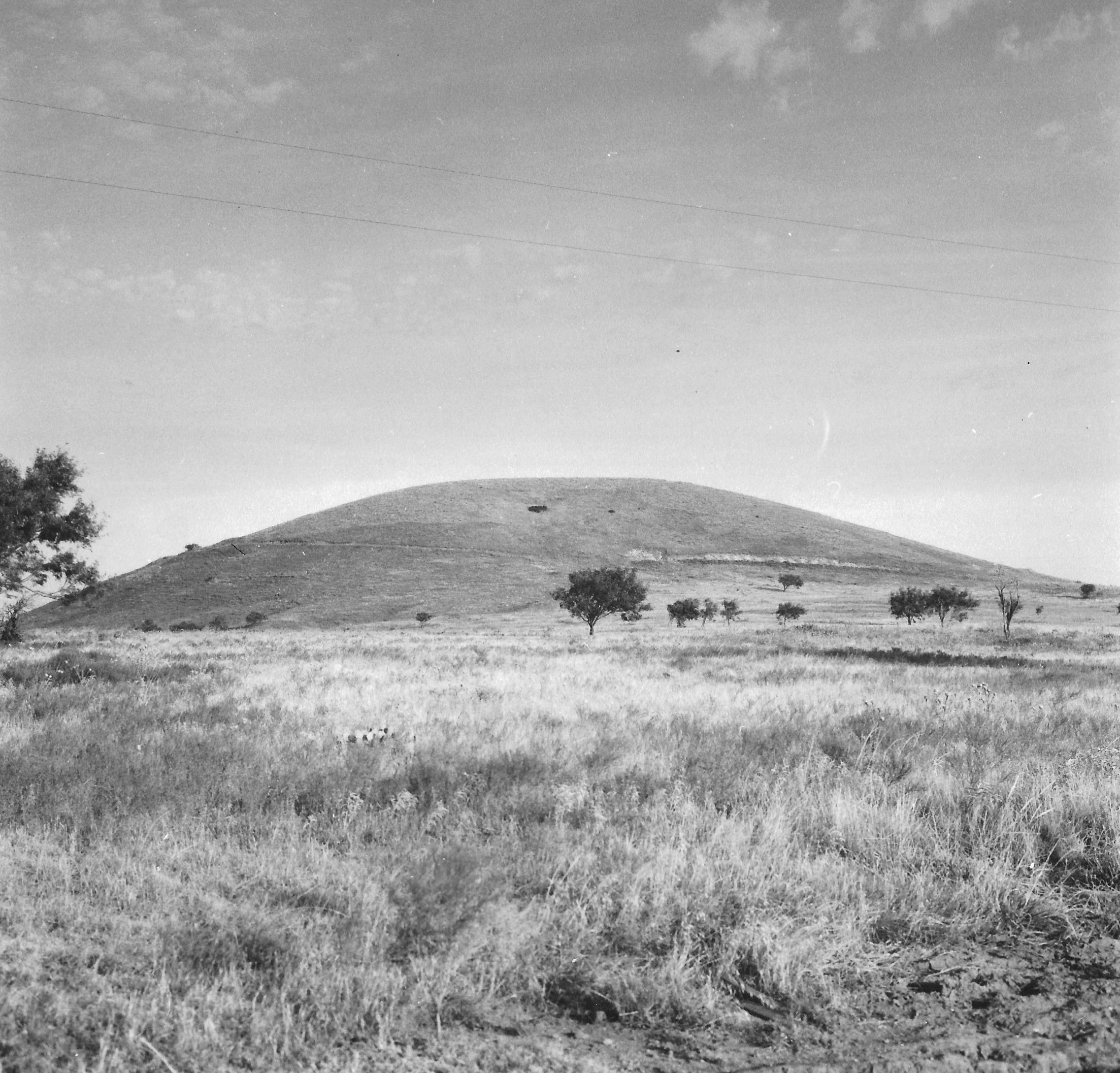
In Gus’s “Holygraph” (a blank dummy book–holograph–for the Winters Forms of Discovery run) Scott Momaday writes,
“Dear Veering,
It has been good to be
with you on the way to Rainy
Mountain. One day you must
go to the cemetery there, to
see the gravestones of some of
these red people you must at
times feel that you know.
And I hope that the
weather is particularly hard
on that occasion.
N. Scott Momaday
Christmas Eve 1968”
Gus writes in a journal:
“On an Inscription in my Holygraph Book
for Scott.
We have been to/get/her now these many months
each on his way to Rainy Mountain, a journey
taken in fact, in spirit, and imagination.
It is a labor of love without loss, finding
my way, finally, to that dark stone
that bears your grandmother’s name.
You wish me the hardest weather on my visit
Such weather is the weather of my spirit,
A semiarid terrain wild with winds, and,
At evening, reason’s rage and fury flaming,
When the wind blows and wind bells ring
Or the snow falls down and no bell rings.”
Still frustrated by the lack of an advanced degree, Gus enrolls in graduate school at UNM to study philosophy and mathematics. In a letter to friend and Tribal Press publisher, Howard McCord, Gus writes,
“Sitting around these mad rationalists and poets is telling. Descartes raps, and Leibniz and Spinoza rap back; I rap on all three; Wittgenstein jumps up and down, tearing his fuzzy fright wig; and Sam “The Sham”–as in sham-an–Beckett smiles from the mouth of the jug in which he is immersed.
“Now if the above should seem hyperbolic and oblique, it simply hyperbolically and obliquely–with some metaphor–states that I have begun my dissertation this summer. Consolation; if I survive intact, it will drive the department out of their zonks. Title: PRIVACY: FACT & FICTION, and dealing with self-knowledge and “inner experience”–cf.: “Gloss Annexed” and the preceding, “side window.” Philosophers: Descartes, Leibniz, Spinoza, Wittgenstein, & Strawson; real philosophers–though some would maintain philosophes–Beckett, Borges, Cunningham (Quest of the Opal), Connell (Notes), Valery (mostly M. Teste), Mallarmé (the criticism and theory, with a few poems [thrown in]), etc. As my friend and mentor Monty Furth says—Narrow the fucking thing or title it THE WORLD.”
In a November letter to Durrett Wagner of Swallow Press, Chicago Gus writes, “Sluggishness–would that it were so; I’m just overloaded, over-reached, and nearing over-exhaustion.”
In December the basement of Gus and Sally’s house catches fire. Much is lost.
1969 In January Gus writes to Janet Lewis, “He [Scott Momaday] is pleased with Rainy Mountain, which is in page proof, the illustrations keyed in. Ken [Fields] wrote a wonderful two pages on the book, and from the small consensus of distinguished gentlemen at hand I am certain that the book is, will become, a classic. Scott is writing a “gloss” on the special imagination involved in Rainy Mountain for the next issue of NMQ, a special double issue on the contemporary American imagination.” In a postcard Momaday writes to Gus that the cloth, the jacket, Janet Lewis’s statement, everything is “smashing” and that he couldn’t be more pleased.
Gus leaves UNM Press by mutual agreement shortly thereafter.
Gus spends the summer of ’69 in San Francisco, visiting with Evan Connell and Ernie Gaines. He writes that he’s working for Ferlinghetti at City Lights Publishing, cataloging his private collection and starting editing on Neal Cassady’s, Last Third. He meets Peter Howard, owner of Serendipity Books, and Jack Shoemaker, who is working there.
Gus writes to his Stanford friend, the Argentine writer Luis Harss:
“I spent the summer in San Francisco, doing free-lance editorial work for Ferlinghetti at City Lights Publishing and studying typography with my friend Jack Warner Stauffacher. It was a successful summer in the sense that I was alone, “dropped out” as the phrasing has it today, and I pretty well systematically (and otherwise) deranged my senses on booze, mushrooms, acid, pot and anything else that I could ingest or insert. Dereglement des sens. Yeah, thanks Rimbaud.
“Anyway, returned, I am now on the wagon and off cigarettes—the last for over a year now.
I discovered that I was using booze as a “downer,” a tranquilizer, and I decided that I would simply live with my high-energy freakiness or let the whole thing slide. I now find that—unmystically!—I exist in a kind of metabolic high, thereby forming an ecosphere that scares shit out of most of the people who come within its frontiers and boundaries (which is which depends
on the side of the line you are on).”
Gus’s semi-autobiographical story entitled “A Gloss Annexed” is published in the Summer issue of Café Solo under “Theory,” edited by Glenna Luschei.
Gus’s short story “Spaces” is published in New Mexico Quarterly’s, final issue, The Contemporary Imagination, edited by Gene Frumkin with help from Gus. Sur, the Argentine literary magazine, translates NMQ’s final issue into Spanish.
Gus is selected as one of eight panel members for the Discovery Writers program of the National Endowment for the Arts.
1970 NEA Grants are awarded to Gus’s nominees Leslie Chapman (Marmon Silko), Ronald Johnson, Simon Ortiz, James Welch, and Geoffrey Young. Later in an advance review copy of her landmark book Ceremony Leslie Marmon Silko writes, “For Gus, / The one who kept me / going at a time when / I almost became a / lawyer instead. / I won’t forget, / Love, / Leslie.” The grant allowed her to quit law school and write Ceremony.
On the recommendation of journalist Tony Hillerman New Mexico Tech’s president, Sterling Colgate, hires Gus as a P R man in Information Services. Gus writes to Bill Pearlman:
“Well, what can I tell you about the delights of Socorro? That there are tribes of phenomenologists massing in a secret staging area in the hills? That the main recreation is driving up and down the main street, which is less than a mile long? There is a palace that shows flickers, and that is a saving grace. There are also a few possible human beings on the staff–like the drama cat who is doing Godot next weekend; one shrink; a couple of leering, lemurian mathematicians; and some other oddments in astrophysics… Socorro is a cry for help! But one can “work” in this ecosphere—there’s nothing else to do.”
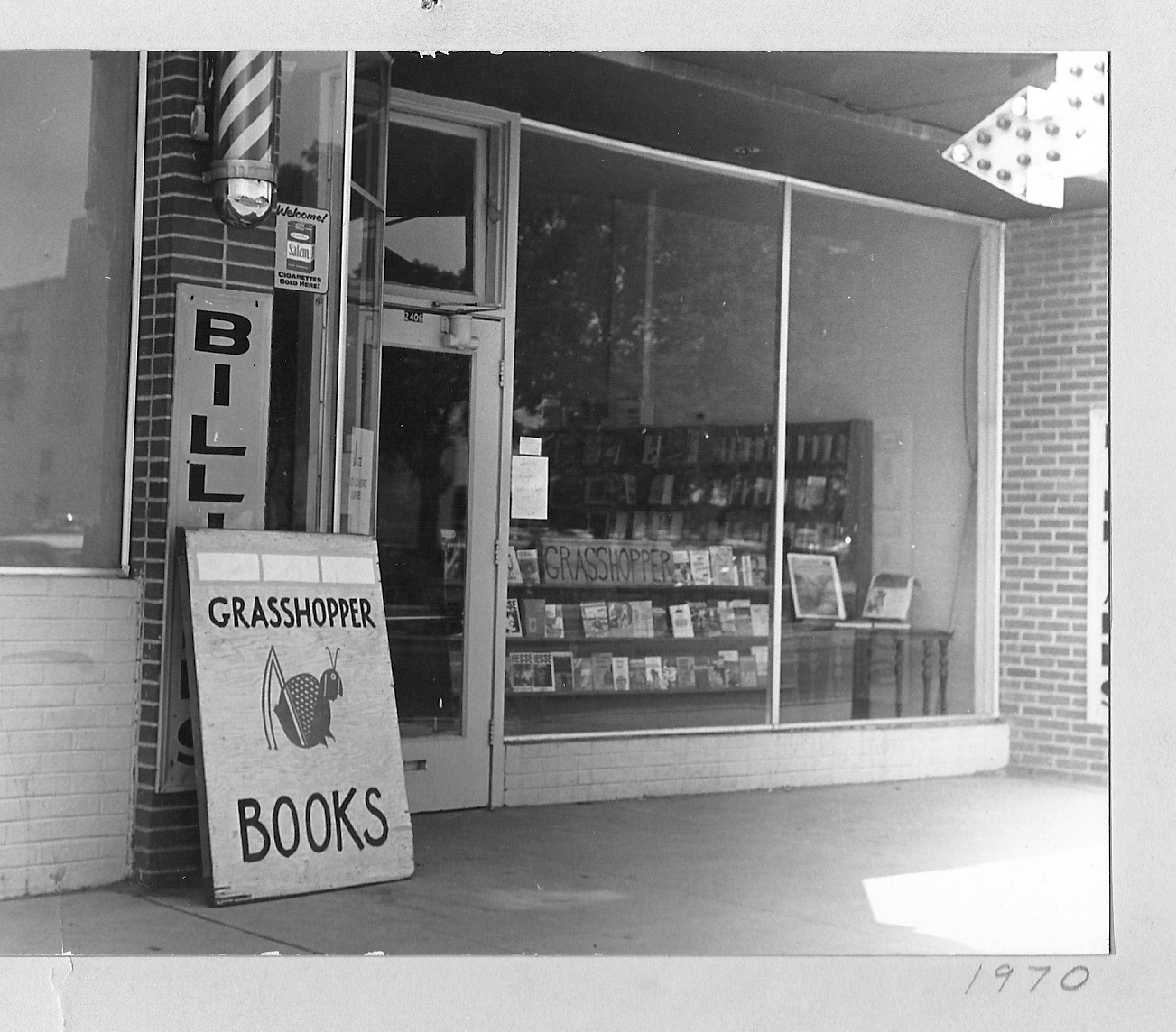
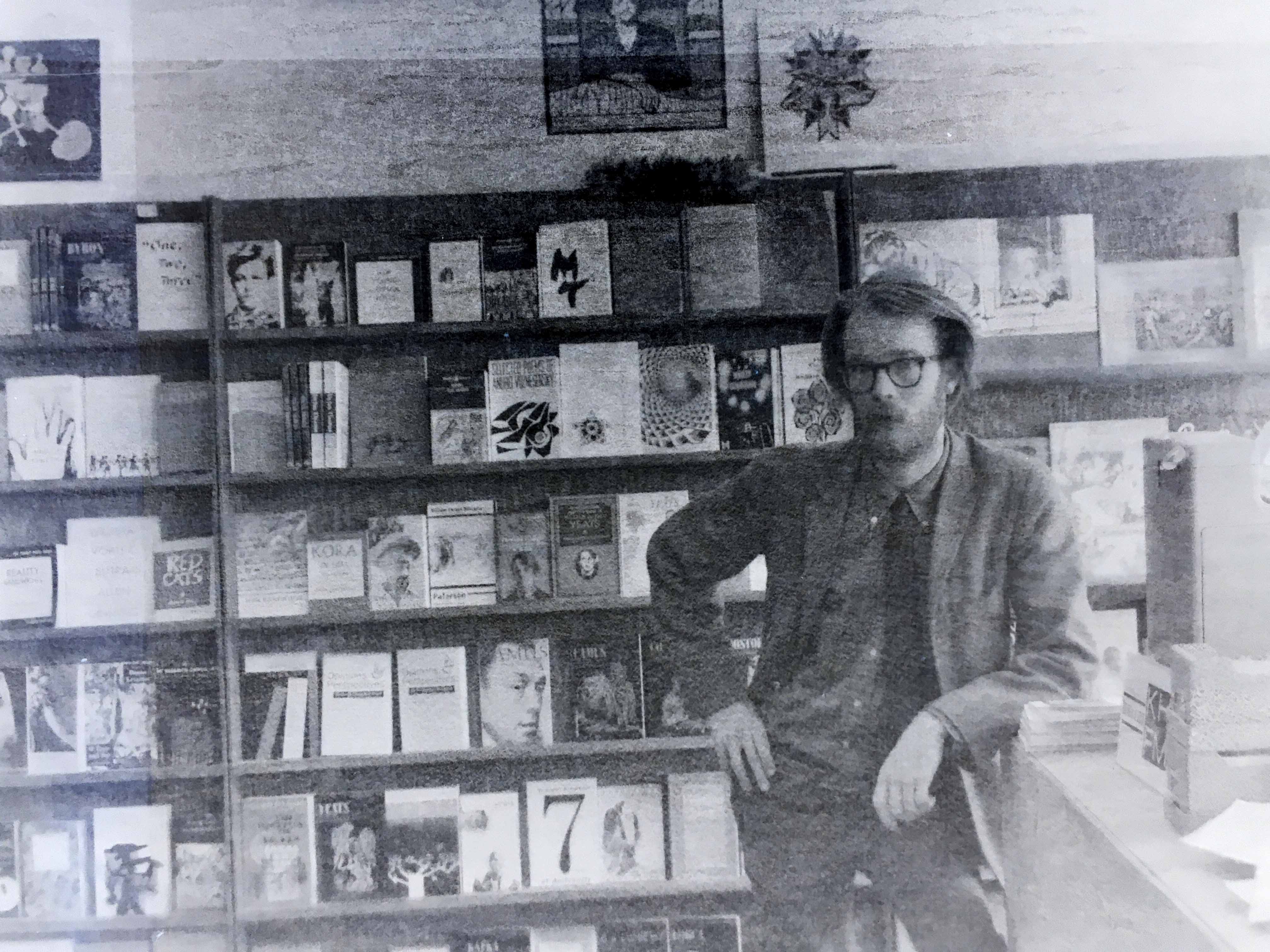
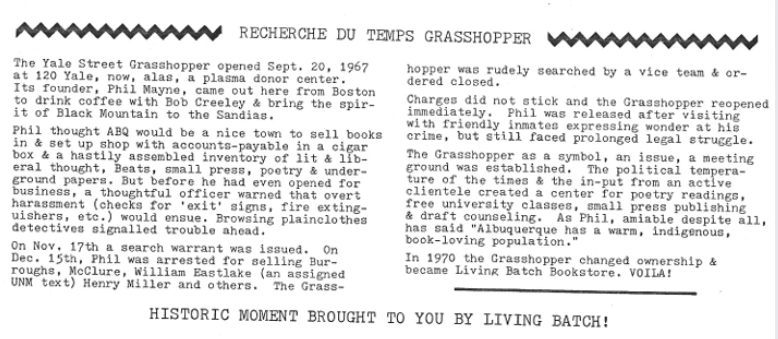
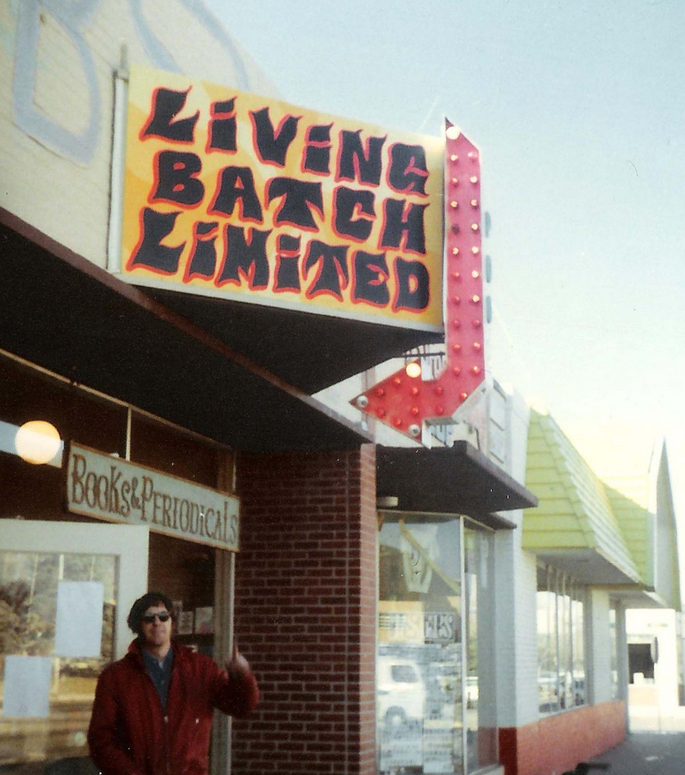
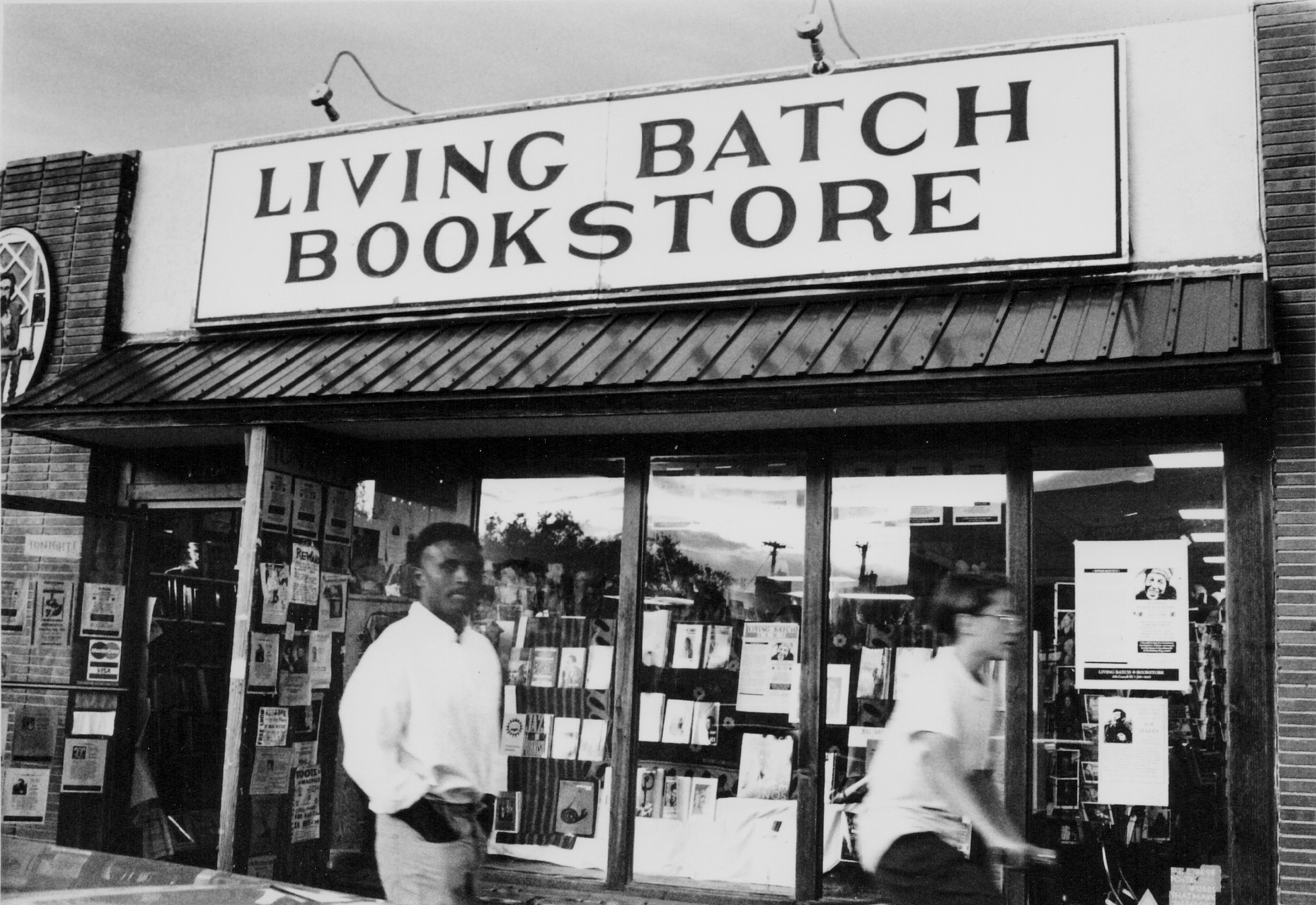
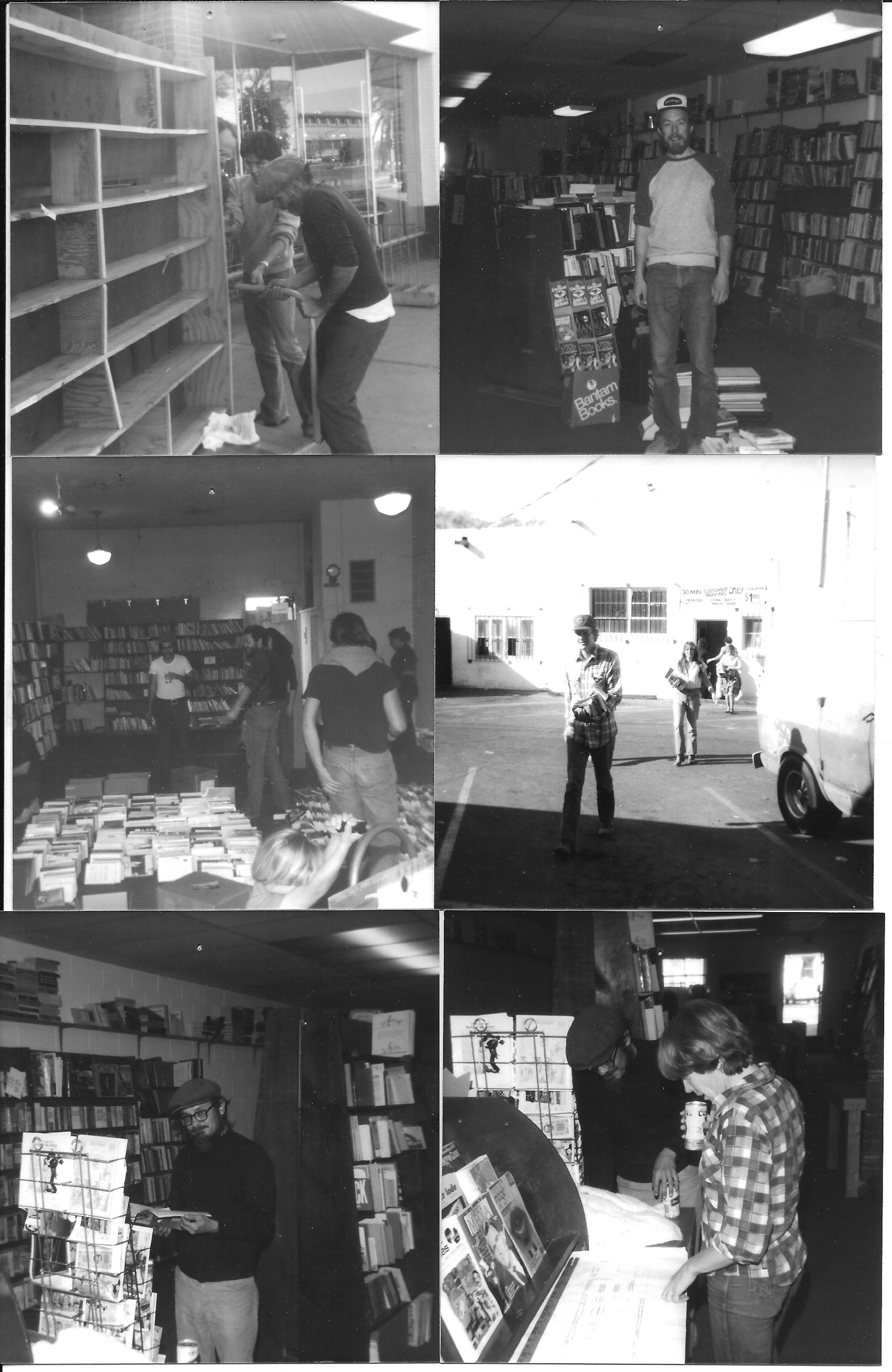
Peter ‘Poncho’ Elliston and Mike Elliston buy Phil Mayne’s Grasshopper Bookstore and turn it into the Living Batch Bookstore (its name taken from “The Gunslinger” by Edward Dorn, a poem about desperados bringing enlightenment to Albuquerque in the form of an acid-filled corpse–a work that Gus loathed). Already a Grasshopper veteran, Gus becomes a Batch regular, and Poncho says that they quickly discover Gus is sorely lacking in “customer relations.”
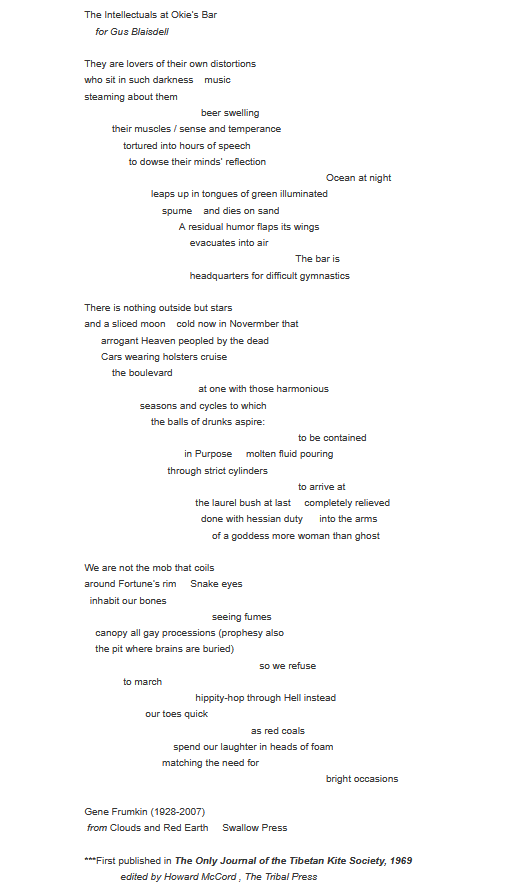
1971 Stanley Cavell’s The World Viewed is published. Gus wears a green army fatigue jacket and carries the tattered book everywhere, especially to Okie Joe’s Bar across from the University of New Mexico, a counterculture hub. The poet Gene Frumkin dedicates his poem, “The Intellectuals at Okie’s Bar,” to Gus.
Gus is enrolled at UNM in the doctoral program in mathematics. Sally is hired to do bookkeeping at the Living Batch Bookstore and is the only employee allowed to buy shares in the store.
With poet Larry Goddell Gus edits Fervent Valley #1, a small-press poetry magazine out of Placitas, New Mexico. Gus meets Felice Gonzales in the fall.
In September he becomes a lecturer in mathematics, English, and philosophy at New Mexico Institute of Mining and Technology, Socorro. Gus hitchhikes the 70 miles between Socorro and Albuquerque, sleeping in his office two nights a week.
To his longtime friend and Stanford roommate, Ray Waddington, Gus writes, “I am back teaching–3 philosophy courses, 2 mathematics, and the latter is fun. I find myself gyring more and more into the helices of purity and farther and farther from Yeats’s tower. . . . I spent May through mid-July in California as a participant in an international symposium for Alfred Tarski (foundations of math).”
Gus is an invited speaker for the Visiting Lecture Series at The Claremont Colleges, Pomona, where Hap Tivey, James Turrell, Lewis Baltz, and Marcy Goodwin are graduate students, Guy Williams is teaching art, and Mowry Baden is the chair of the Art Department.
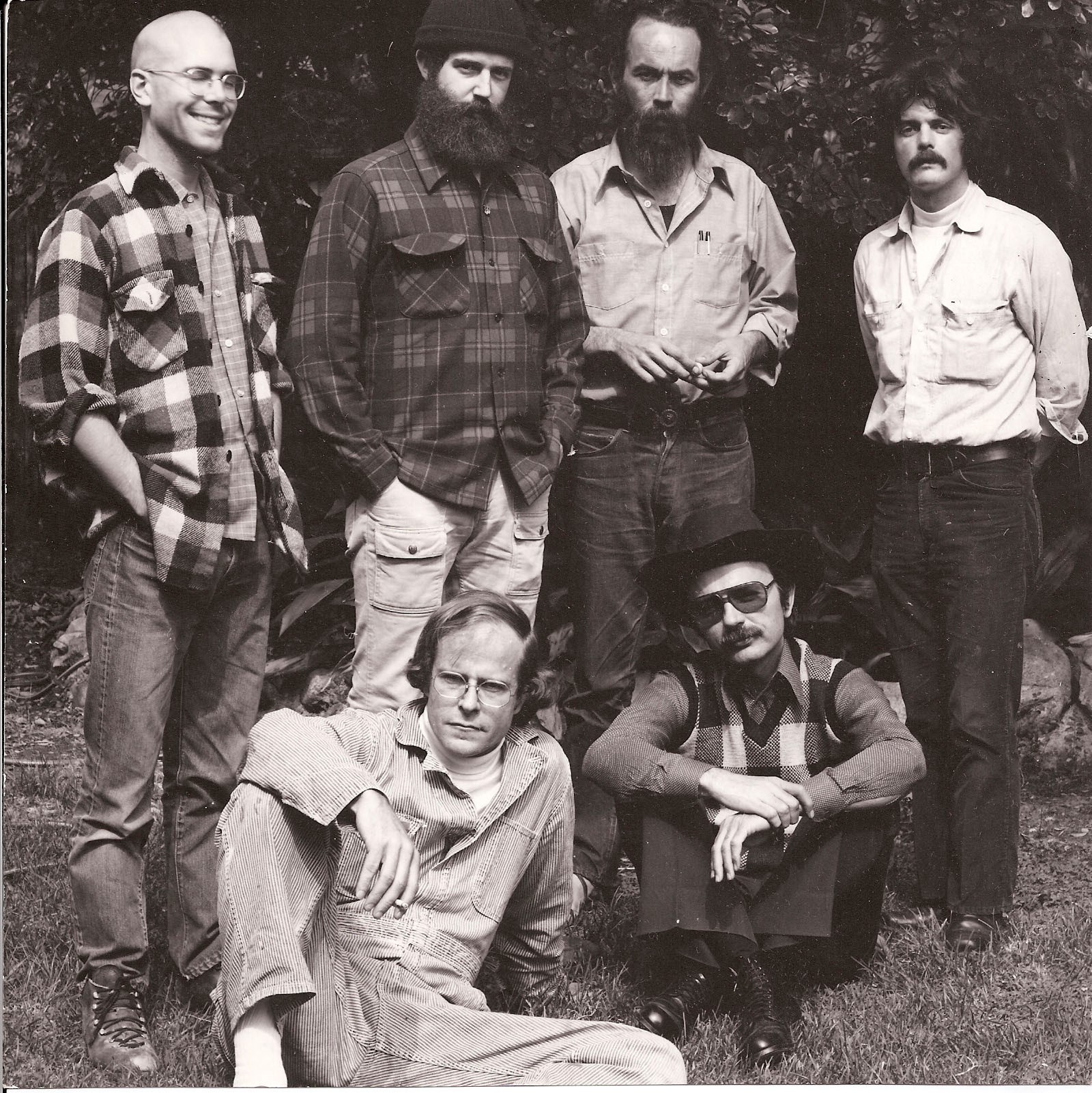
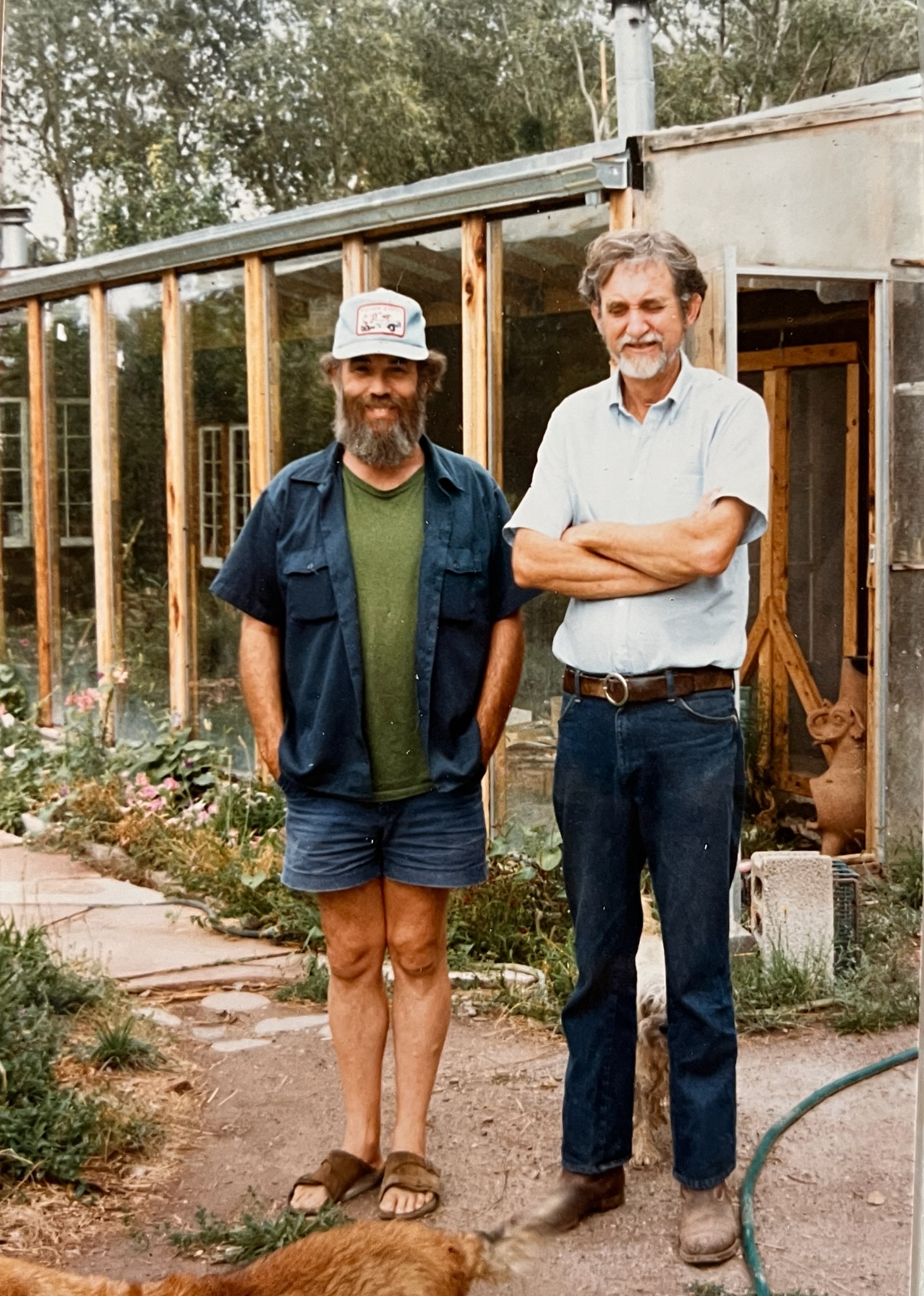
Photo caption: “At the time they were all determined to become mightily famous, and the amazing thing is that for the most part, they did. They achieved their goals and then some. So the photo was meant to document the coming together of these to-be-mighty artists–top left is Hap Tivey, Jim Turrell, Gus, Duke [Lewis Baltz]. In the front is Mowry Baden on the left, and Guy [Williams] on the right.” –from friend and museum consultant, Marcy Goodwin.
1972 Sally and Gus divorce in January.
While living with Felice Gonzales, Gus stops drinking in the fall.
1973 Gus’s correspondence with photographer Lewis (Duke) Baltz begins.
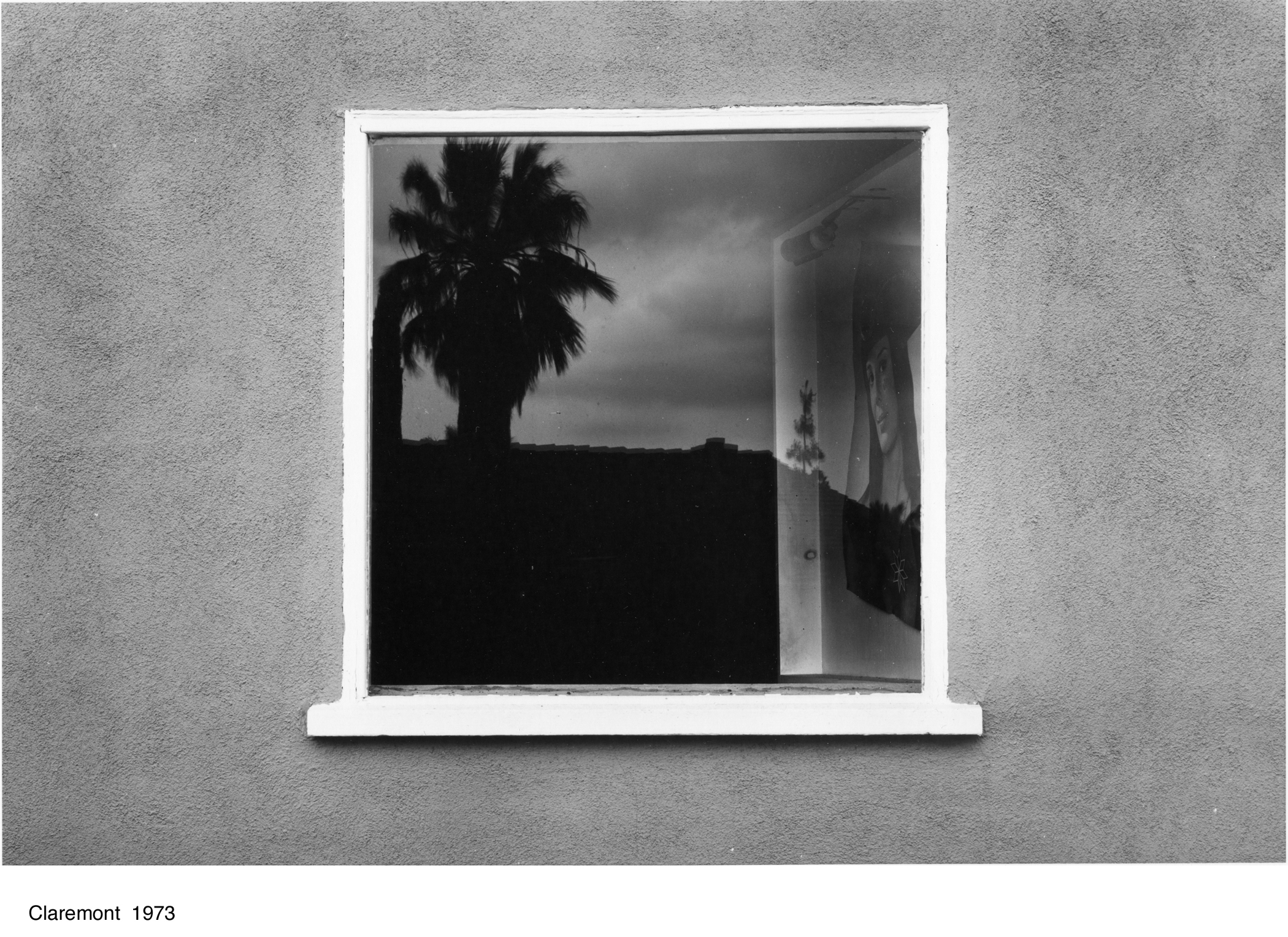
In a letter from Jonathan Williams to Gus on writing and rejection from publishers, “I suppose all one can do is persist and master seduction through good letters.” Gus is a visiting artist and lecturer at Bowling Green State University, Ohio. In a letter to friend and poet Geoff Young Gus writes, “I completely stopped drinking about two months ago. Like when I quit smoking, this seems to be the real thing: I have no desire for the sauce. The new energy level is amazing and appalling. . . .”
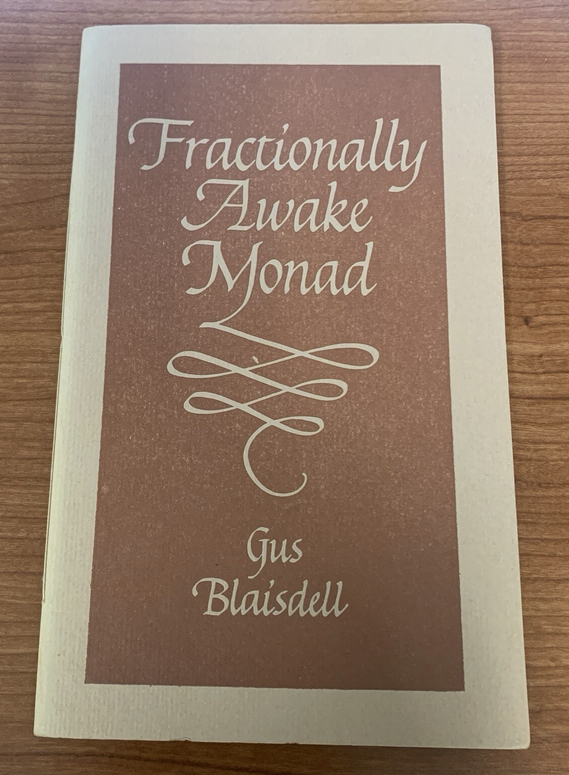
1974 Gus’s Fractionally Awake Monad, dedicated to Montgomery Furth, is published by Sand Dollar Press (publisher Jack Shoemaker’s first press imprint).
Howard McCord’s Tribal Press publishes Gus’s essay/prose/poem, O Bateau (standing for the Bar At the End of the World, with a nod to Rimbaud) in Measure 6/7, a small press magazine. In the last stanza/paragraph of O Bateau Gus writes,
“In the back room sits a poet who no longer writes. He just junks and drinks, the rhythmic lines now only bubbling in his veins, eating through his forehead, and idling numbly up from his dimming backbrain. One more seeking life like art, an intensity that burns and wrinkles, all muscles in the acetylene of alcohol. Ghosts whisper in him. But it is too late for him even to recognize the voices of those he still loves and of those who still love him. Upon the heaving bodies of women and the lips of glasses and the necks of bottles and the backs of his decaying teeth he inscribes his final poems. In gibberish, O Bateau.”
Gus writes to Howard McCord that he has a studio in Aspen for July. For the Aspen Times Gus covers the International Design Conference in Aspen (IDCA) writing about the main speakers Bobby Seale, Susan Sontag, and John Berger as well as fame, language, photography, film, society and Aspen. From June 24-26 Gus attends the Cornell Seminar on Science, Technology and Society in Aspen. He writes, “It was deadly. I am about completely resolved to get out of academe. There was another guy in the seminar, David Braybrooke, from Nova Scotia, who was a ringer for [Montgomery] Furth–Oxford trained, analytical philosopher. . . . We talked about philosophy, this and that; I gave him a lengthy piece of mine, ‘The Color of Wisdom’ (Augustine: Quem colorem habent sapientia?), contra academic philosophy; and he liked it.”
1975 Gus’s mother Mary dies in February.
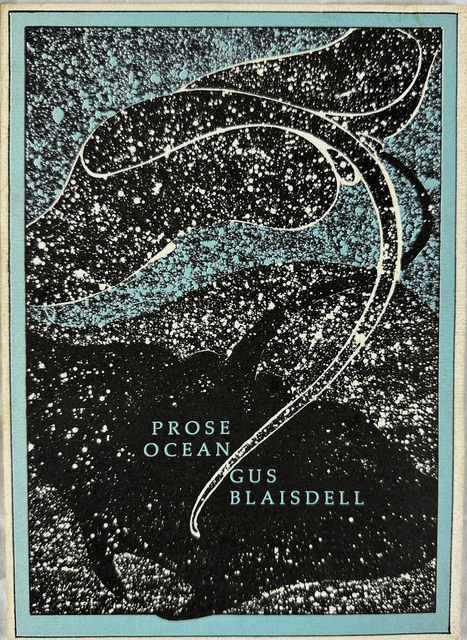
Prose Ocean by Gus, with illustrations by Chuck Miller, is published by Bear Hug Books, distributed by Serendipity Books in Berkeley.
In a letter to Ray Waddington about the settlement of his tenure lawsuit at New Mexico Tech Gus writes, “The academic shit is no hassle; I’ve been wanting to get out, unbeknownst to them, but now I must leave in tact and with a foundation for the guys behind me. . . .”
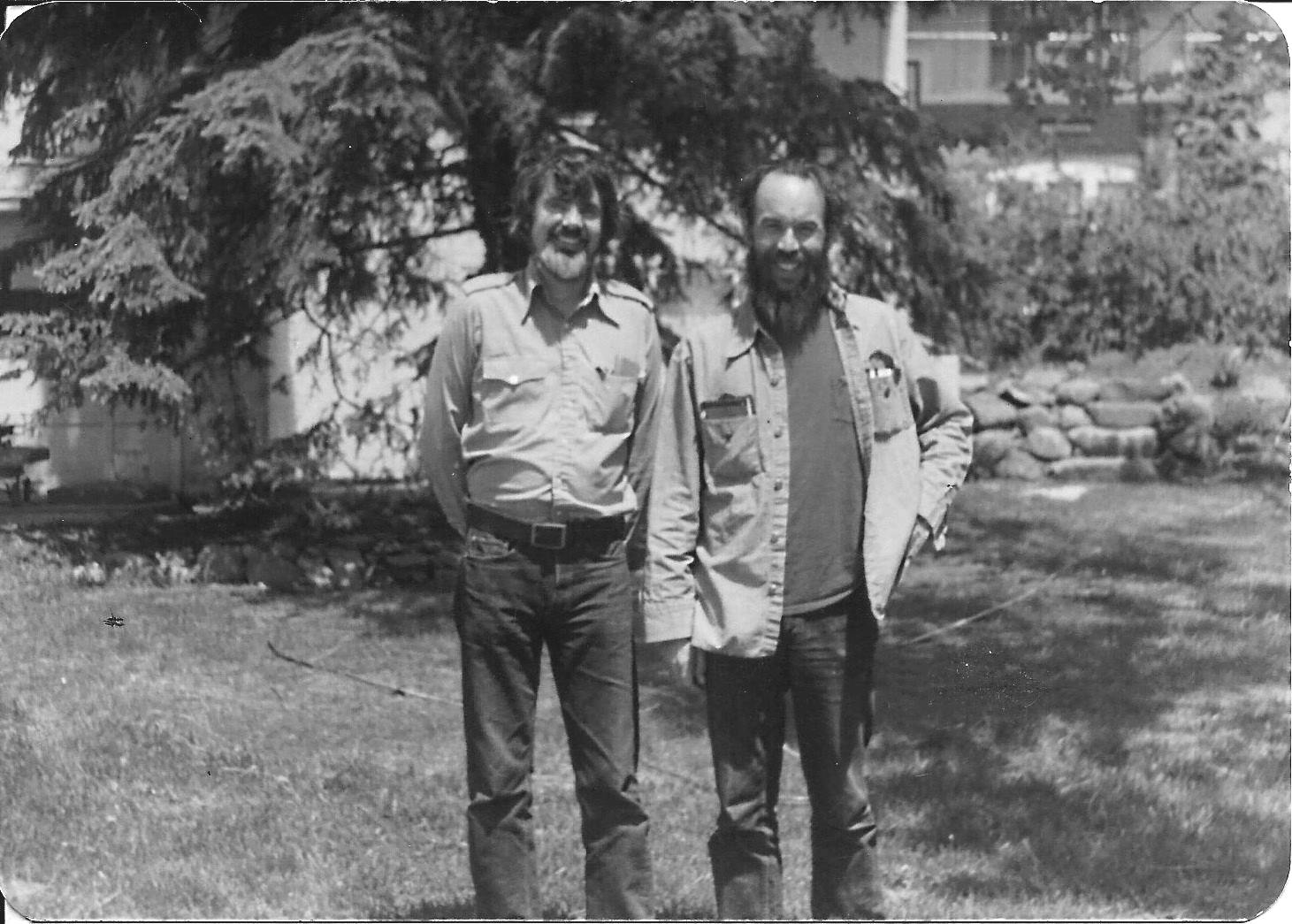
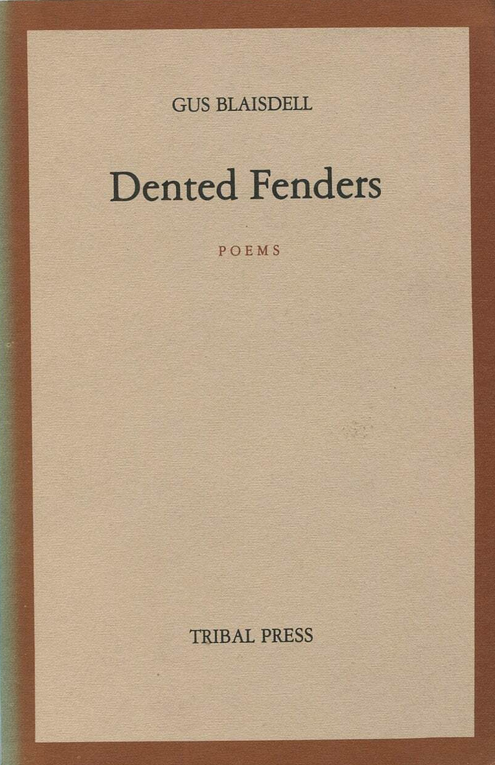
1976 Tribal Press publishes Gus’s book of poems Dented Fenders 1960-1975.
Gus reviews the Collected Essays of J. V. Cunningham for Pacific Sun Review.
His essay “Building Poems” on poet Ronald Johnson is published in Vort.
Both Gus’s father and stepfather die in 1976 within a month of each other. Gus attends his stepfather Jim Casey’s funeral. His father Norman is buried in Arlington National Cemetery. Gus inherits enough money to buy his house on Hermosa Street near the university and focus on writing, researching, teaching, and publishing.
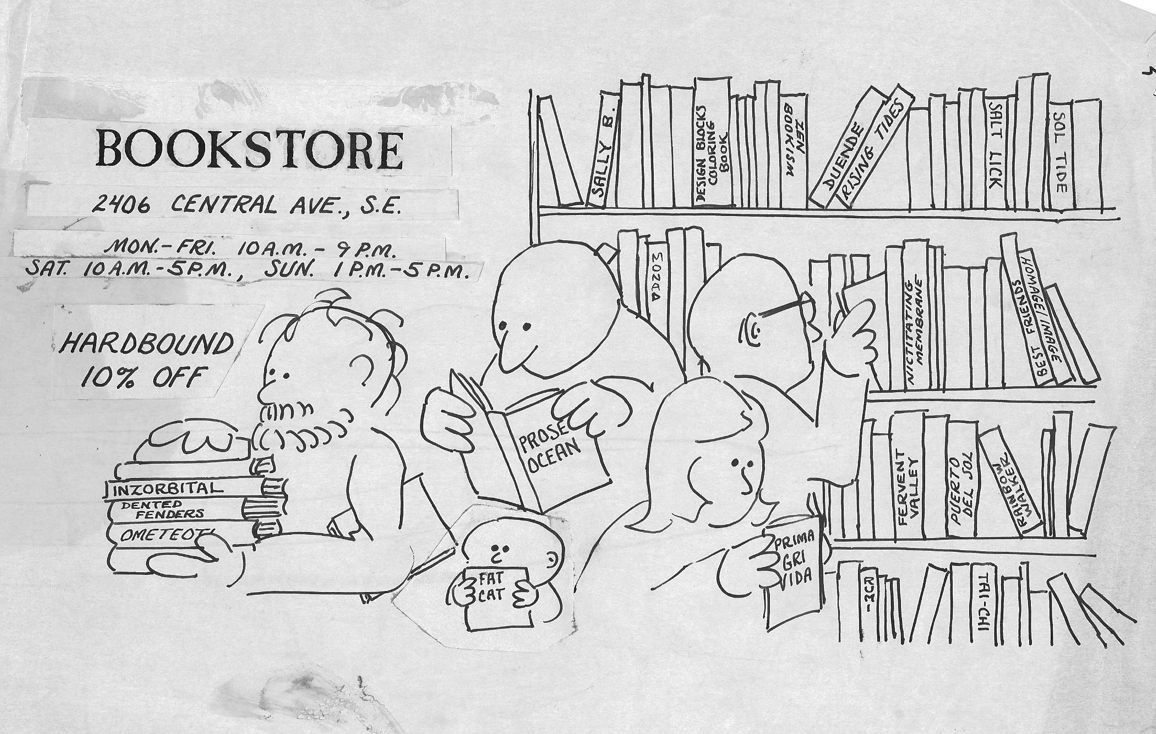
Through an agreement with Poncho Elliston, Gus becomes owner of the Living Batch Bookstore, “an alternative to an absence” in the Southwest and a place for his friends to come and read, including Edward Abbey, Allen Ginsberg, Robert Creeley, Stanley Cavell, Stanley Crawford and many more. In a newspaper article about the store Gus says, “It was an alternative to an absence. When we started there was no gay, no women, no politics, no black, no small press, no serious literature in the state. Maybe you could find the books at my place you couldn’t find anyplace else.”
He begins teaching part-time at the University of New Mexico as a lecturer in the College of Fine Arts. In December his invited address to the Poetry Division of the Modern Language Association in New York City is titled, “Philosophy’s Poet, The Skeptic.”
Gus becomes a contributing editor to Artspace, a new journal of contemporary art founded by William Peterson; the premier issue in the fall carries his essay, “Larry Goodell: Co(s)mic Clown.” For the next 17 years Artspace will provide a steady outlet for Gus’s writing.
1977 His first essay on Lewis Baltz, “BLDGS,” is published in the catalog for Three Photographic Visions, an exhibition curated by Arnold Gassan at Trisolini Gallery in Athens, Ohio and the Dayton Art Institute.
Gus inherits his mother’s house and moves Sally and the kids to San Diego.
1978 The New Mexico Arts Division’s “Poetry in the Schools” program gives Gus an award to teach in the Santa Fe Public Schools.
“A Nobler Seduction” by Gus is included in Jack Staffaucher’s Greenwood Press monograph of Plato’s Phaedrus: A Search for the Typographic Form of Plato’s Phaedrus. In a review of the monograph Gus writes:
“The real achievement of Jack’s most successful pages is a beauty noticed only on reflection: as if present first to the mind, the eye is reminded to look once again, and it suddenly sees anew, or for the very first time. This would have been a beauty close to Socrates’ heart and to his vision of truth’s nonluminous, almost beggarly plainness. The fact that one must reflect in order to capture the beauties of pages designed to be effortlessly readable is itself a Platonic notion, since it is through memory that the philosopher is enabled to maintain himself ‘always perfectly initiated into perfect mysteries’; and it is through such earthly beauty that he is recalled to his initial glimpses of true being.”
Gus and Felice Gonzales marry.
1979 Gus is a National Endowment for the Arts Literature Fellowship recipient. His essay on concrete poetry titled, “Viz., Poetry” is published in New Mexico Studies in the Fine Arts.
Through Artspace, Gus and Lewis Baltz receive a National Endowment for the Arts grant for Park City. The collaborative project quickly outgrows the scope of the NEA grant and Baltz’s New York dealer, Leo Castelli, steps in to finance its completion.
1980 Gus is a literary consultant for his friend Jack Shoemaker at North Point Press, San Francisco, from its inception until its closing. He agents and edits many books including Saint Augustine’s Pigeon by Evan Connell. To Geoff Young, he writes, “Best novel in ms, William [S.] Wilson’s Birthplace, astonishingly original, what one would hope for, expect, and then more. . . . I want to get it to North Point”
Park City with photographs by Lewis Baltz and Gus Blaisdell’s essay “Skeptical Landscapes” is published by Artspace Press and Castelli Graphics in cooperation with Aperture.
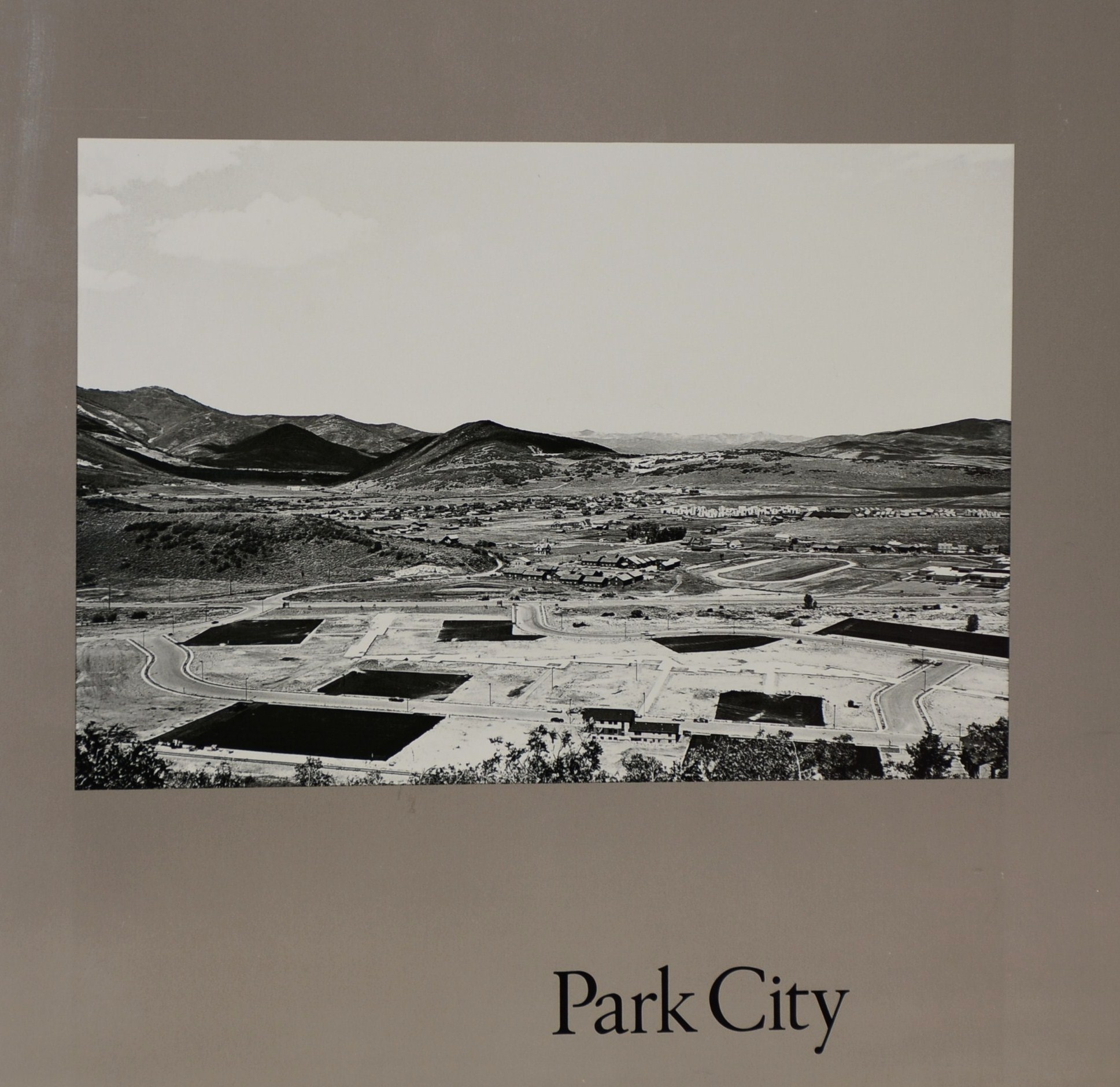

1982 Park City launches Gus on a whirlwind lecturing tour: Symposium Uber Photographia IV, Graz, Austria; Werkstadt fur Fotographie, Berlin; Oakland Art Museum, “Formal Issues in Recent Photographs;” University of California, Davis, “Eleven Contemporary Photographers;” New Topographics panel (Lewis Baltz, Gus Blaisdell, Joe Deal, Henry Wessel Jr.), Institute of Contemporary Art, University of Pennsylvania.
Gus and Felice divorce.
Gus’s monograph Guy Williams: Recent Paintings is published to accompany the painter’s solo exhibition at the Los Angeles Municipal Art Gallery.

Academic roadblocks occur throughout Gus’s teaching. In 1982, Sam B. Girgus, the Chair of American Studies at UNM, writes a letter, as do others, attesting to his capabilities:
“Every university gathers around itself people of outstanding intellectual and creative qualities who lack the conventional certification that is usually required for advanced or graduate instruction. Such a person is Gus Blaisdell. I met Gus Blaisdell my first day on campus as a professor when Joel Jones introduced me to him on the grounds that Gus was an invaluable and impeccable source of new ideas and important intellectual trends. Since that time I have discovered that he serves a similar function for countless members of this academic community. He has taught innumerable courses for the university through many different departments and programs. He has an outstanding reputation among the faculty for the depth and range of his learning and erudition and for his critical brilliance.”
1984 In an Albuquerque Journal article Gus says that education is the biggest investment the state has, but New Mexico has yet to recognize that fact. “Education is radical because it keeps democracy alive,” he said. “As soon as you reach a certain level of ignorance, democracy has had it. The system is pretty flabby now.”
Gus works as a volunteer teacher at Freedom High School and volunteers at the Albuquerque Mediation Center in addition to teaching at UNM.
1985 Gus goes to study at Harvard with Stanley Cavell. He and Janet sublet the Boston-area house of their anthropologist friends Dennis and Barbara Tedlock. On his return home after six months in Cambridge, he writes to Stanley, “Beloved friend . . . Coming home I have never more deeply and profoundly loved the empty, dimensionless vastness of the West. I am indeed a Westerner. The sky was empty blue and had no end, the mountains accidents of horizon, and it went up so clearly and so infinitely that as you looked at it you had trouble remembering that it was in front of your eyes and not the color of consciousness itself, a blue suffusion of mind.”
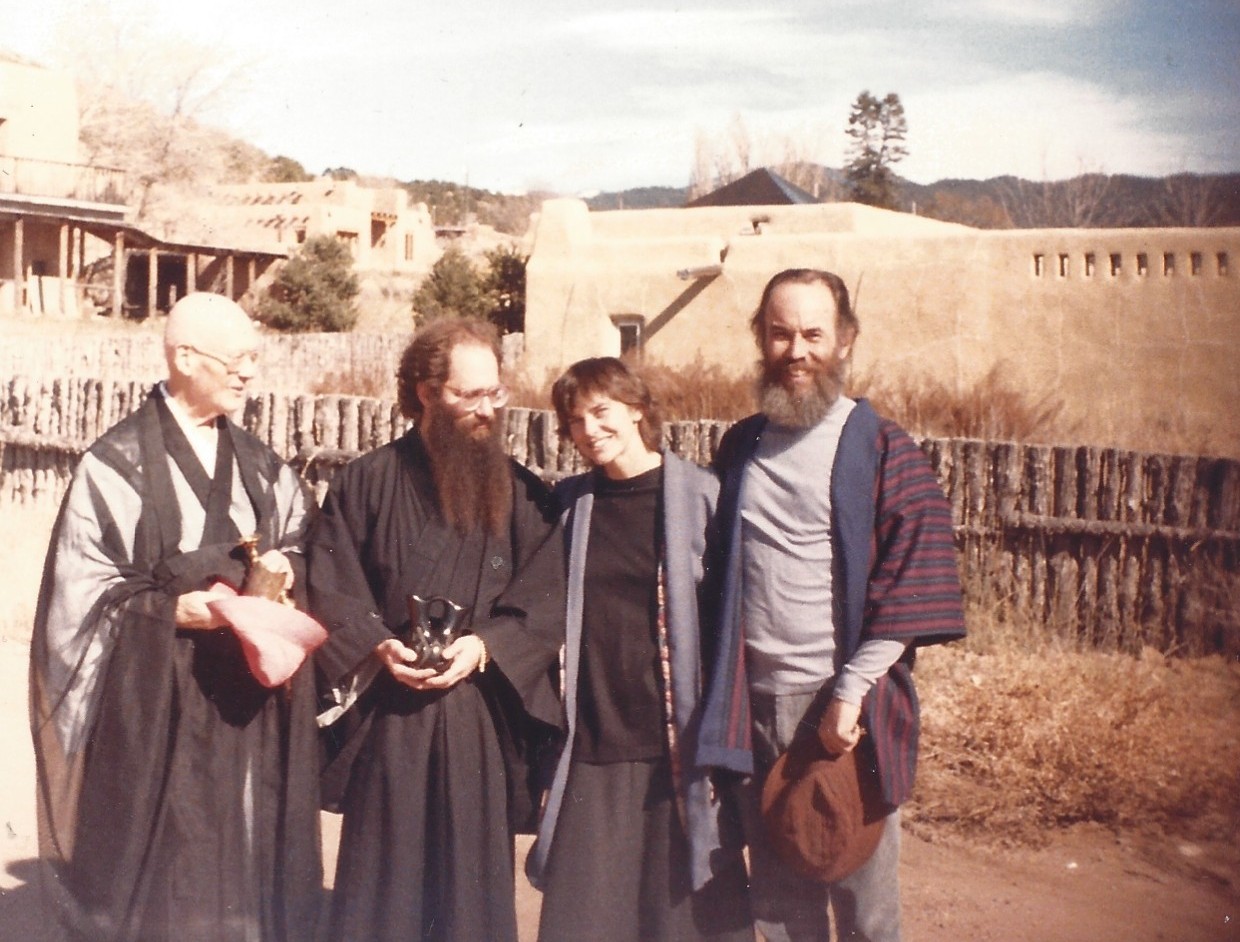
Gus and Janet are married in a Zen ceremony conducted by poet Philip Whalen.
1986 Gus is invited to speak about his and Lewis Baltz’s collaboration on Park City and other projects at the Fall Conference South-Central Region of the Society for Photographic Education hosted by the University of Arkansas at Little Rock.
1987 In Aspen Gus speaks about friendship at Irving Thalberg’s memorial service. “There are remarkable friendships. Their depths and faith do not require confined presence. Years may intervene before we see one another again but on being together it was only yesterday and we resume a conversation suspended or unfinished or barely begun generations ago. Such friendships are trepanation for death, as is philosophy when it comes to its senses. Death is final, one conversant is gone, an irrevocable interruption.”
1988 Gus sends his friend Stanley Crawford’s memoir Mayordomo to UNM Press, where it is published and wins a Western States Book Award. He reissues Crawford’s 1977 novel The Log of the SS. Mrs. Unguentine, the first under his Living Batch imprint. From the bookstore’s newsletter, Living Batch News:

“LIVING BATCH ENTERS PUBLISHING . . . The first two [books] are Stanley Cavell’s This New Yet Unapproachable America and Stanley Crawford’s classic and long-unattainable The Log of the S.S. Mrs. Unguentine. Reasons for the press? To make some of what we believe in available and to produce at reasonable prices and in typographically handsome (readable) formats lost (and original) books of lasting interest. A simpler reason is enthusiasm. When I read Cavell’s lectures on Wittgenstein as a cultural philosopher and Emerson as finding and beginning the founding of American culture, I felt that if I ever wanted to publish, here was an opportunity not to be missed. For years I have tried to interest publishers in printing Crawford’s novel. . . . With Cavell as foundation and Crawford as the first couple of bricks I had more than I needed to move on. I trust such conviction will continue and the little wall of books will stretch like a new course of masonry, brick by brick, book by book, until we have a foot or so of our own choosing on our and others’ shelves.”
Gus and Janet divorce.
Gus helps Ira Jaffe to bring important speakers for the International Cinema Lecture Series at UNM, including Dusan Makavejev, Tony Bill, Robert Gardner, Ross McElwee, Kaja Silverman, Stan Brakhage, Walter Murch, Marianne Keane, and others.
1989 Gus writes his essay “Afterworld” for photographer Joel-Peter Witkin’s book,
Gods of Earth and Heaven.
Gus’s essay “Space begins because we look away from where we are” for Lewis Baltz’s book Candlestick Point is printed in both English and Japanese.
1991 Living Batch Press publishes poet Gene Frumkin’s Comma in the Ear.
Rule without Exception, the catalog for Lewis Baltz’s retrospective at the Des Moines Art Center and the Los Angeles County Museum of Art, contains Gus’s essays “Still Moving” and “Space begins because we look away from where we are.”
1992 On Martin Luther King’s birthday Gus marries his last wife, Elizabeth Major, a prosecuting attorney, outstanding cook, and pianist.
Gus is the acting chair of the Media Arts Department at UNM filling in for his friend Ira Jaffe. In a letter to Robert Creeley he writes, “I’m chair of film for the year, Ira on a much needed sabbatical. The dean said I needn’t attend chairs’ and directors’ meetings, a weekly waste of 4 hours every Monday. Why, I asked. ‘Your impatience and candor are well known.’ ‘But if I have something?’ Then I’ll put you first on the agenda.’ . . . As it used to ‘pay to be ignorant,’ it now pays to be bad.”
Goodbye Matilija by poet Alan Stephens is published by Gus’s Living Batch Press with graphic design by Jeff Bryan, Batch employee and friend.
1993 Gus reprints Vampire Tapestry by Suzy Charnas in a “handsome trade paperback edition,” according to Charnas. Gus’s friend, the artist Joyce Kozloff, creates the cover and chapter illustrations for the book. It is the first book to make a “fine” profit for the press. Living Batch Press also reprints The Aficionado’s Southwestern Cookbook by poet Ronald Johnson (originally published at Gus’s suggestion by UNM Press in 1970).
In June he gives a talk on Yvor Winters and Harte Crane at the Poetry Conference at the University of Maine, Oronon.
1995 North Point’s The Collected Stories of Evan Connell is dedicated to Gus. In an interview Gus says, “A new image of man–I think that’s exactly what Evan is up to. There is too much humor merely to be blackly prophetic. Humor is the form hope takes. He’s not just pissing anger. He doesn’t belittle, though he may chide and scold. We reform ourselves out of what we already are.”
1996 Gus gives a rousing lecture/performance on the Beat poets at UNM’s Art Museum.
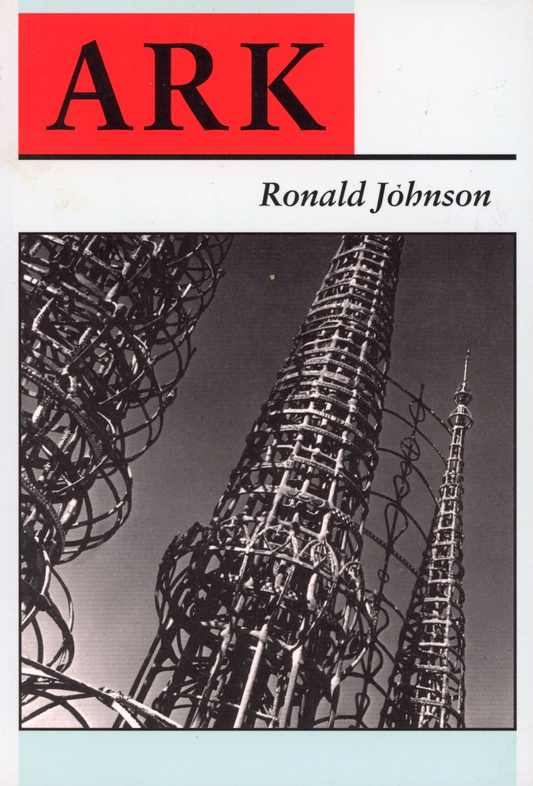
Living Batch Press publishes ARK by Ronald Johnson. Gus calls it, “The work of a lifetime.” On the back cover of ARK Robert Creeley writes, “Twenty years in the making, Ronald Johnson’s ARK is a defining, proposing and securing work of singular beauty and resolution. It takes its legitimate place with the great works of the century of like kind, Ezra Pound’s Cantos, Louis Zukofsky’s ‘A’, Charles Olson’s Maximus and Robert Duncan’s Passages. Its own specific character is, however, brilliantly singular.”
Robert Creeley gives the last invited reading at the Living Batch Bookstore.
In a December article on the closing of the Living Batch bookstore Gus says that “a literary period of mass readership for the small bookstore is passing out of democratic politics. I think inexpensive books should be available to a large number of people, if they want to read.
So, through various circumstances, we have become extinct.”
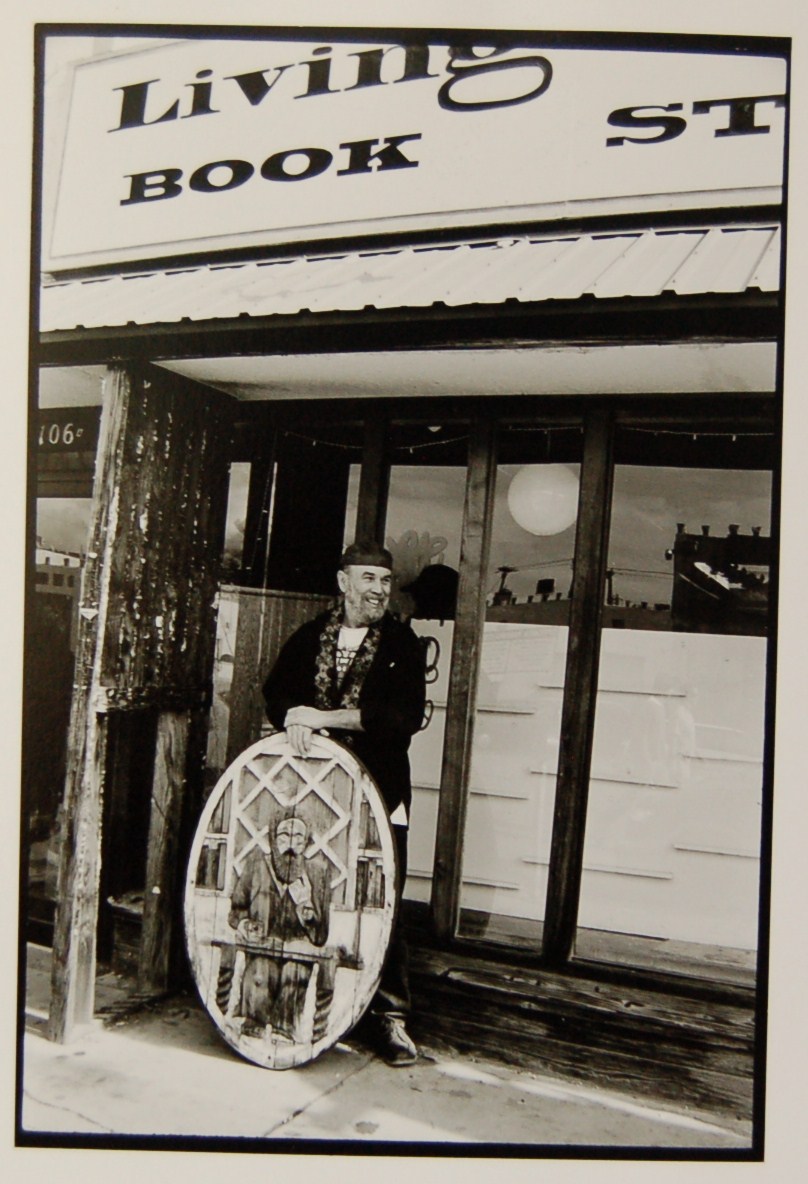
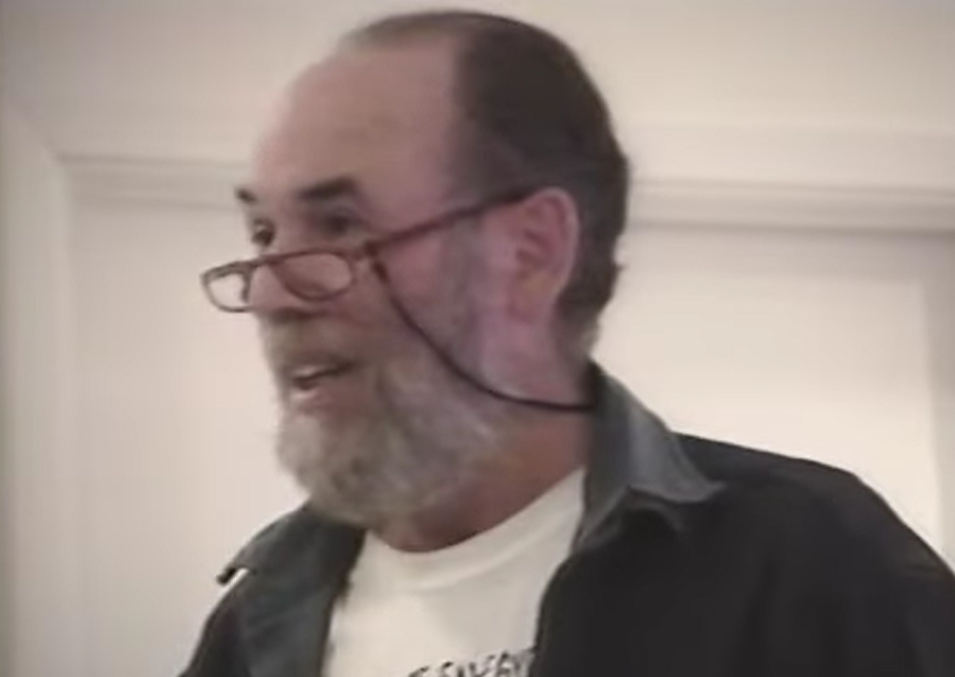
1997 In January daughter Nicole follows Gus around the empty bookstore with her video camera, shooting footage for her video documentary portrait, His Heaviness. As he looks around the desolate bookstore Gus says:
“I don’t like what publishing has become. What we’ve seen progressively here is that the kind of material that we sell doesn’t sell to younger readers because the prices are so high—and the publishers won’t give you an economic break, they want everything in 30 days—but they also want you to build up a back list which you can’t do in 30 days.
“So politically I really object to the younger reader being priced out of the market. The book has become a luxury object wrapped up in indecipherable images…it belongs to the boomers and the yuppies, that’s not universally true but that’s sort of what the big machine maintained inventories are all about. There’s no difference really between a Barnes and Noble and a Price Club (Costco). They are all these huge temples to commodities…pyramids built around commodities and not around the dead…And the tradeoff for that is that if a machine maintains your inventory that means the human being can forget about it—so you get Mac clerks who are just selling Mac books.”
Away from the Road by poet Alan Stevens is the first publication under Gus’s new imprint, drive he sd books.
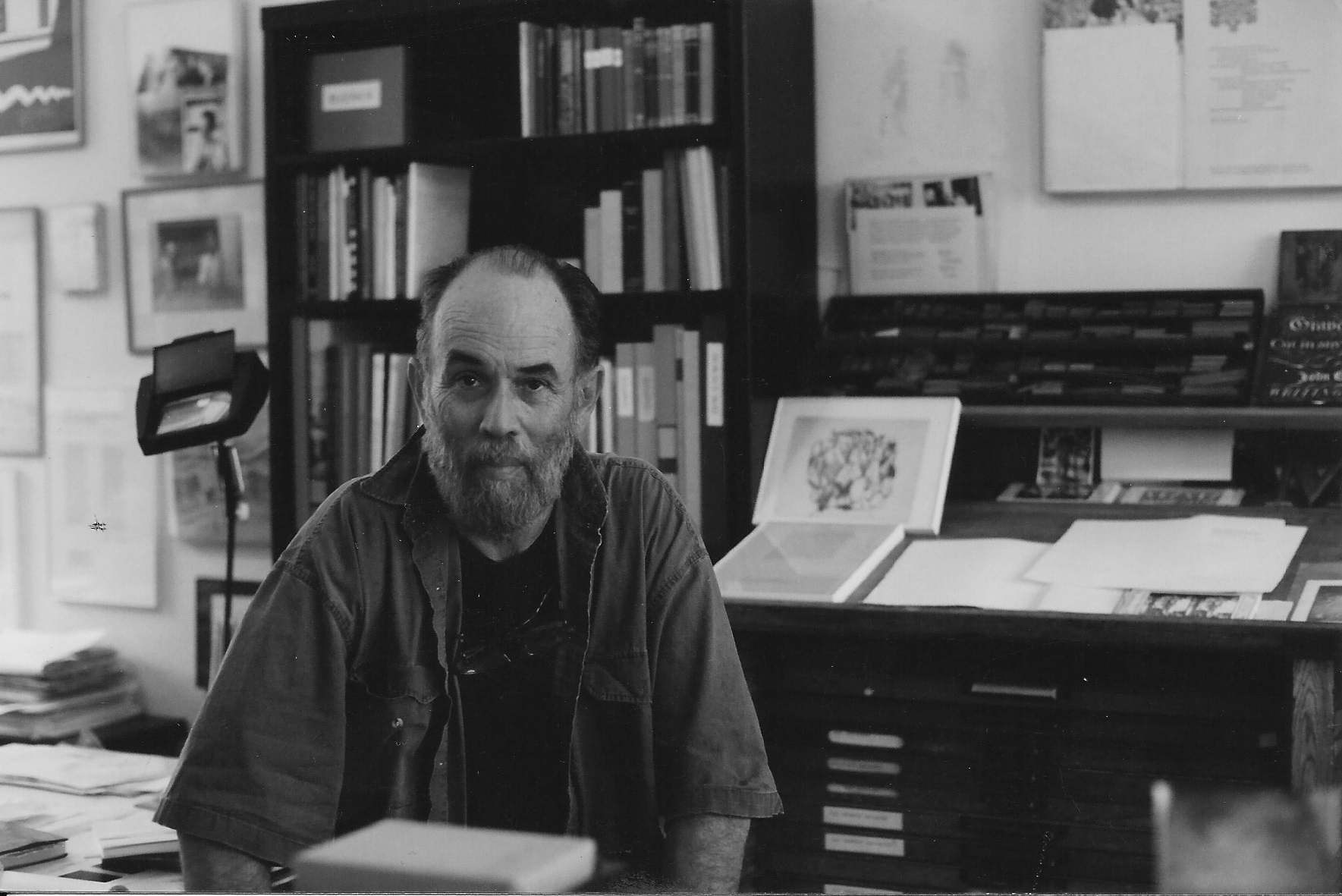
1998 Gus writes “A Vigorous Lucidity” for Jack Stauffacher’s book, A Typographic Journey: The History of the Greenwood Press. A note before the essay reads, “My friendship with Gus Blasidell began in the early sixties when I returned to San Francisco to reestablish the press. When I was working on Phaedrus, he helped me in so many ways with the Supplement, writing a short essay titled, ‘A Nobler Seduction.’” Gus’s biographical note at the end reads, “Gus Blaisdell closed the Living Batch Bookstore in Albuquerque after twenty-seven years. He continues its spirit with the Living Batch Press, a small press soon to be renamed drive he sd press in honor of Creeley’s poem ‘I Know a Man.’ He teaches film studies at the University of New Mexico.”
1999 From Gus’s computer: “28 Sept. 5:09 AM: Unannounced episode beginning at 6:30 yesterday 9/27. Hand much worse, shoulder numb and right pectoral too. Rt hand barely works to type this. Speech slurred too but that seems to have passed. On walk last evening, 7:00, aura moiré in right eye for unusual 20 min. Slight numbness right ear. A little sweaty, but can’t tell if that is part or not. So head, ear, down to right pect and arm and hand much worse.”
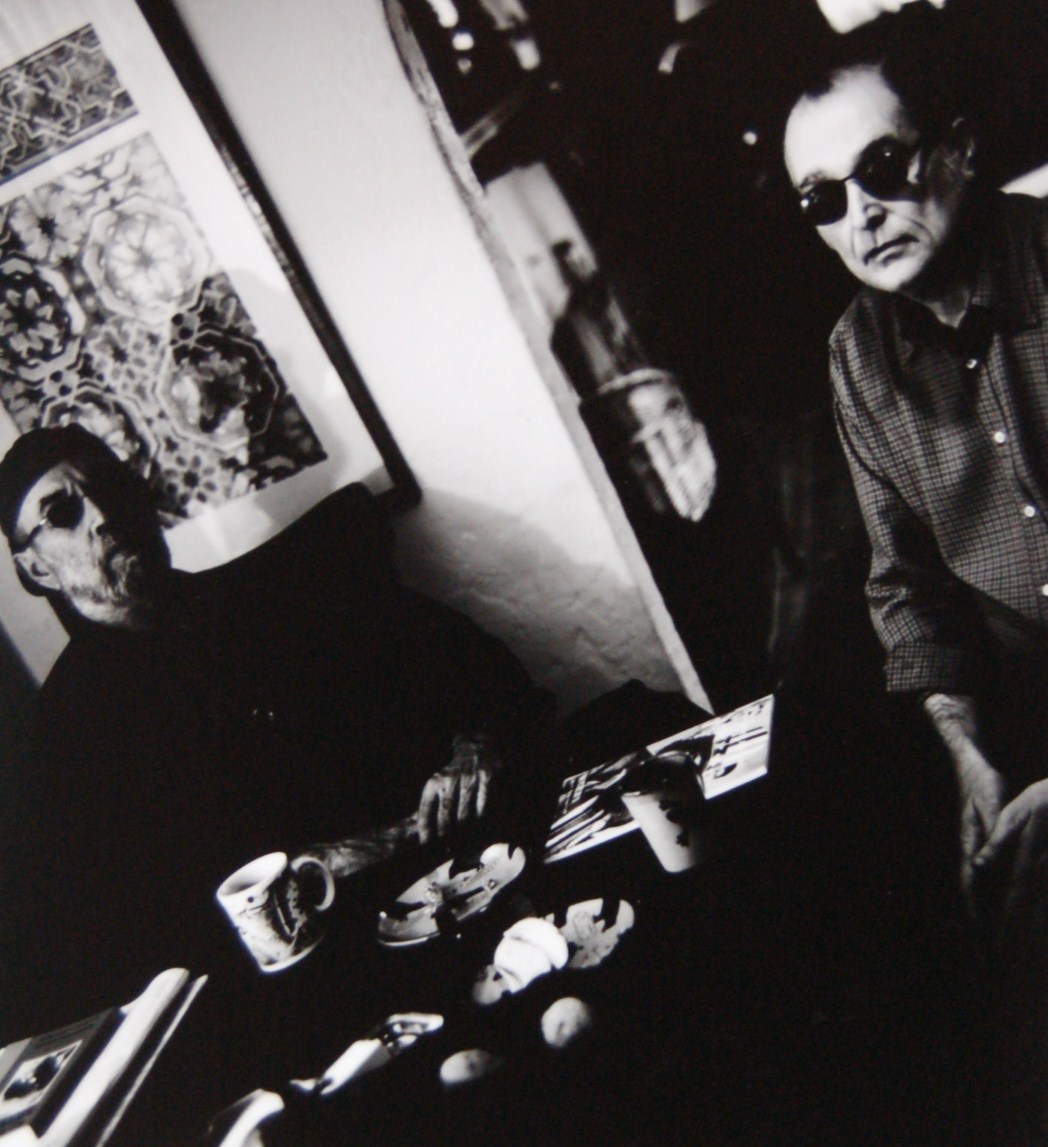
Now It’s Jazz by Clark Coolidge and Cerulean Embankments by Geoffrey Young are published by Gus under his drive he sd books imprint.
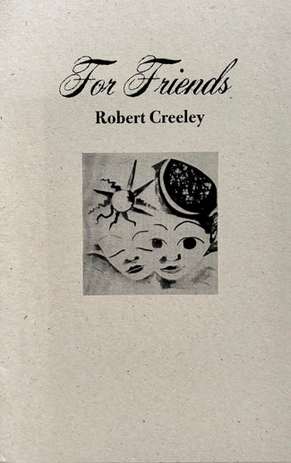
2000 For Robert Creeley’s reading at The Outpost performance space Gus publishes a chapbook of Creeley’s poems entitled For Friends, the last for Gus’s drive he sd books imprint.
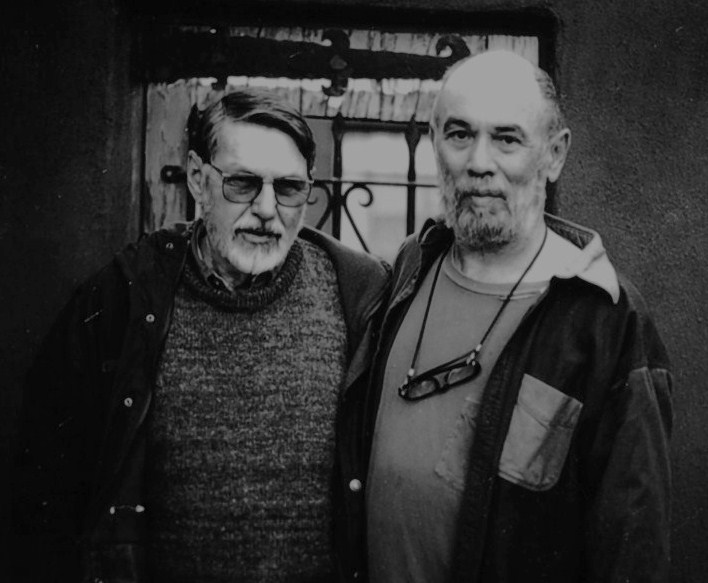
For photographer John Gossage’s portfolio Hey Fuckface! Gus writes the accompanying pamphlet “From ‘Obscenity in Thy Mother’s Milk.”’
In November Gus is an invited speaker at the Yvor Winters Centenary Symposium at Stanford University, organized by poet and longtime friend Kenneth Fields, along with Thom Gunn, Donald Hall, Helen Pinkerton, Ann Hayes, Dana Gioia, R. L. Barth, and others.
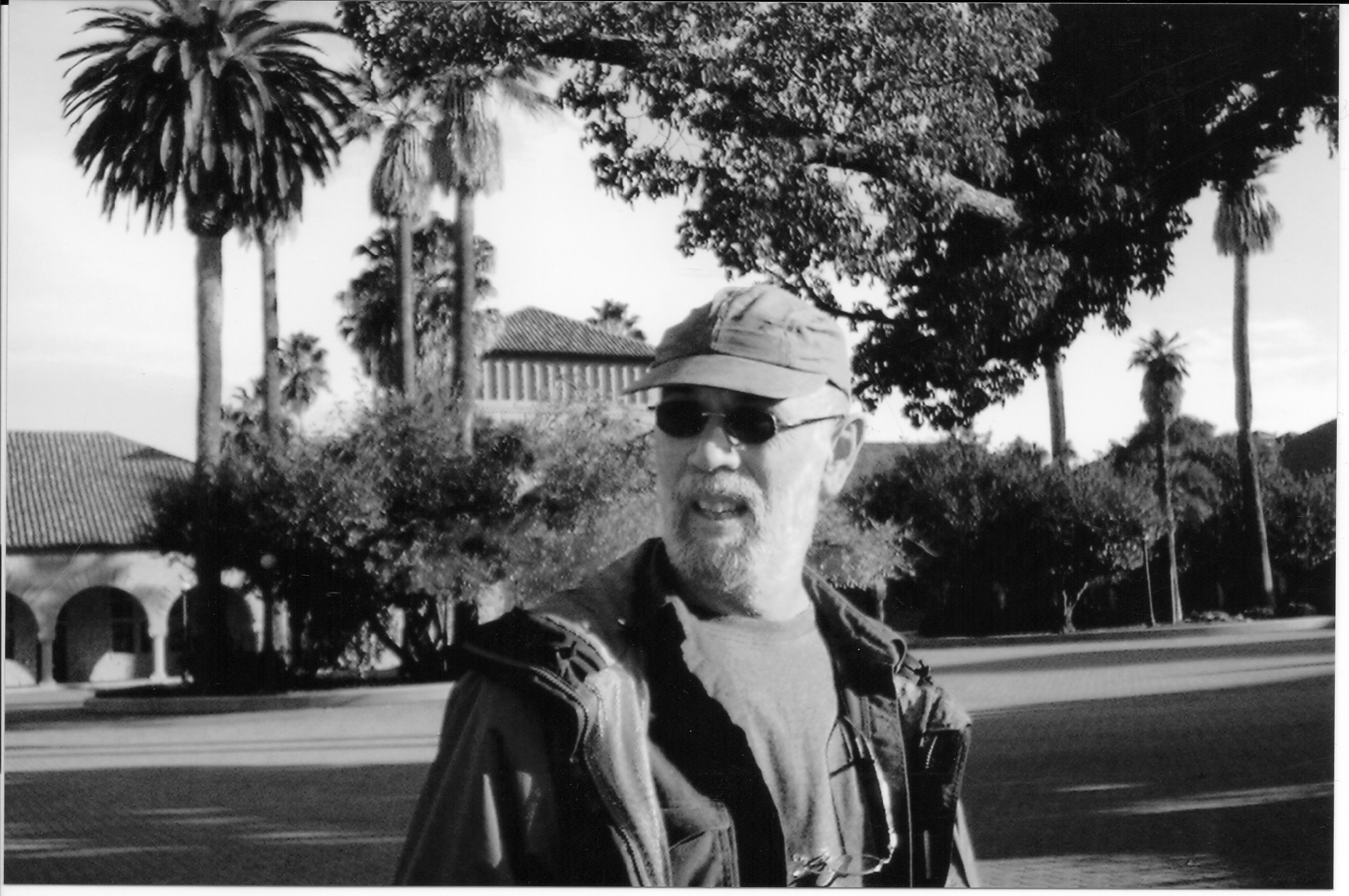
Comedian Marc Maron (WTF) pays tribute to Gus in an email titled, “acknowledge thy guru”:
“Buddha–
“Summer break, 1982. I walk into the Batch. There is a poster up for a beatnik
Summit at Naropa. I’m filled with excitement and ready to borrow my Dad’s Mercedes to drive up and live it. Then, the Wizard of Lizard City speaks,
“‘Why do you want to go up there and see those geriatrics? I met Kerouac. He was drunk and babbling. Live like a tree, Neal.’
“If it hadn’t been for that moment of perspective I might have spent my college years selling Dead bootlegs in arena parking lots.
“. . . No worries, Obi Wan! The riff seeds you planted have spread rhizome style throughout my consciousness. . . . You are etched in the credits of my soul.”
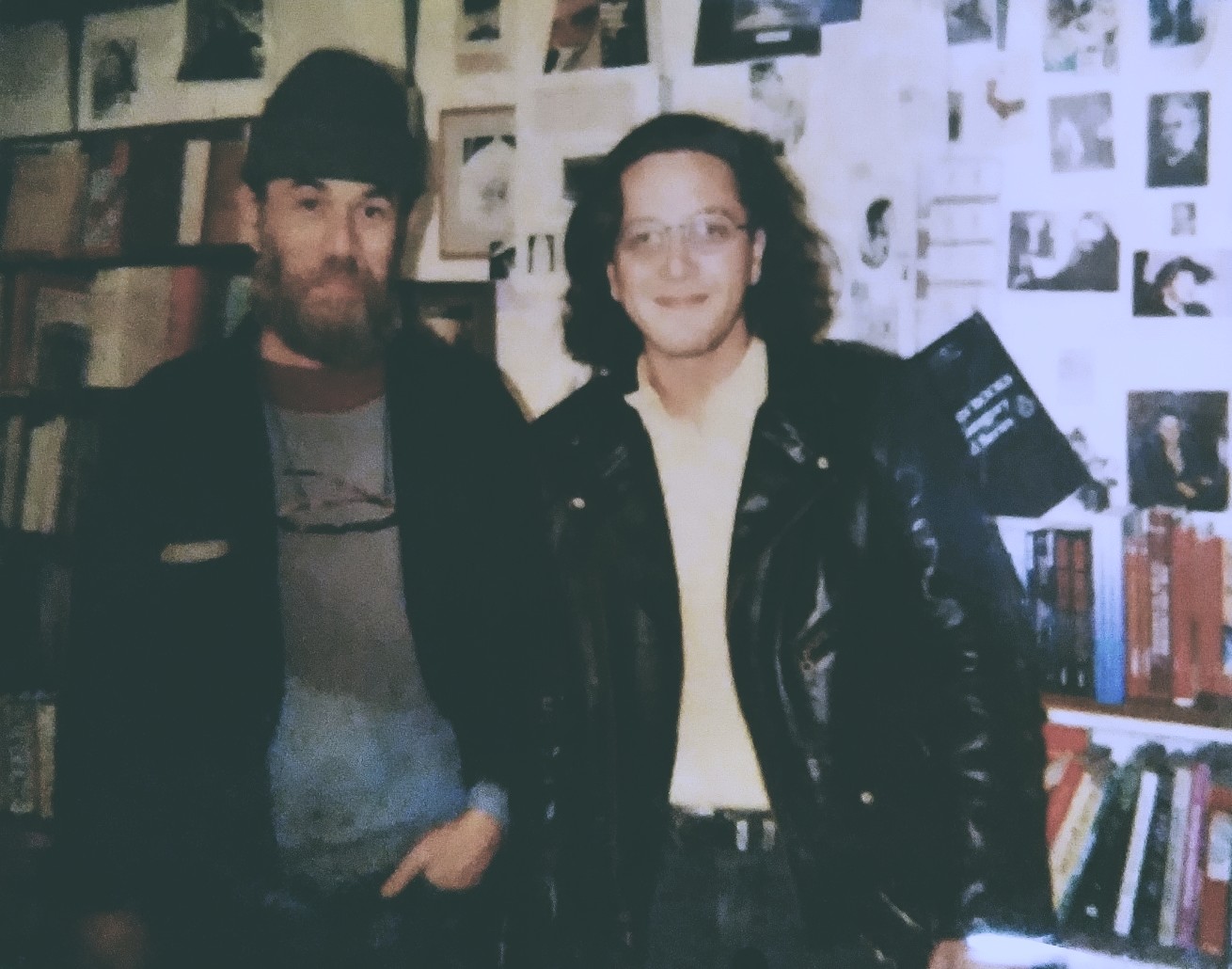
2001 His essay “Black Lacquer Bucket” on friend and artist Allan Graham is published in the book Toadhouse / Allan Graham by the Tucson Museum of Art.
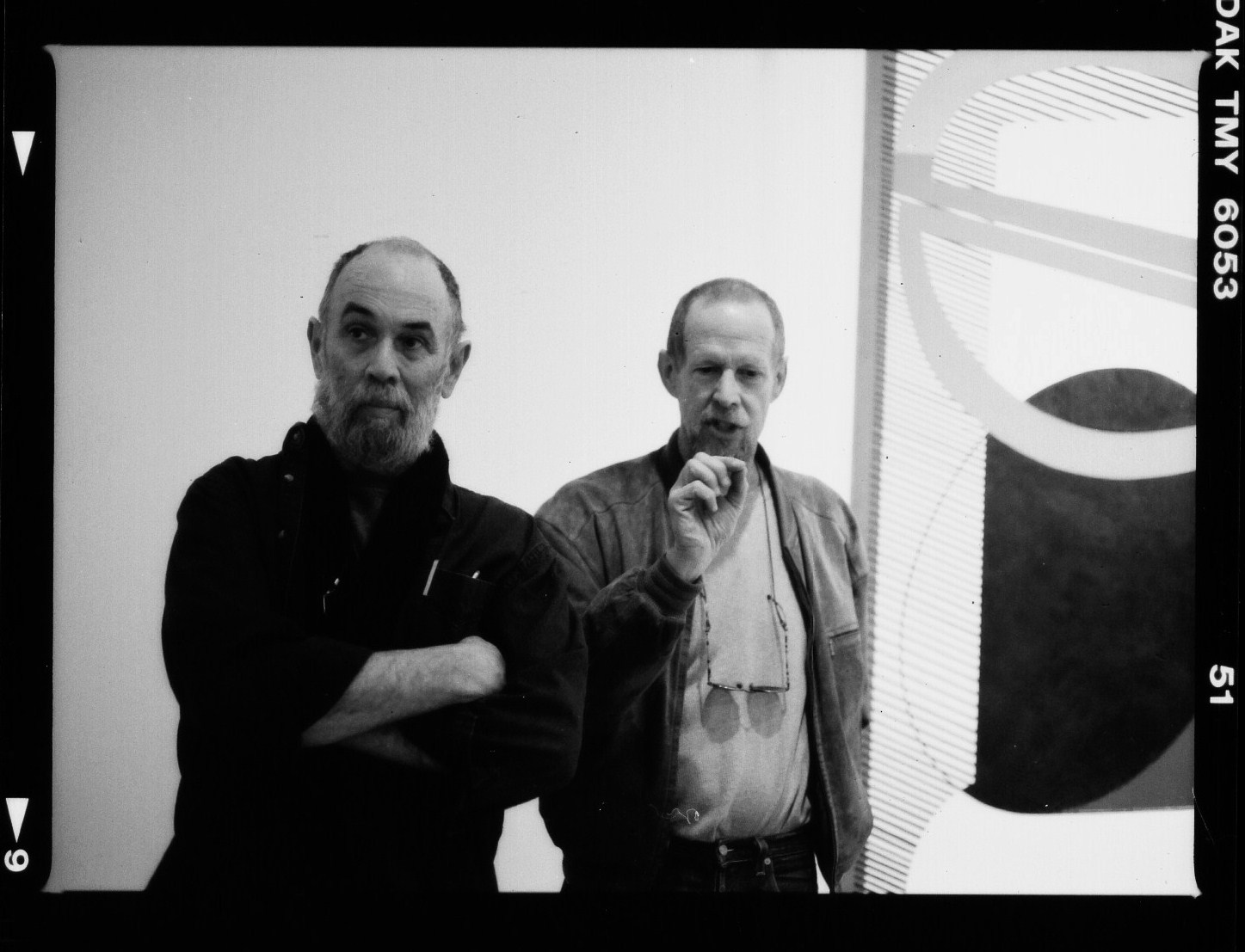
The traveling exhibition, “In Company: Robert Creeley’s Collaborations” comes to the UNM Art Museum. The assistant director asks Creeley if they could film him walking around discussing the work. Creeley agrees, but only if Gus can accompany him. He wanted someone who really understood his work.
2002 Gus writes, “Thirteen Ways of NOT Looking at a Gossage” for John Gossage’s book The Romance Industry.
2003 Gus interviews the artist Constance De Jong for her book Metal, published by UNM Press. In May Gus and Elizabeth travel to Italy, for Gossage art opening, art and adventure. On their way home they visit dear artist friends in New York.
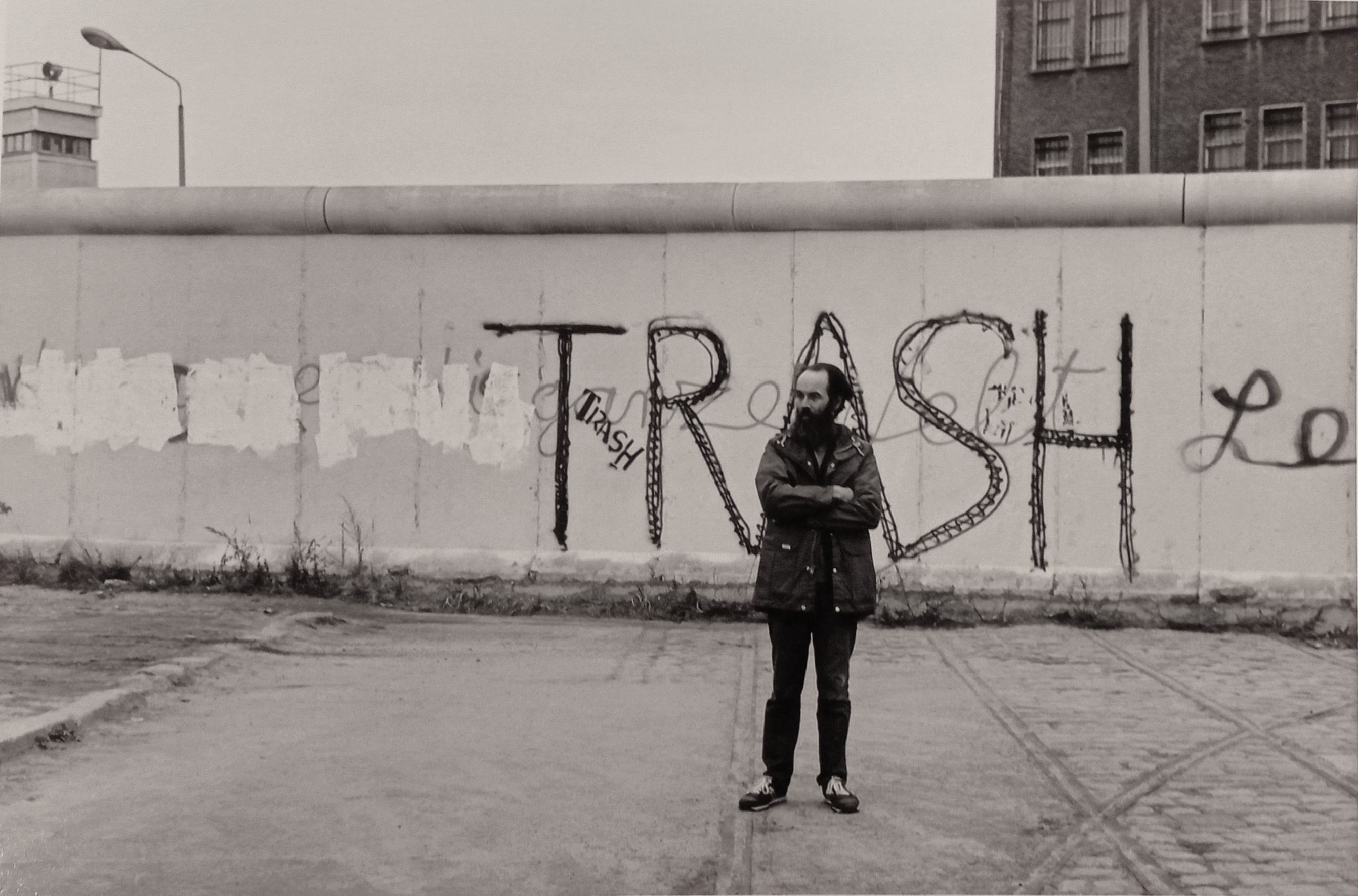
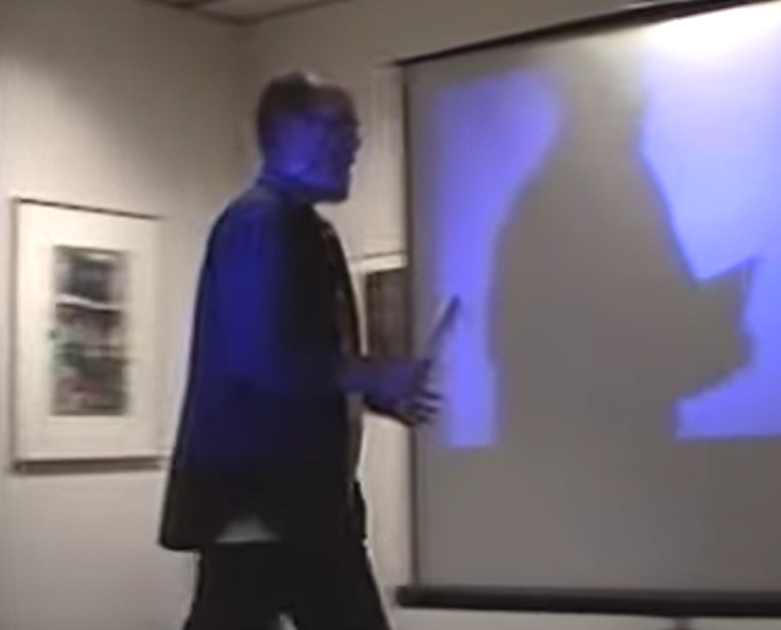
On September 17, a clear starry night, after lecturing on the Japanese film Pages of Madness (1926), Gus succumbs to a heart attack in the parking lot behind the Frontier Restaurant, a spot in the alleyway that perfectly intersects with the back of his old Living Batch Bookstore. Midwife Carol Brightwater, pulling out of the parking lot, notices people standing around. She sees someone on the ground, jumps out of her car and says, “What are you people doing?” With her brother’s help she administers CPR but finds no pulse. She says, “I’m not sure how long he was lying there, a few people were milling around at the edges uncertainly. I believe they were unable to go to him because of the strength of his presence, but because I deal with helping bring life into this world, and sometimes out of it, I was able to go to him. I could sense this great presence and I felt that my brother and I were meant to be there to help with his transition.”
The last entry in his notebook that day is a poem begun about two types of horses in Japanese prints–the Samurai’s horse and the pack horse.
The Death That Capsizes All Reproach
For Gus
Saw his mute overthrow as a sign
there would be difficulties at the edge
of time. Just when things looked auspicious,
his heart attacked
and the whole system went south.
I would have loved to find him new rhythm,
juice his stride for another ten years.
But no such luck. The inevitable flat-on-the-back
figure in hospital, looking peaceful,
displacing who in fact is departed;
the great word machine adjourned,
the great vocal capability not even
whispering one final valediction.
–Bill Pearlman
On September 23, in the UNM Alumni chapel, designed by John Gaw Meem, a friend of Yvor Winters, Gus’s memorial service overflowed with friends, family, four of his five wives, and his stalker. When the last speaker, his widow Elizabeth, finished, Bob Dylan’s Knockin on Heaven’s Door began. As the mourners stood to leave the Rolling Stones’ Sympathy for the Devil filled the chapel, along with tears, and the crowd moved reluctantly out into the waning light.
2004 Photographer John Gossage’s dedicates his monumental book, Berlin in the Time of the Wall, to Gus.
In Company: an Anthology of New Mexico Poets after 1960 published by UNM Press includes four of Gus’s poems, among them an untitled poem:
In my hand a smooth black stone. Still wet and cold
In my staring eyes, so still, the winter sea
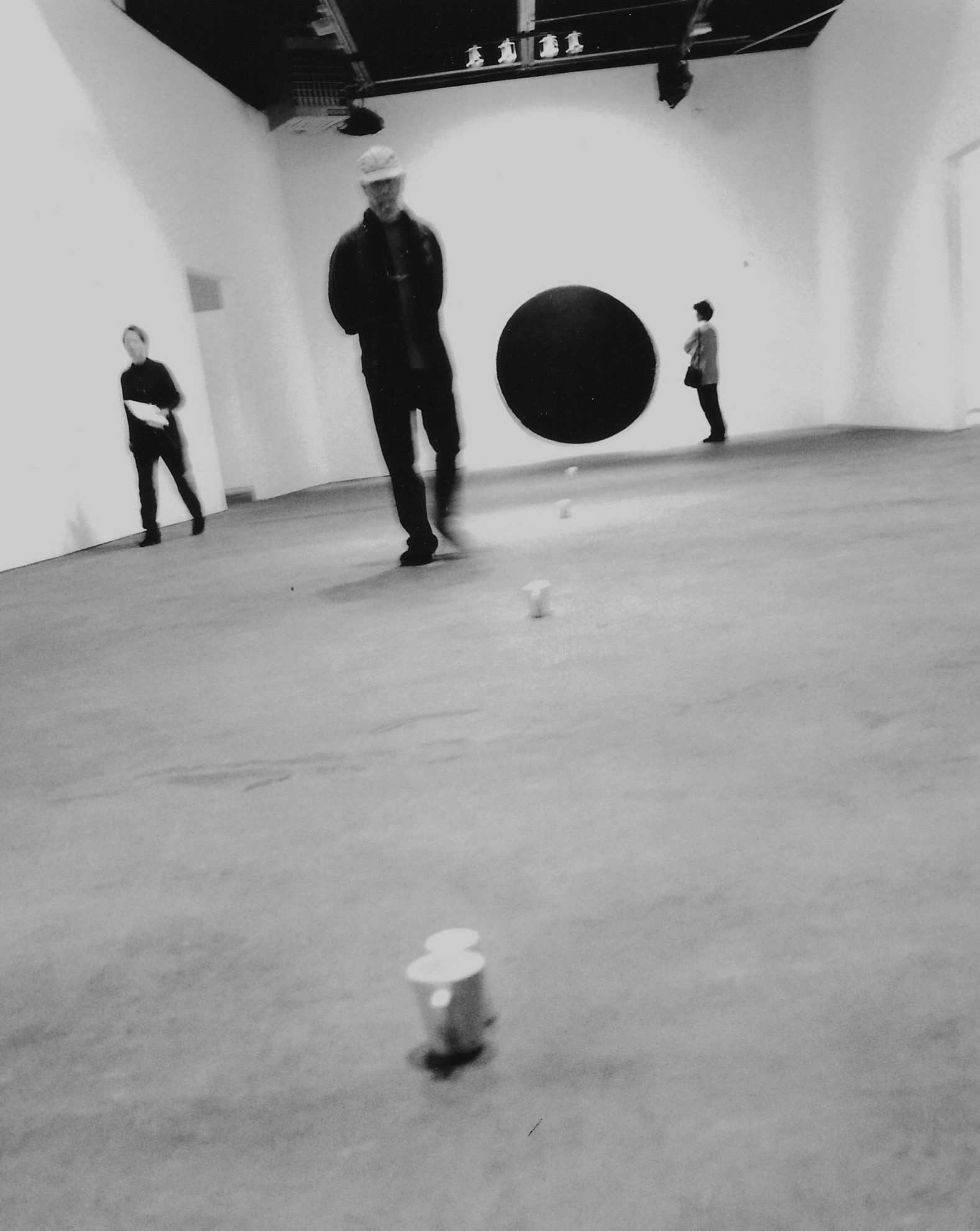
A postcard from photographer Lewis Baltz to artist poet Geoff Young:
“Dear Geoff, Just returned from Paris to find your ‘O Hermie, O Augie’ [an edited collection of letters between Geoff and Gus] waiting for me. I’ve never properly mourned Gus because I’ve never really believed that he is dead. I’m perfectly prepared to accept the Death of God, even the Death of Art, but the Death of Gus is inconceivable. Hearing his voice–loud and clear–in ‘O Hermie’ reconfirms my belief that Gus is immortal and eternal. –Duke.”
In the end, let Gus have the last word:
“I was walking in the hills the other night. It was clear, the moon down, and hosts of stars were clearly visible. I thought of that letter from the young meteorologist to his beloved from Stalingrad–the one which ends that though he thought in light years he always felt in seconds. As I mused I wished that I knew more astronomy, that I could with ease identify galaxies, constellations, and nebulas. To do this, I suddenly realized, I would have to consult books, would have to turn my face from the sky to the page in order to gain a knowledge that would both enhance and transcend my simple seeing. I saw a triangulation: me, a book, and the starry skies. Yes, Mallarmé, all the world is there simply to be put into a book. But the books are there so that the world may be returned to its proper place. And in translation what is it that we leave behind?”


You are no doubt, his flesh & blood. Reading this sitting