
October 2, 1937 – January 25, 2024
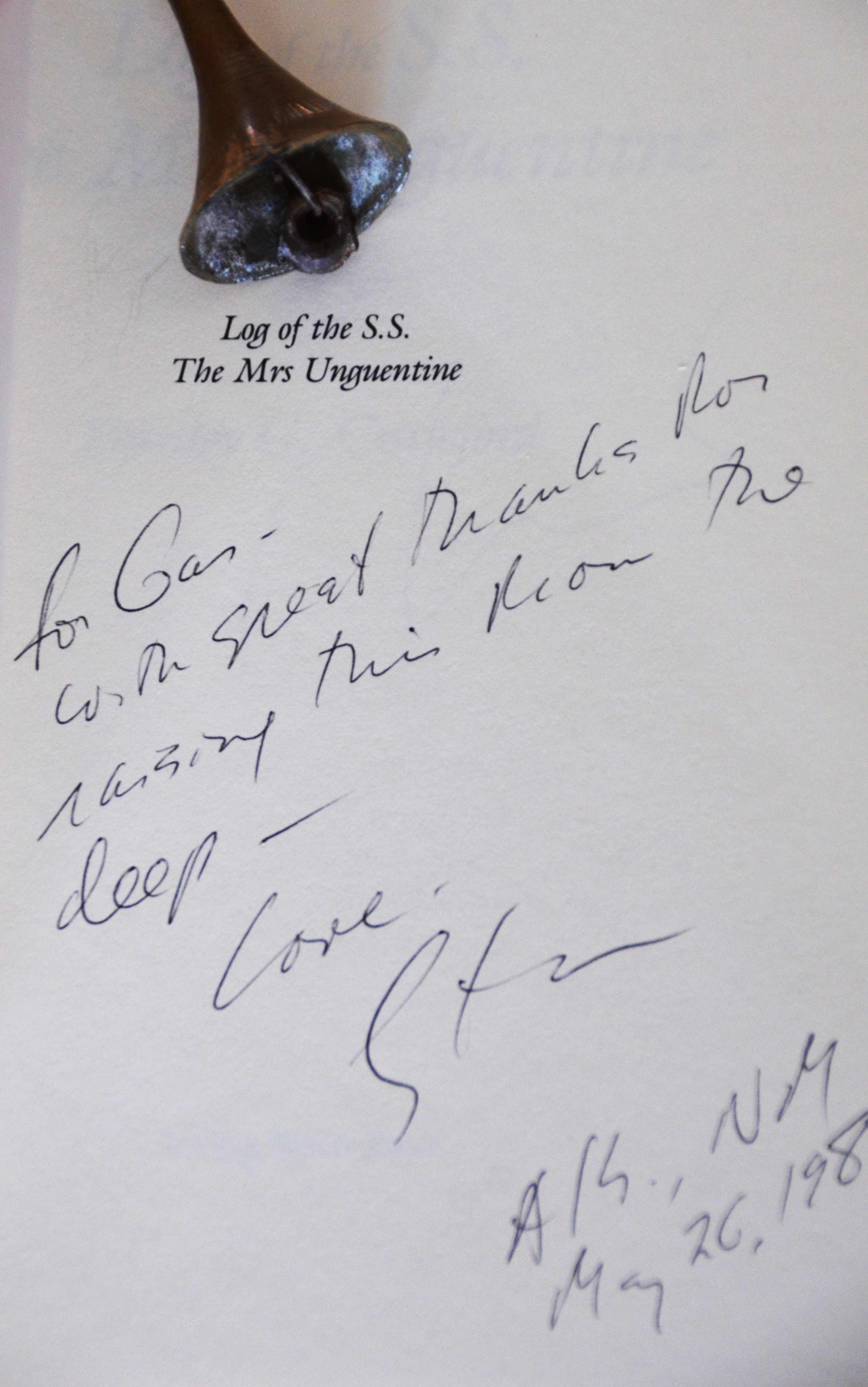
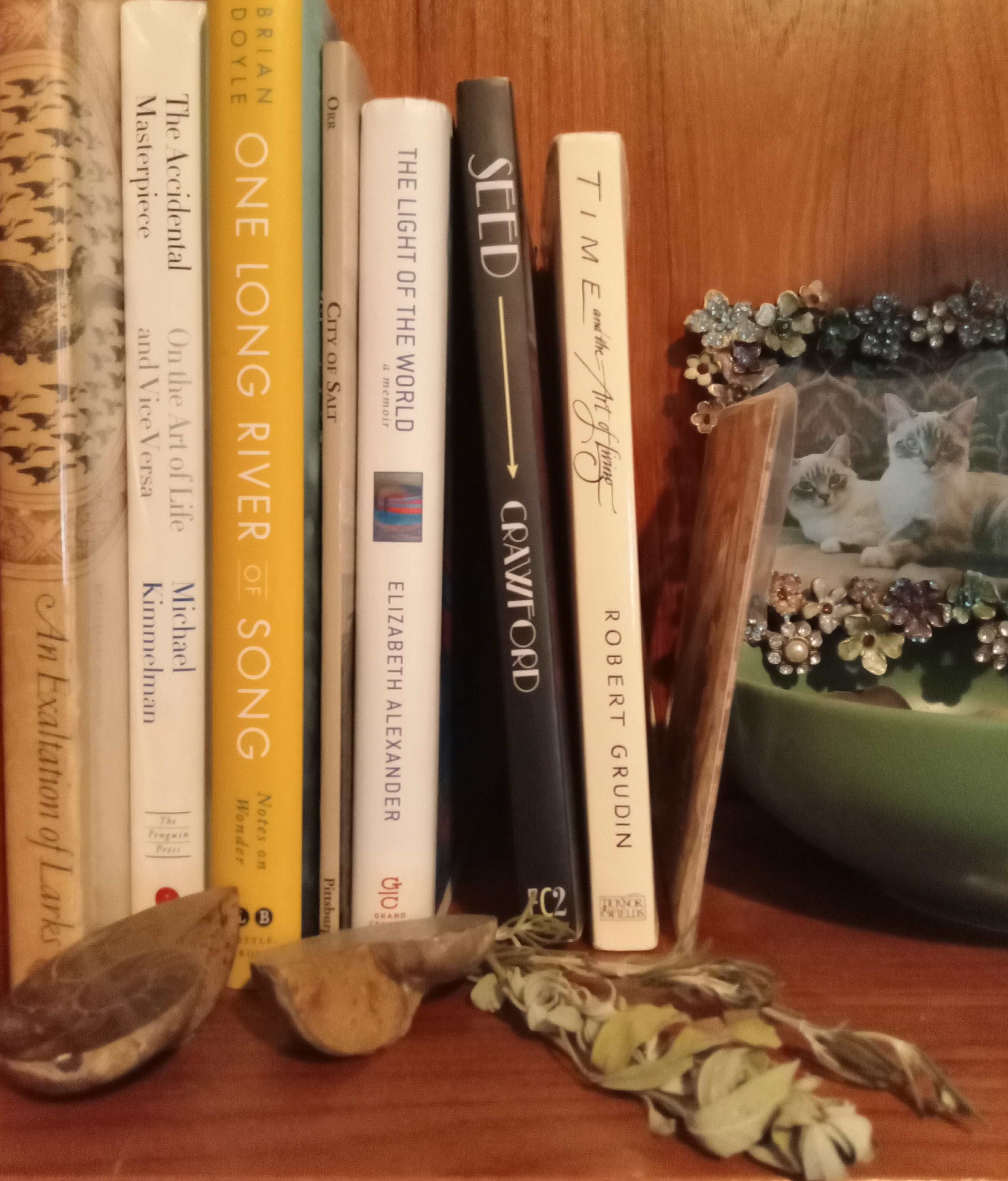
Eternally grateful for all the SEEDS dear Stanley
love, Nicole
FRAGMENTS
Gus becomes friends with Stanley and Rose Mary Crawford in the 1970’s. He champions Stanley’s writings for the rest of his life.

Gus sends Stanley Crawford’s memoir Mayordomo to editor and friend Beth Hadas at the University of New Mexico Press, where it is published in 1988 and wins a Western States Book Award.


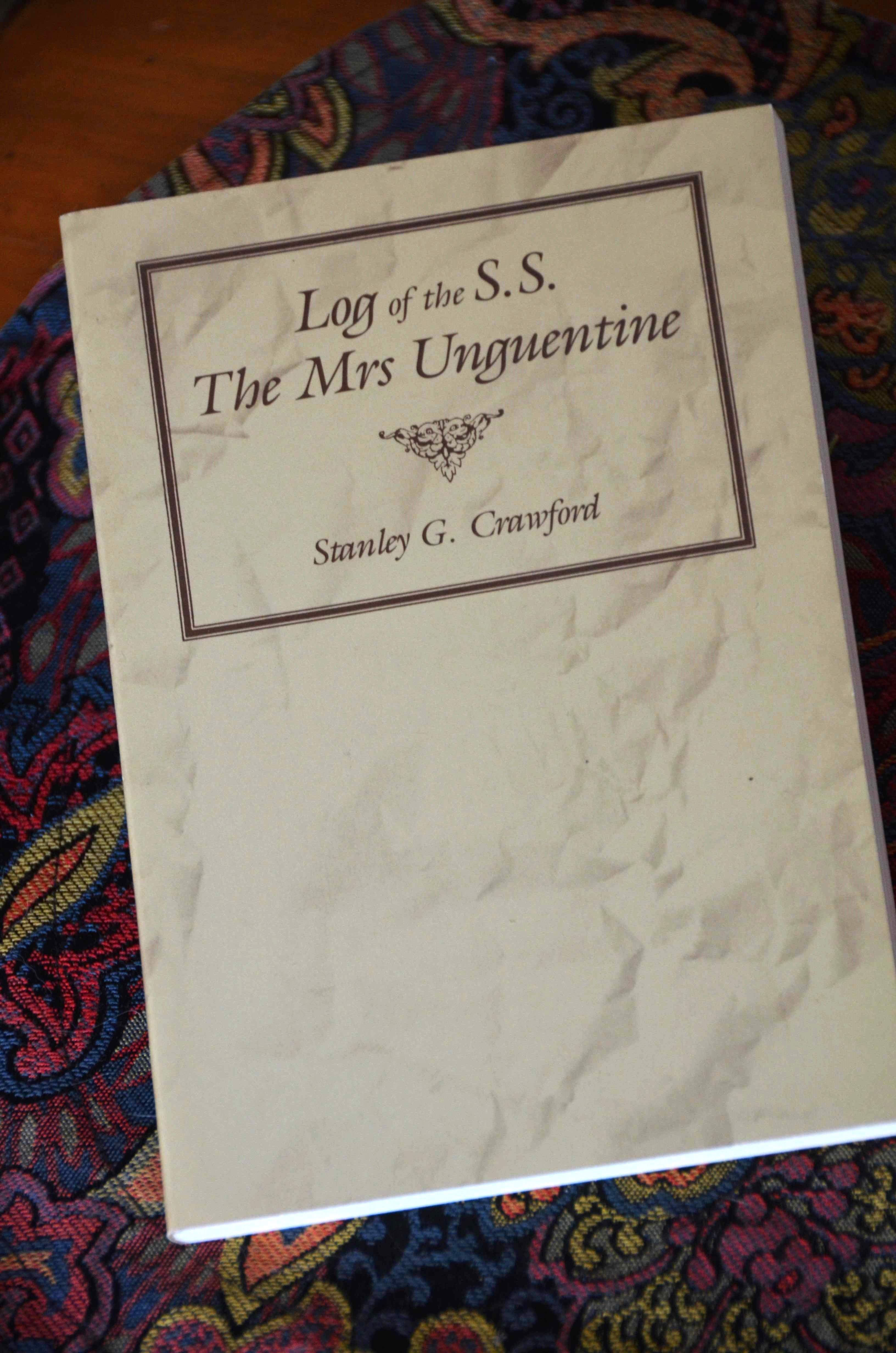
Gus reissues Crawford’s 1972 novel The Log of the SS The Mrs Unguentine, the first under his Living Batch Press imprint.
From the LIVING BATCH NEWS, “LIVING BATCH ENTERS PUBLISHING…The first two (books) are Stanley Cavells’ THIS NEW YET UNAPPROACHABLE AMERICA and Stanley Crawford’s classic and long-unattainable LOG OF THE S.S. THE MRS. UNGUENTINE… Reasons for the press? To make some of what we believe in and to produce at reasonable prices and in typographically handsome (readable) formats lost (and original) books of lasting interest..A simpler reason is enthusiasm. When I read Cavells’ lectures on Wittgenstein as a cultural philosopher and Emerson as finding and beginning the founding of American culture, I felt that if I ever wanted to publish, here was an opportunity not to be missed. For years, I have tried to interest publishers in printing Crawford’s novel…With Cavell as foundation and Crawford as the first couple of bricks I had more than I needed to move on. I trust such conviction will continue and the little wall of books will stretch like a new course of masonry, brick by brick, book by book, until we have a foot or so of or own choosing on ours and others’ shelves.
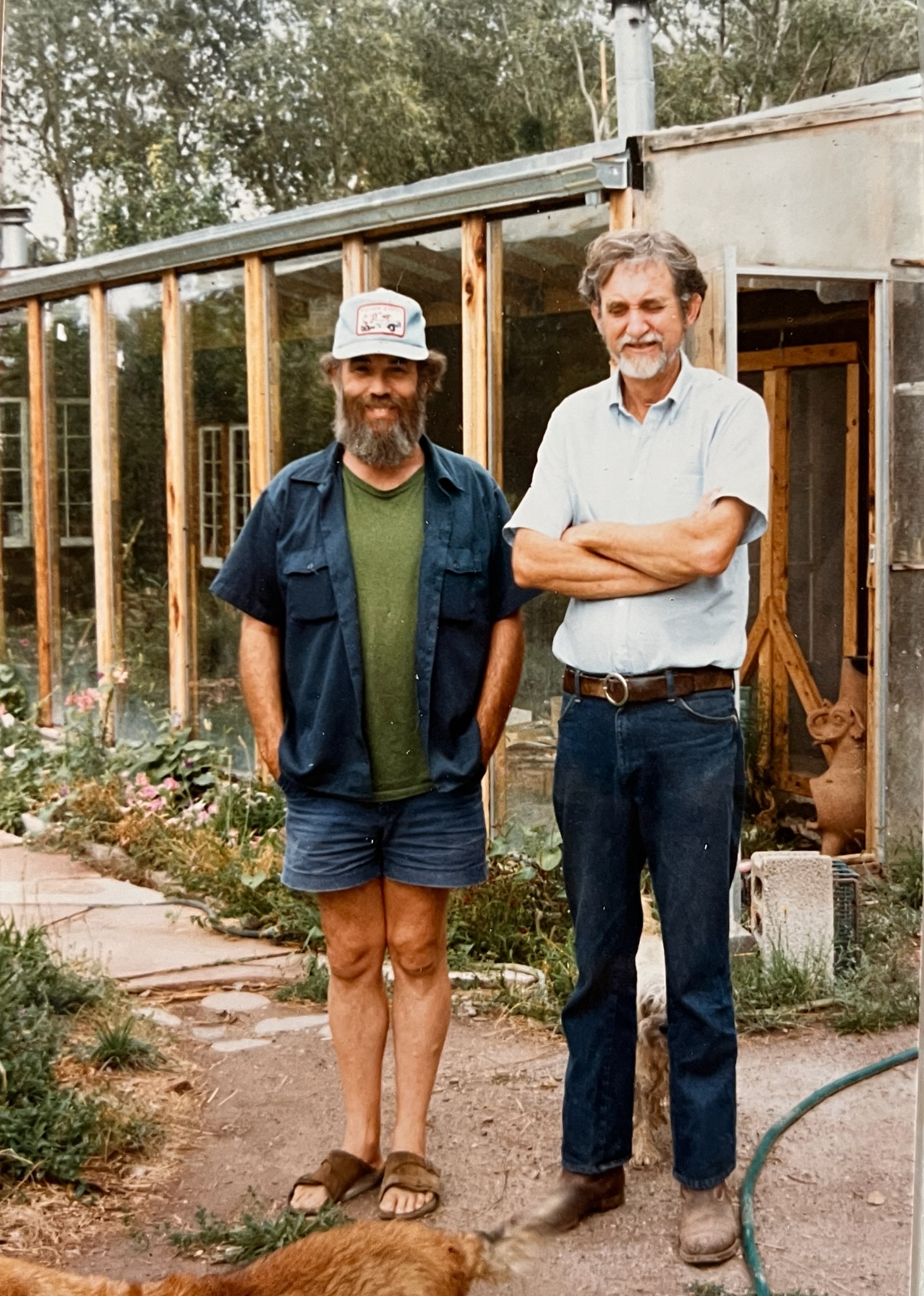
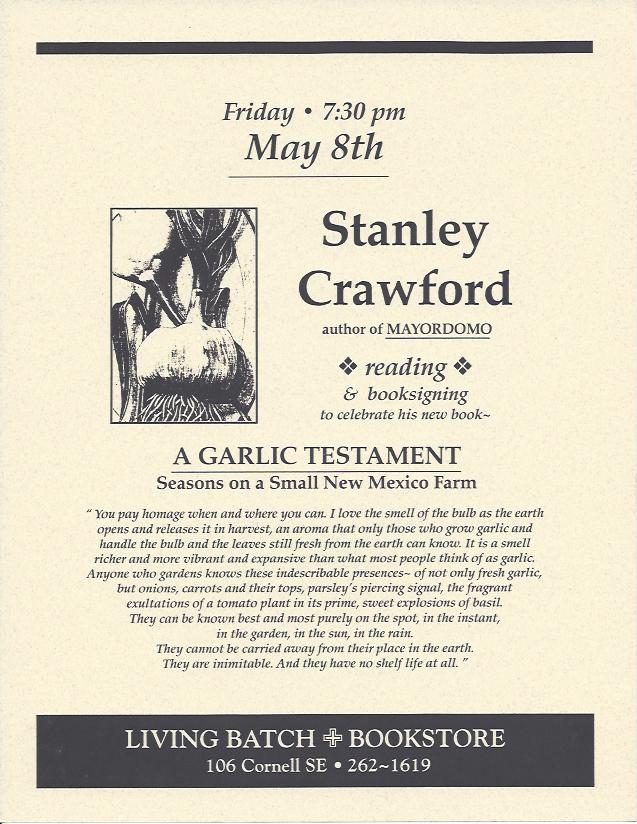

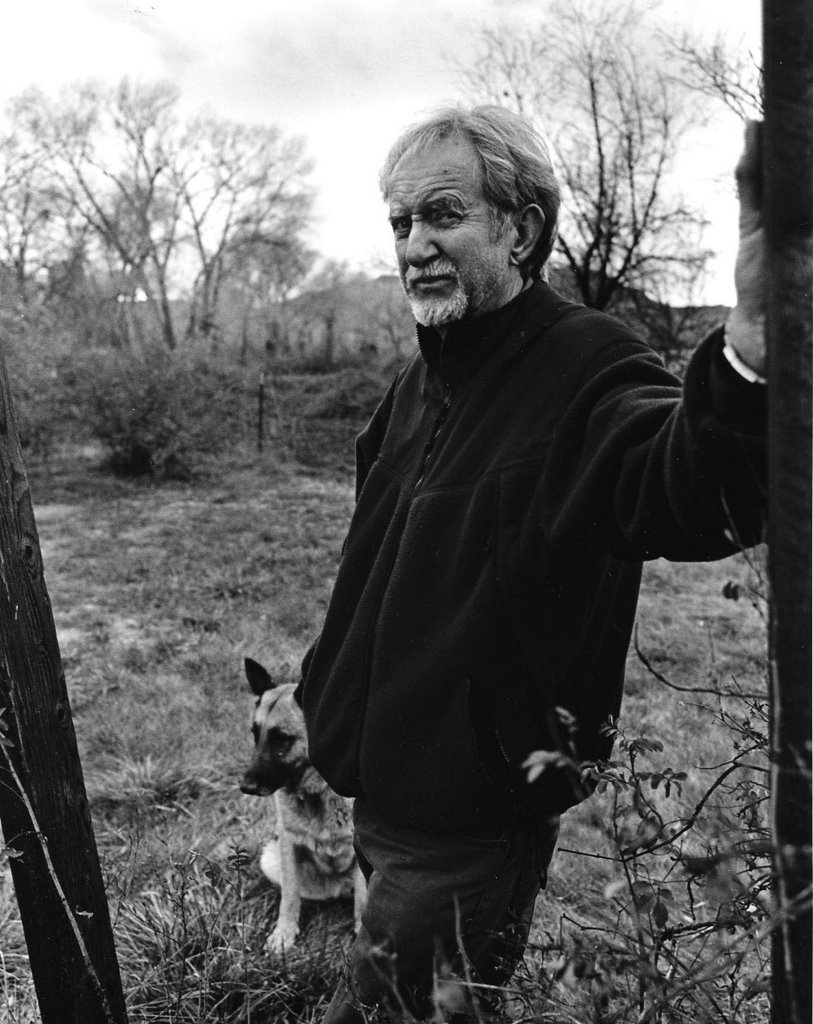
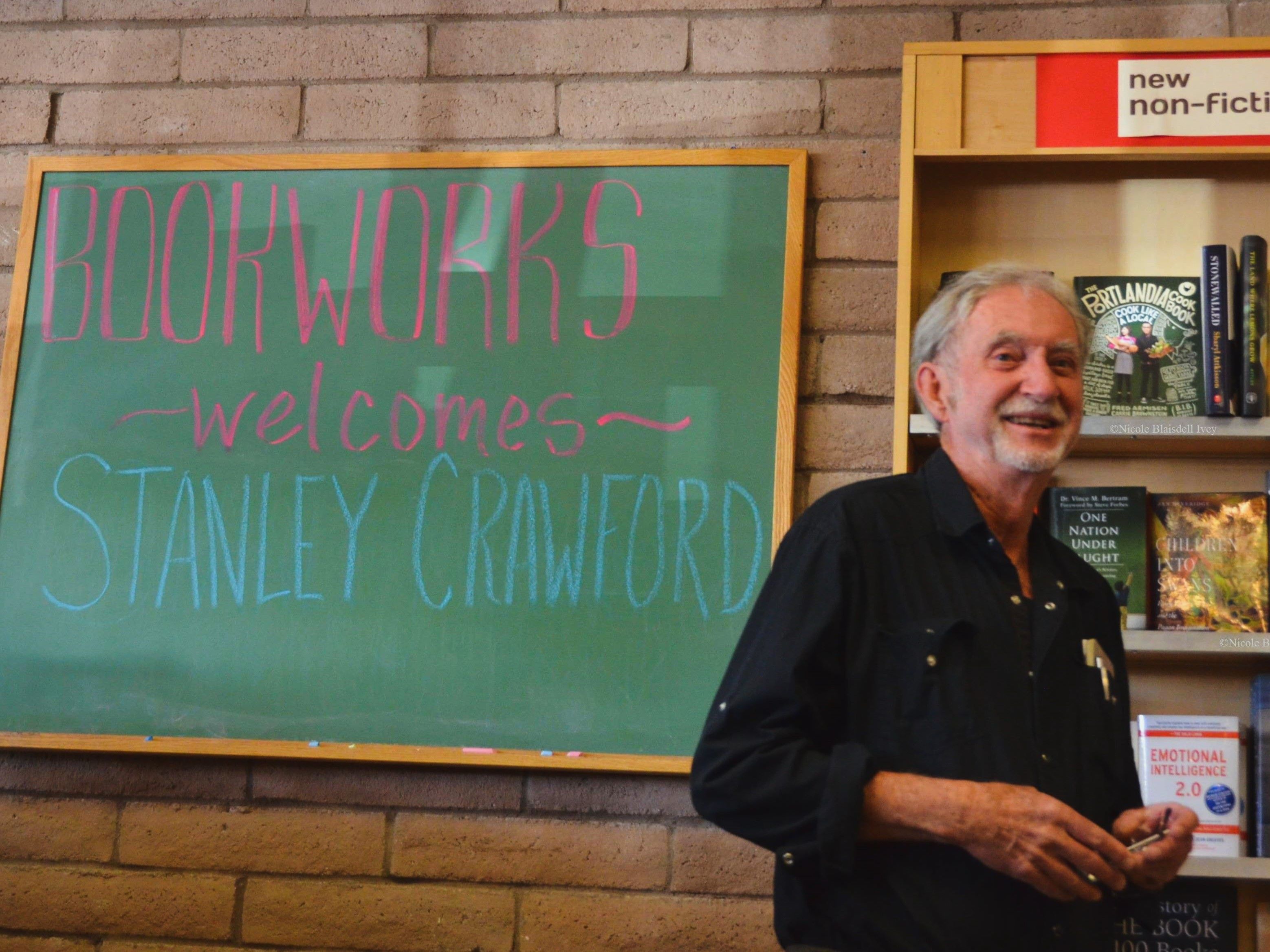
Wonderful tribute/story/obit published by the Santa Fe New Mexican-
Dixon Garlic Farmer, Revered Author Stanley Crawford Dies at 86
“He was totally brave, totally ready, and was very, very graceful about it”
:quality(70)/cloudfront-us-east-1.images.arcpublishing.com/sfr/RCDDLSLSP5ATLJOCYLLTJ4YNCY.jpeg)
By Julia Goldberg January 31, 2024 at 5:38 am MST
“A farmer-writer who loves garlic as much as words” is how the New York Times described Dixon writer and farmer Stanley Crawford in a 2011 story, and one might be hard-pressed to improve upon that characterization.
Crawford, whose 11 books included the seminal and award-winning memoirs Mayordormo: Chronicle of an Acequia in Northern New MexicoandA Garlic Testament: Seasons on a Small New Mexico Farm,died Jan. 25 at his home in Dixon as a result of a medically-assisted death he chose after learning earlier in January he had untreatable cancer, his daughter Katya Crawford tells SFR.
“He was totally brave, totally ready, and was very, very graceful about it,” says Crawford, who was with her father when he died, along with her brother Adam and his wife.
After learning he had advanced liver, kidney and colon cancer at the start of January and making the decision to decline treatment, Crawford spent the last few weeks of life talking to friends and family.
“He was able to speak to so many people that he loved and let them know that he was dying,” Katya Crawford says. “For three weeks before he died, he was able to see people every day or talk to people on the phone all around the world.” And while he had trouble walking toward the end and was very weak, “he was never in any pain,” she says.
In fact, up until last year, Crawford was still farming El Bosque Farm in Dixon, where he and his late wife, Rose Mary, who died three years ago, moved in 1969 and raised their children. Katya Crawford was born in Embudo, while Adam was born in Ireland, where Stanley and Rose Mary were living at the time.
Up until last year, her father remained on the electric co-op board, Crawford says. “He was traveling to conferences and to Washington DC. He was doing the Farmers Market. He taught at Colorado College in October; he could barely walk and his students loved him. That was in October. He was just living life very, very fully. He was surrounded by lots of young people and lifetime friends.”
Though his death naturally was hard to prepare for, she says, “my dad lived a really awesome life.”
:quality(70)/cloudfront-us-east-1.images.arcpublishing.com/sfr/LQUXIXDIRJB3VATRMYP4SYV3BE.jpg)
Crawford himself was born in 1937 and educated at the University of Chicago and at the Sorbonne. He wrote his first novel, Gascoyne, while living on Greece, and it was optioned for film.
That was “probably the only time he had money,” Katya says of her father. He had “a pretty intense obsession with automobiles” and bought a Mercedes. He, RoseMary and Adam were living on Ireland and took the Mercedes on a ship back to New York, where they drove it across the country. He left behind a Bentley, a Ford Model T and a vintage tractor, she says. After returning to San Francisco, the Crawfords went to visit friends in Northern New Mexico and ended up buying land and staying there.
Stanley Crawford also left behind two aging Blue Healers, a Corgi puppy named Pippa and approximately 35 geese, ducks and chickens, she says. Decisions about the farm’s future have not been made.
“We’re not going to make any rash decisions,” she says. “We both grew up in that house. It’s incredibly sentimental to us. I worked there even when I was in college, I would go back in the summer time to work on the farm. I went to the farm almost every weekend to take care of my mom, lots of times in the summertime to take care of my mom and then my dad. So we’re very attached to that to the property and to their legacy. It’s also kind of a painful place to be without them.”
In 2019, Crawford published The Garlic Papers: A Small Garlic Farm in the Age of Global Vampires (Leaf Storm Press), which documents the massive legal battle that pitted his small farm in New Mexico against a Chinese garlic importer and its several international law firms, also the subject of a Netflix documentary, “Garlic Breath,” in the six-part series Rotten, released in 2018.
“The news about Stan’s passing came as a shock,” Leaf Storm Publisher Andy Dudzik (a former longtime SFR publisher) tells SFR via email. “As a writer, he was a singular talent and an absolute joy to work with. It was an honor to be entrusted with publishing two of his books. He was also one of the most gentle and humble souls I’ve ever known, and I will miss him greatly.”
:quality(70)/cloudfront-us-east-1.images.arcpublishing.com/sfr/HNKOF4QGMRA25HACLUM6RS6KQU.jpg)
Leaf Storm also published Crawford’s 2017 novel Village, described by the late author John Nichols as “vintage Crawford…true to life…love, death, sex, depression, poverty, ditch cleaning, love of automobiles, teenage craziness, bits of euphoria…all mingle with the natural world through which the human community stumbles.”
In a 2017 interview with Lorene Mills on Report from Santa Fe, Crawford said he wrote the novel as “a love letter to my village.”
Katya Crawford says he favorite of her father’s books is the 1972 novella Log of the S.S. The Mrs. Unguentine. Chair and Associate Professor in the Landscape Architecture Department at the University of New Mexico’s School of Architecture, Crawford says when she was doing her master’s degree in landscape architecture, she had an assignment to design an island and designed the garbage barge from the novella, which describes, in the form of a ship’s log, the 40-year history of the Unguentine marriage at sea on board a garbage barge. Upon its reissue several years ago, the Los Angeles Times wrote “the book is long overdue for a heroic homecoming.”
Stanley Crawford also left behind one unpublished novel, Katya says, which his agent will work on selling to publish posthumously. His remaining archives will go to UNM.
Before her father died, she asked him if he wanted to write his own obituary. He said no; he was too tired. So she asked if there was any particular message he would want that obituary to include.
“Friendship are everything,” he said.
She told him that was her mother’s line and not “very original.” And he laughed and understood but then repeated the sentiment: “I’m serious,” he said. “Friends are so important.”
And he had so many, Katya says. “He had a really good life.”
:quality(70)/cloudfront-us-east-1.images.arcpublishing.com/sfr/IHFHYWIQAVHHPGWES2SKPIZURY.jpeg)
“You pay homage when and where you can. I love the smell of the bulb as the earth opens and releases it in harvest, an aroma that only those who grow garlic and handle the bulb and the leaves still fresh from the earth can know. Anyone who gardens knows these indescribable presences—of not only fresh garlic, but onions, carrots and their tops, parsley’s piercing signal, the fragrant exultations of a tomato plant in its prime, sweet explosions of basil. They can be known best and most purely on the spot, in the instant, in the garden, in the sun, in the rain. They cannot be carried away from their place in the earth. They are inimitable. And they have no shelf life at all.”
― Stanley Crawford, A Garlic Testament: Seasons on a Small New Mexico Farm
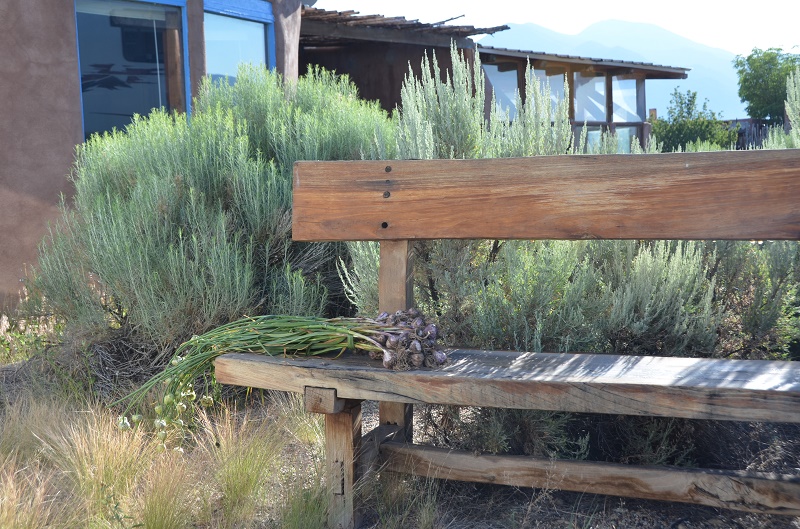
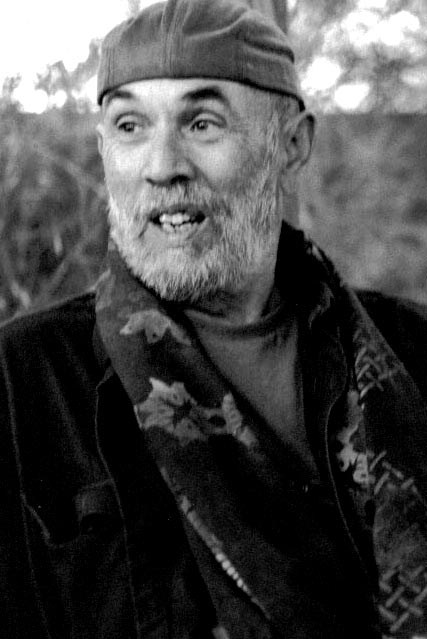
My son Jack Augustus (Gus’ grandson) and I are lucky enough to spend a fine hot day picking garlic with Stan, who at 81 years old, silently gives us a lesson in endurance and, of course, enough fabulous fragrant garlic to share with family.
Albuquerque, New Mexico Photo by Nicole Blaisdell Ivey
Hello Stan,
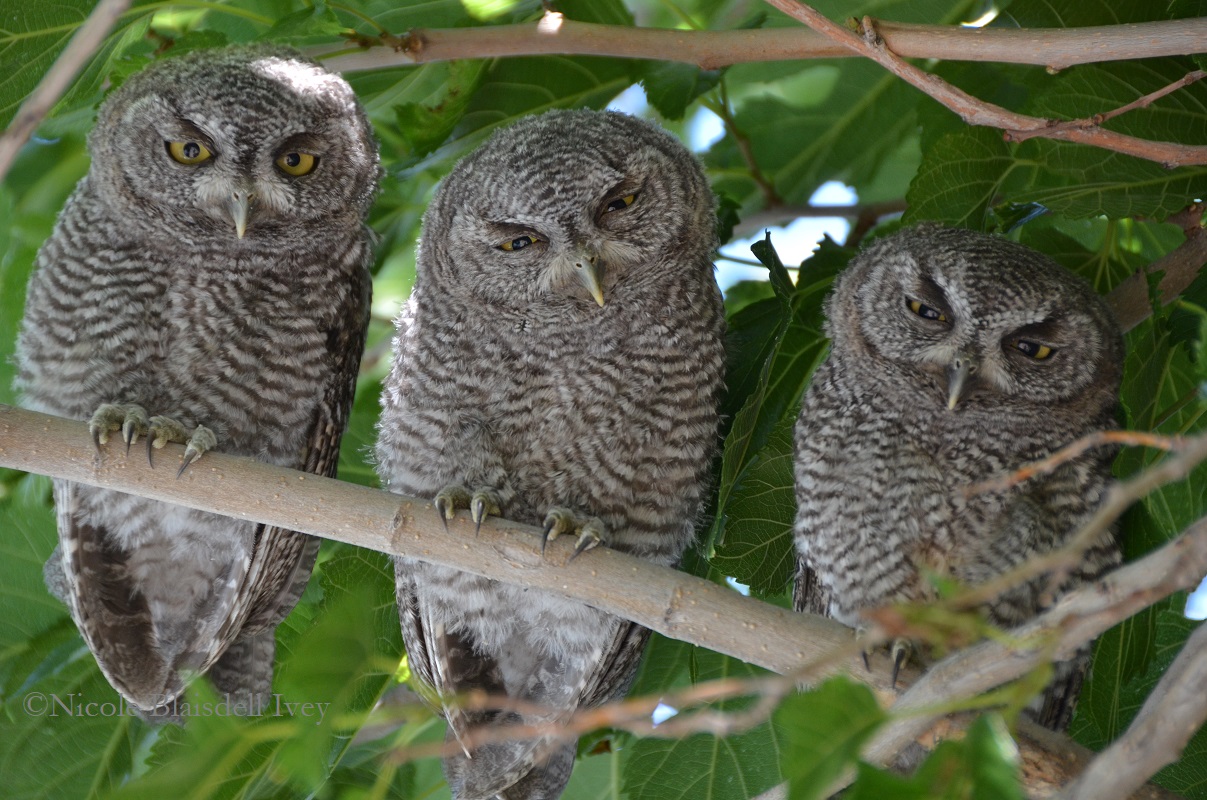
For a week now five Screech owls have perched in our overgrown backyard mulberry tree.
Gold orb eyes stare back at me. Feels like a visitation from ancient gods.
City girl photographer tries desperately not to abuse their daytime rest
with camera clicks and lonely sighs.
Last night finished reading SEED for third time.
Such good company.
How are you? Garlic? etc…
love and gratitude,
Nicole
In February my husband and I drive to Dixon to take Stan to lunch and visit with him at his home. We’d sadly missed Rose Mary’s memorial celebration having been exposed to Covid and not wanting to infect others.
_______________________________________
We pull into Zuly’s little dirt parking lot. Stan unfolds his lanky self from a sleek silver car, a stark contrast to his dusty black jeans and faded plaid flannel. I hug him, my head nestling in at his heart. He laughs. He reaches to shake Mark’s hand. “Good to see you.” In two steps I say “Oh” , and turn to hug him again. He takes it. “That one’s from Janet.”
Stan smiles, “It’s been a while since I’ve seen her,” he looks towards the scrubby hills, “two years since Rosemary’s death. At the celebration I believe, in the summer.” He pulls open the restaurant screen door. “First day they’re open this season.”
The dark-haired woman greets Stan warmly in Spanish and English. They catch up, swinging words back and forth between them, between languages.
We order Carne con Chile and sandwiches.
We sit at the formica wood tables, in the black padded metal chairs and tell stories. Mark talks climate. Stan says, my friend David read the new book by William de Buys. It’s a small one. He’s gone to Nepal to walk around and behold the natural world. He says the planet is in hospice.”
We walk out of the deli and into the sunshine, light bounces of the car hood.
“Come back to the house,” Stan says.
I put on my sunglasses and hand Mark my keys. “I’m riding with him.”
Stan folds himself back into the driver’s seat. I wait as he clears the papers, books, tools, choice sticks, rocks and feathers off the passenger seat. I climb in, see the screen, look around the interior. “What kind of car is this?”
“It’s a Tesla,” he says tapping the screen and backing up.
“Oh, I’ve never been in one.”
“Let me show you what it does.”
Stan transports us from zero to so fast on that little country straight away that I inhale a squeal, my stomach butterflys , and I yell, as if increased speed requires an equal increase in volume.
“Don’t’ stop. Keep going. I don’t have to be back for two weeks.”
He laughs as he slows before the curve out of town.
Back at El Bosque Farm in the adobe house that he and Rosemary built by hand, we sit and talk in his paper strewn living room where dogs wag and hop up on couches for love.
“I should have invited people over even though it was hard”, he said. ” It would have been better. Everyone just stopped coming by.”
We sit in silence. Think about the slow loss of his vivacious wife’s memory ten years before she died.
Mark and I stand to go, to head back for my shift with my mother who thinks I’m her high school girl friend.
Stan says, “Let me get you some garlic.”

 blaisdell Ivey collected