Message from Momaday

                          A note from Pulitzer prize-winning author, N. Scott Momaday, discussing the GUS BLAISDELL COLLECTED book (Gus was UNM Press editor on Momaday’s second book, The Way to Rainy Mountain, published by UNM press).
Dear Nicole,The book is a clear mirror of the man. It is beautiful and moving. Gus and I made a legendary journey to Rainy Mountain in the hard weather that shapes mind and memory. It was a quest, a journey eminently worth making.With deepest thanks.Scott


In Gus’s  “Holygraph” book (a blank dummy book for Ivor Winters’s Forms of Discovery run, filled with friends poems, drawings, autographs and insights) 

Scott writes,

“Dear Veering,
It has been good to be
with you on the way to Rainy
Mountain. One day you must
go to the cemetery there, to
see the gravestones of some of
these red people you must at
times feel that you know.
And I hope that the
weather is particularly hard
on that occasion.


N Scott Momaday
Christmas Eve 1968
"


Gus writes,


"On an Inscription in my Holygraph Book
for Scott.

We have/ been tog/ether/ now these/ many/ months
each on his way to Rainy Mountain, a journey
taken in fact, in spirit, and imagination.
It is a labor of love without loss, finding
my way, finally, to that dark stone
that bears your grandmother’s name.

You wish me the hardest weather on my visit
Such weather is the weather of my spirit,
A semiarid terrain wild with winds, and,
At evening, reason’s rage and fury flaming,
When the wind blows and wind bells ring
Or the snow falls down and no bell rings."
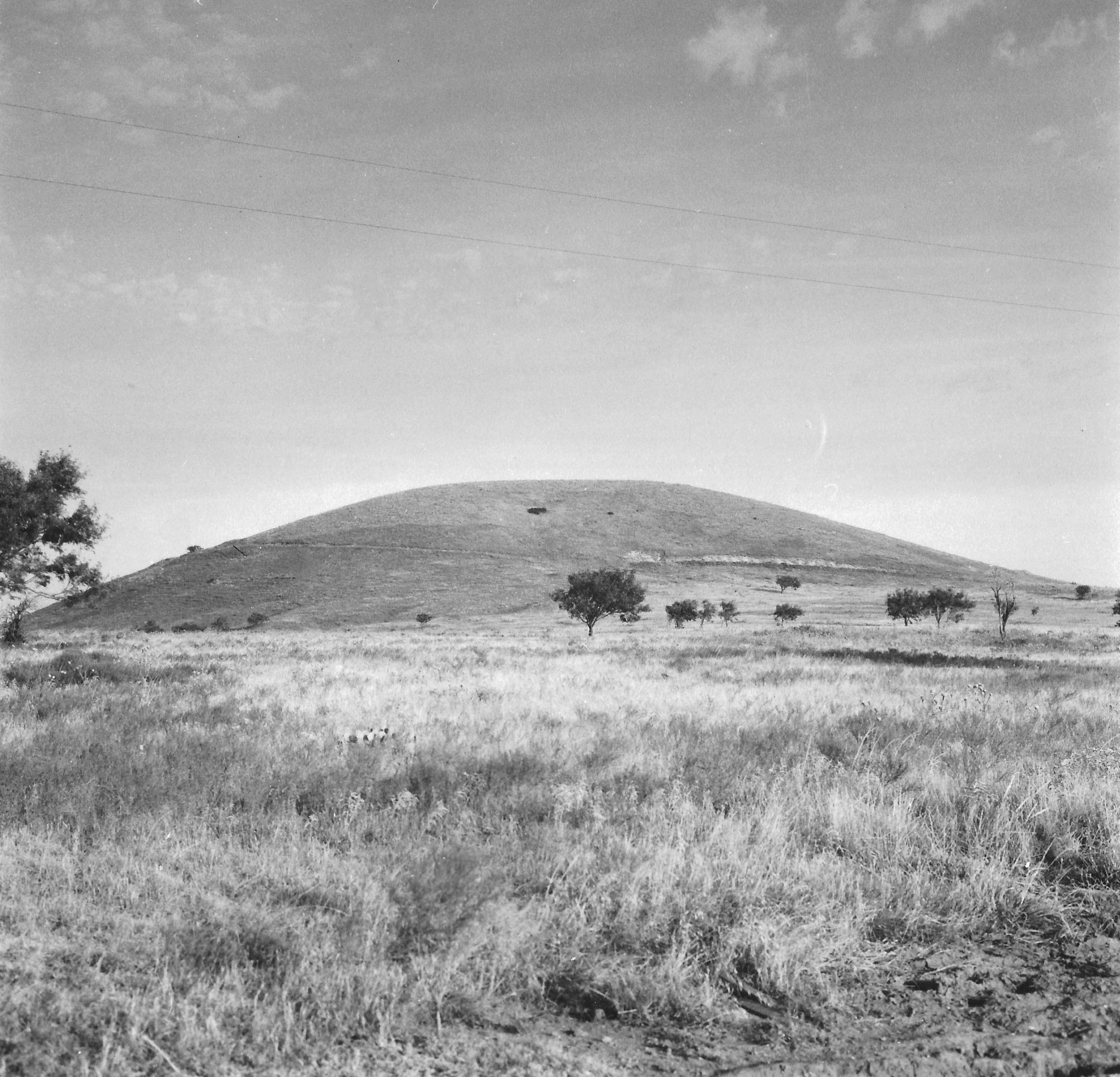

Rainy Mountain                   from the archive of Gus Blaisdell

N. Scott Momaday, Pulitzer-Winning Native American Novelist, Dies at 89

https://www.nytimes.com/2024/01/29/books/n-scott-momaday-dead.html

For Jacket Copy / by JB Bryan

For a jacket-copy intro to the author it would be hard to improve on the capsule snapshot by artist, poet, and publisher (and one-time Living Batch employee), J. B. Bryan, in the little Festschrift chapbook he prepared for the memorial “Celebration of Gus Blaisdell” in 2005:

Gus lived as a man of discerning mind & precise locution, as well as blurted expletive. The oppositional was his blessing & curse. Sharp, jagged, uncannily quick-witted, he sought how to see, how to know, how to lay it down. Outrageous, often enraged, he liked the scat in scatological, he could insult, he could adore, a mimic ribald & hilarious, elegant steel trap crankiness, photographic memory backed by a deep catalogue of reference wielded with fierce conviction. Within this shone profound appreciation for beauty (film, Monk, Matisse, Utamaro, photography, poetry, prose, mathematics, found objects, etc., etc.) & its precise articulation. His writings have hard-fought style with a content that requires slow, deliberate reading. Language & lingo, philosophy & logic argued toward revelation inside his own difficult critique.

Doors of Memory and Desire

 Photographer Arnold Gassan and Gus Blaisdell 1962-63 in Denver, Colorado                  Stockyard Earth                    

                                                                                Photograph by Robert Voy Stark
NOTES ON THE FILM (GASSAN-BLAISDELL)
Tenative title:   DOORS OF MEMORY AND DESIRE.
Chippewa Poem:
You are Walking around
Trying to remember
What you promised.
But you can’t remember.
I am walking around, trying to remember what I promised, but I can’t remember.
 Can the narration run in a kind of counter-point to the images: first as, say, a description of what  will happen next visually; then as a description of what is or has just happened–  but always keeping to the tone of a specious present.
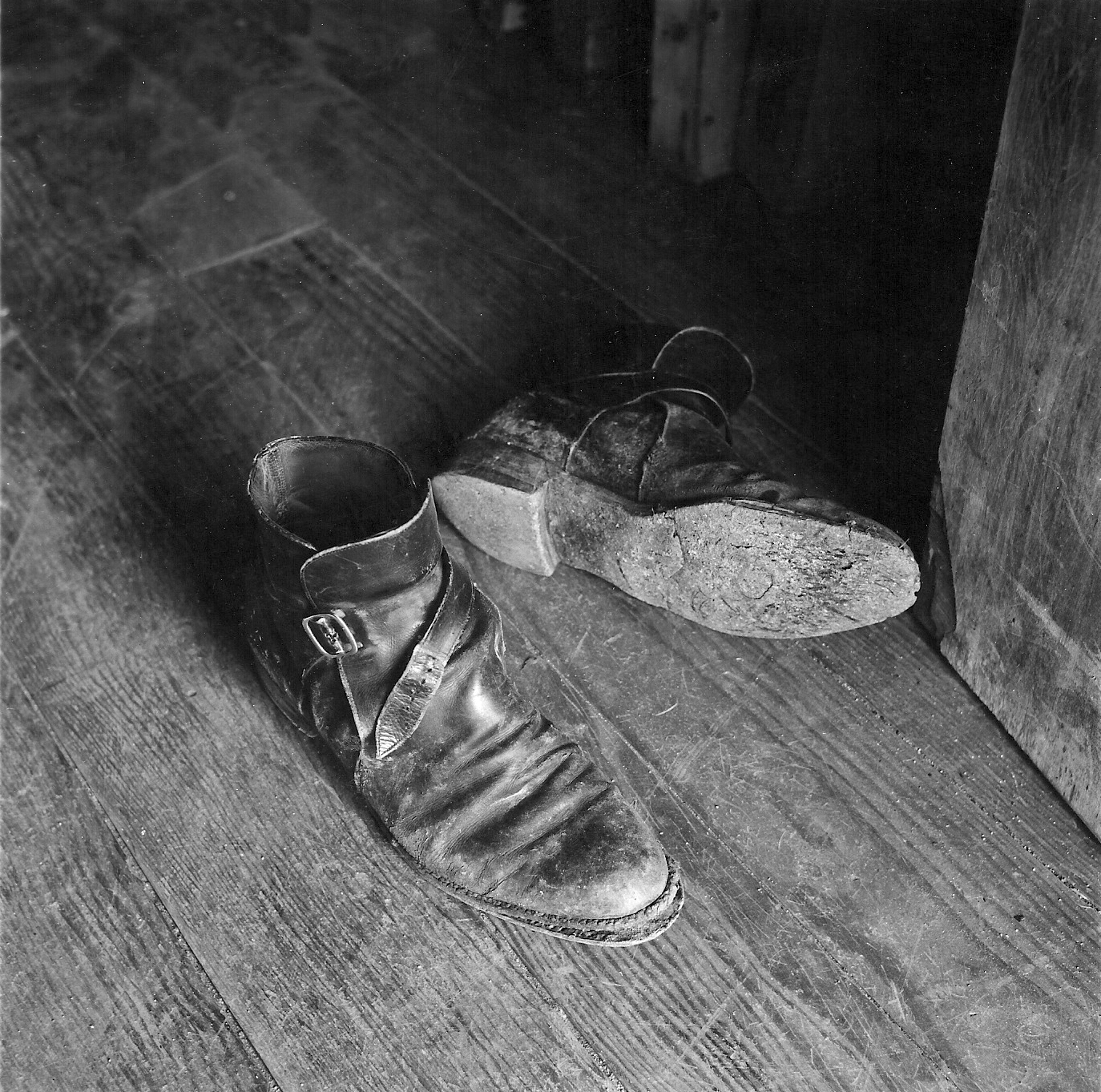
Camera catches M putting on cracked and broken shoes,
lacing them slowly, hastily, angrily. The laces break.
The foot kicks the shoes off. A hand reaches into the frame,
picks between the toes, moves out of frame.
“I have been walking, too long, too swiftly, sometimes much too swiftly
and much too slowly.”
Camera catches man as he moves towards table.
 I have been walking around, trying to remember what I promised, but I can’t remember…can’t  remember what I desired, what I promised…what it was that I desired so much that it made me  promise…whatever it was I did promise.
Perhaps this is because I’m not used to promising,
to desiring, to remembering even.

FILM IS A FINE ART

Gus Blaisdell SITE Photo by Nicole Blaisdell Ivey

 Writings of Gus    *note to the department

 
Film is a fine art – those like music and painting that are goals or ends in themselves- – and a liberal art, the study of those reflective and critical skills necessary to freedom. Film must not be taught in isolation from the humanities and the other arts; nor must it be taught in isolation from history and politics. Given that this newest of our arts draws on so many other major arts in our culture – – on drama, opera, poetry, painting, literature – – it is reasonable to consider any of the humanities or the arts as film’s academic home.Today new voices are demanding to be heard, seriously challenging the canon and the curricula based on it. Given film’s appetite for the arts and its individuality or autonomy as a new art, film is as naturally crossgrained as it is “interdisciplinary”: it offers a radical focus for questions of cultural plurality (it is international in scope, naturally crossing cultural boundaries and declaring both similarities and differences between cultures). Film also questions stereotypes and other social constructions, for a stereotype is indeed a “social construction”, and it can be questioned. Film focuses such challenges, projects and screens them, and discovers the mechanisms in our culture that enables some voices while silencing others, that allow some subjects while relegating others to the margins. Moreover, if our culture has shifted from the word to the image- – I don’t believe this but I entertain the hypothesis- – then why be wail the fact when a film curriculum can obviously reverse this direction. In my experience of teaching and learning from film, movies motivate texts, lead naturally to reading and writing. I require my students to read a great deal, and texts central to our culture and of real difficulty; and even though I have only one assistant for the several hundred students in my classes I also require them to write.Film is presently uncanonical. Those whose work contributes toward a curriculum in any subject know that we cannot in advance design what we can only discover in practice. But film’s uncanonical nature is one of its great assets. We do not know what it can bear and to date we do know that putting it together with the best that a culture can produce is an unending and critical apposition, one worth serious, humanistic study. Unlike scraping the hulls of years of interpretations, film is in the process of discovery and revelation where interpretation is concerned.One principle of my teaching takes its inspiration from Henry James admonishing aspiring writers to, Yes, write from experience. But before that there is something even more important:  “become one upon whom nothing is lost.” But given the nihilisms and fashionable skepticisms of the day don’t we begin by believing that if we are anything at all then we are ones upon whom, if not everything, then surely most important things are lost? Then teaching might be inspired to recover from this despair the self that is best; and learn again how to have a voice in one’s own experience; to stop the incessant voice of rediscover and readmit voices lost and denied.In exposing my students to the best in the other arts and humanities, and to the best in film, it is my hope that these first impressions might prove of sufficient force that they would one day return to the films and texts. By not providing film the best environment we can, we are missing opportunities as teachers and we are missing them at the sacrifice of our students. My fantasy? If students arrive with literacy in images film can help to teach them other articulations, the critical challenge of finding words, the best words, for something, like any masterpiece, that we know is better than anything we can say about it – that this piece of music, story, poem, play or movie offers what any art, liberal or fine, promises: a view of immediate reality, even one that competes with it on the best terms.  Moreover, film offers a student a critical reflective voice in his own experience, surely a place to begin education.  If we deny the student this voice we are as teachers missing one of the great opportunities our democratic culture offers, an art that appeals to the many and can in its greatest instances hold its own with similar achievements in the other arts. I shall end by quoting from some private correspondence from my friend and mentor Stanley Cavell: (should film be denied admittance to a serious, humanistic study and there be no honorable reasons for its rejection – – I can see none – then such denial) “expresses an indifference to the education of a region of our students’ interests and sensibilities that not only directs a significant portion of their times of choice and conversation but which, among all such current times, is the region most likely to persist throughout their lives, whatever their careers.” My fantasy is that film, our new art, is bidding fair and should be heard in its bid for equal treatment among the liberal and the fine arts.

Film requires for its study a socially and intellectually coherent and expansive place rather than one defensive and cultish. If there is any institution in our democracy which denies that there is but one game in town, it must be the university. It is a church permitting, even encouraging, heresy, a constant redress of what we believed were our basic values.
 
*comments welcome

GUS BLAISDELL COLLECTED

Image

Writings on Lewis Baltz, John Gossage, Evan Connell, Frank Stella, Terry Conway, Guy Williams, Hitchcock, Wim Wenders, Kubrick, Joel-Peter Witkin, Thomas Barrow, Stanley Cavell, Robert Creeley, Plato’s Phaedrus, Ross Feld, Rachel Whiteread, James Baldwin, Allen Graham, Don Dudley, Carroll Dunham, …and then some…

GUS BLAISDELL COLLECTED

Cover photo by Nicole Blaisdell Ivey

CONTENTS:

Editor’s Preface: by William Peterson

Foreword: by Stanley Cavell

Introduction:  “On Slipping Across: Reading, Friendship, Otherness” by David Morris

On Photographs:

  1. Absorbing Inventories: Thomas Barrow’s “Libraries Series”
  2. Afterworld: Photographs of Joel-Peter Witkin
  3. BLDGS: Photographs of Lewis Baltz
  4. Space Begins Because We Look Away From Where We Are: Lewis Baltz, Candlestick Point
  5. Buried Silk Exhumed: The Lewis Baltz Retrospective, Rule Without Exception
  6. From Obscenity in Thy Mother’s Milk: John Gossage’s “HF!” Portfolio
  7. Thirteen Ways of NOT Looking at a Gossage Photograph

On Movies:

Passion Misfits Us All: Wim Wenders’ Paris, Texas

  1. Death’s Blue-Eyed Boy: Stanley Kubrick’s Full Metal Jacket
  2. Still Moving
  3. Highlighting Hitchcock’s Vertigo with Magic Marker


On Painting:

  1. Frank Stella’s The Whiteness of the Whale
  2. Passion and the Pine Breeze: The Paintings of Terry Conway
  3. Guy Williams: On In: Outside
  4. Original Face: Allan Graham’s Moon 2
  5. Poem: Omoide No Tsukimi


On Reading & Writing:

  1. A Gloss Annexed
  2. Vatic Writing: Evan Connell’s Notes from a Bottle . . .
  3. Tell It Like It Is: The Experimental Traditionalists
  4. Rebus
  5. What Was Called A Thought Echoed in Sight: Yvor Winters’ Centennial
  6. Poem: Occasional Loquats: For Janet Lewis
  7. For Robert Creeley on his 70th Birthday
  8. A Nobler Seduction
  9. Slipping Across

Fiction: Radical Philosophical Reclamation & Wrecking, The TLP Hotel (4 Excerpts)

Shorts & Excerpts from Correspondence

Envoi: by Ira Jaffe

Chronology: by Nicole Blaisdell Ivey

Bibliography