John Gossage and Gus

John Gossage  Thu, Jun 3, 2004 at 12:41 PM

Nicole,

Finally, in the way of ” I’m finally getting a moment when I can

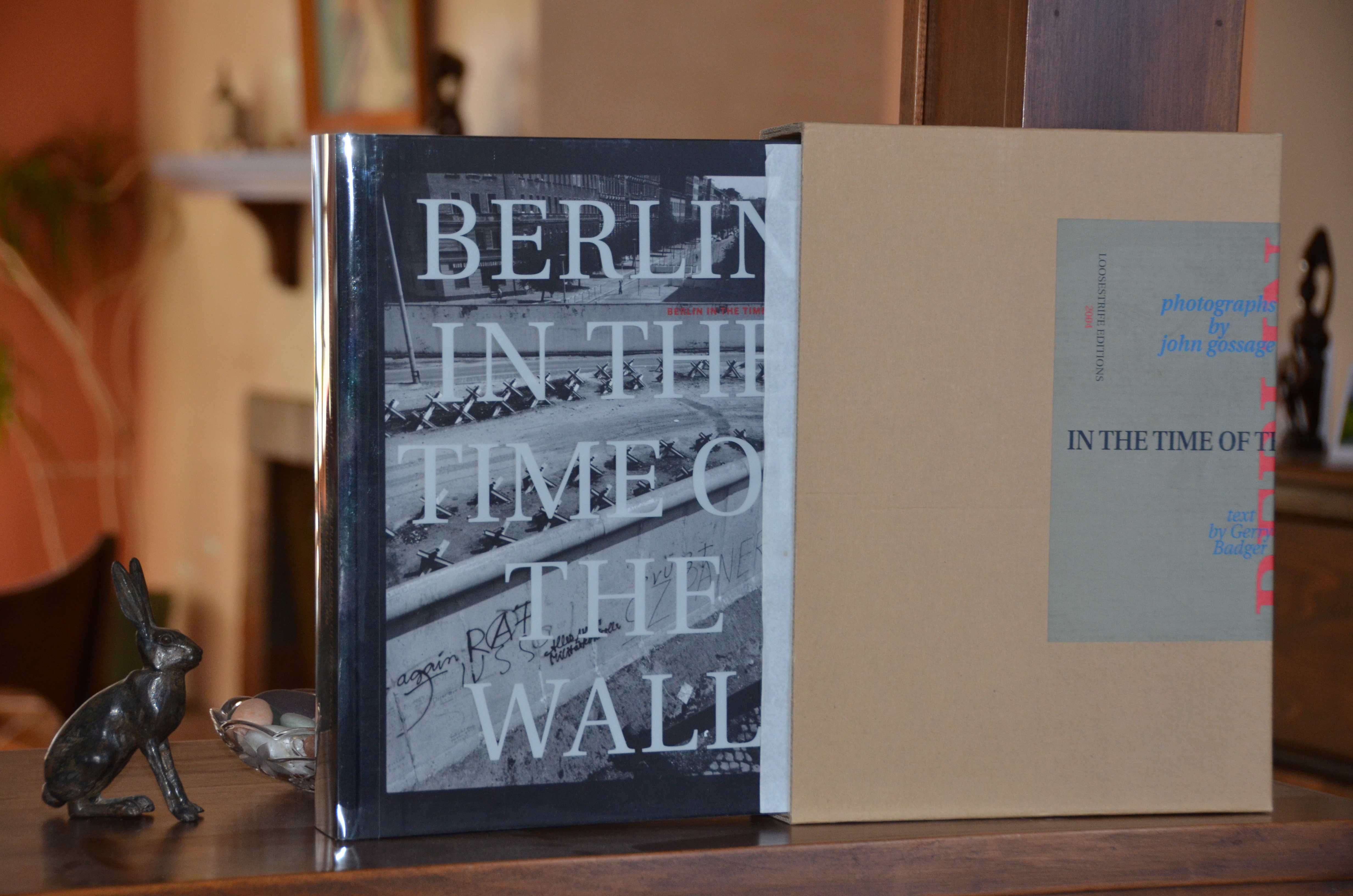
think”. I am awash with details for my next book “Berlin in the time of

the Wall”. I designed the book as well as made the photographs, so

every printing detail falls on me. It is something I’ve done before and

should expect, but it’s always something new ( ei. the slipcase won’t

hold the book correctly, since the book weights nine pounds and the

slipcase falls apart under that weight). But so much for complaints

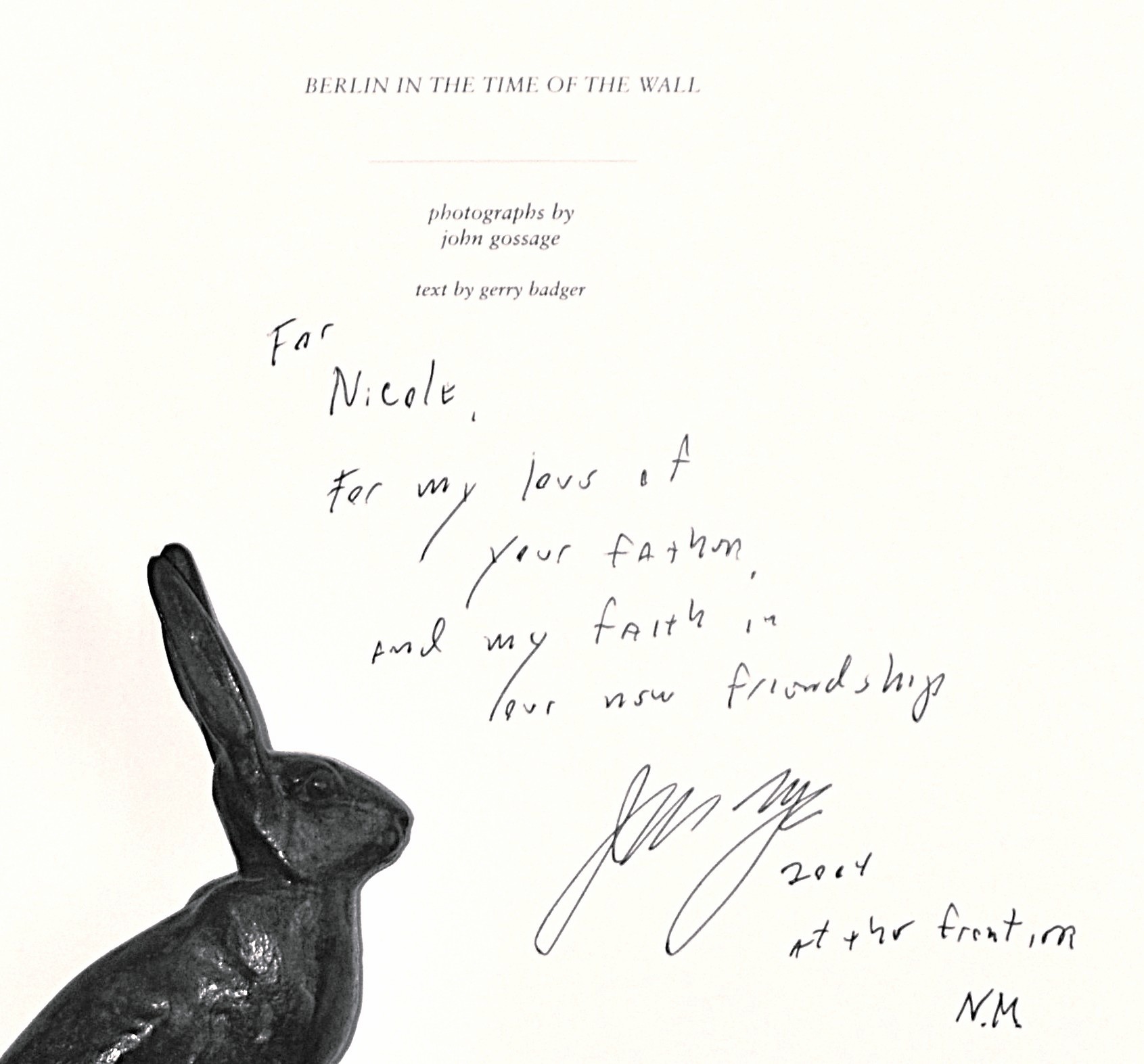
about silly details. Thank you so much for the pictures of Gus and the

information about the service. I’m not a comfortable writer, as with

many photographers, but I would love to keep in touch with you…

 … I have included the text for the Berlin book by Gerry Badger as

attachments to this since he quotes your dad a fair amount. I thought

some of it you might find of interest, as well as by sending it, it

makes me feel like I’ve sent you a long e-mail. Read what you find

interesting and forget the rest. A book will be in the mail by the end

of the year.

All my Best,

John

John Gossage
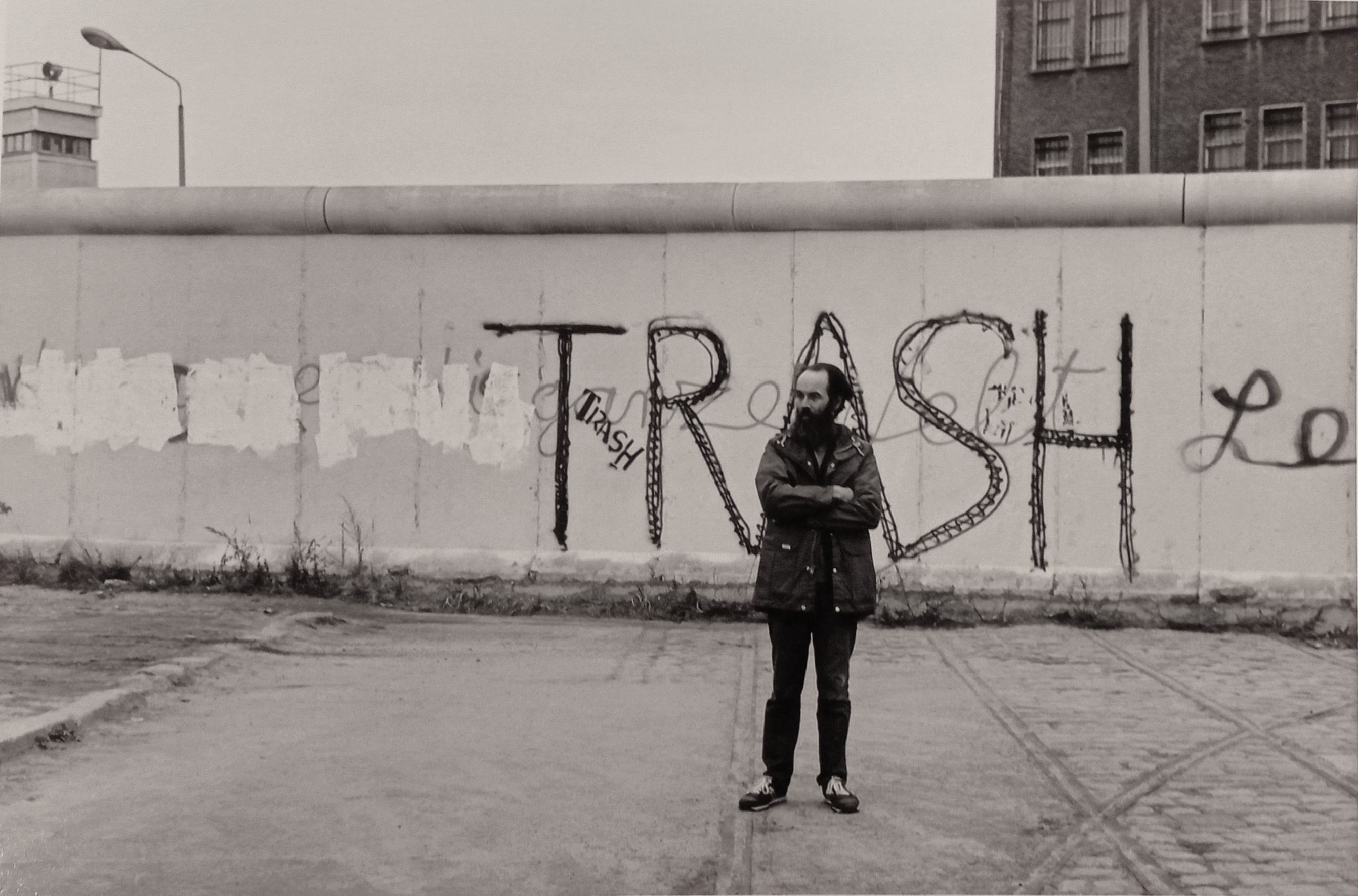
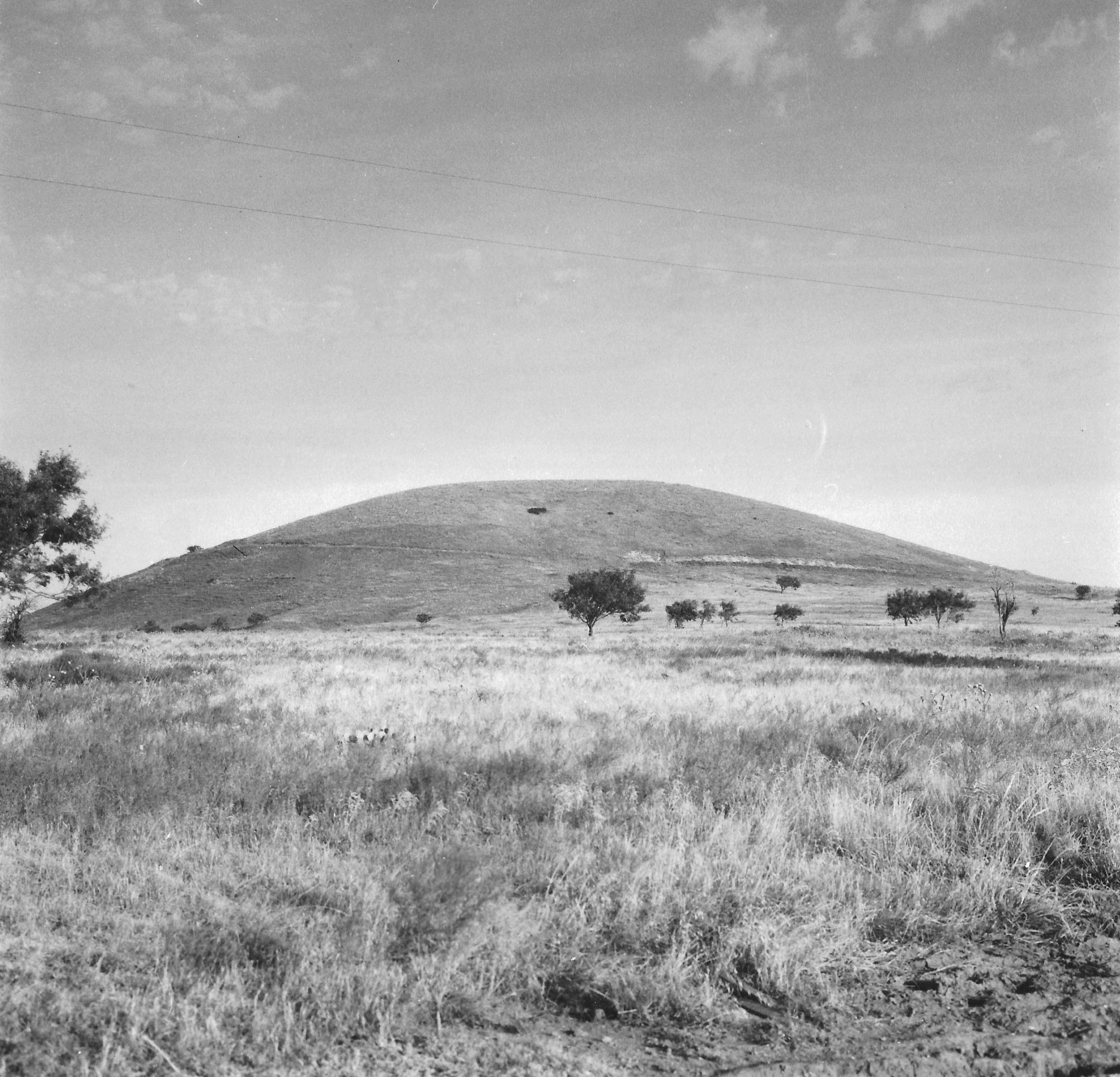
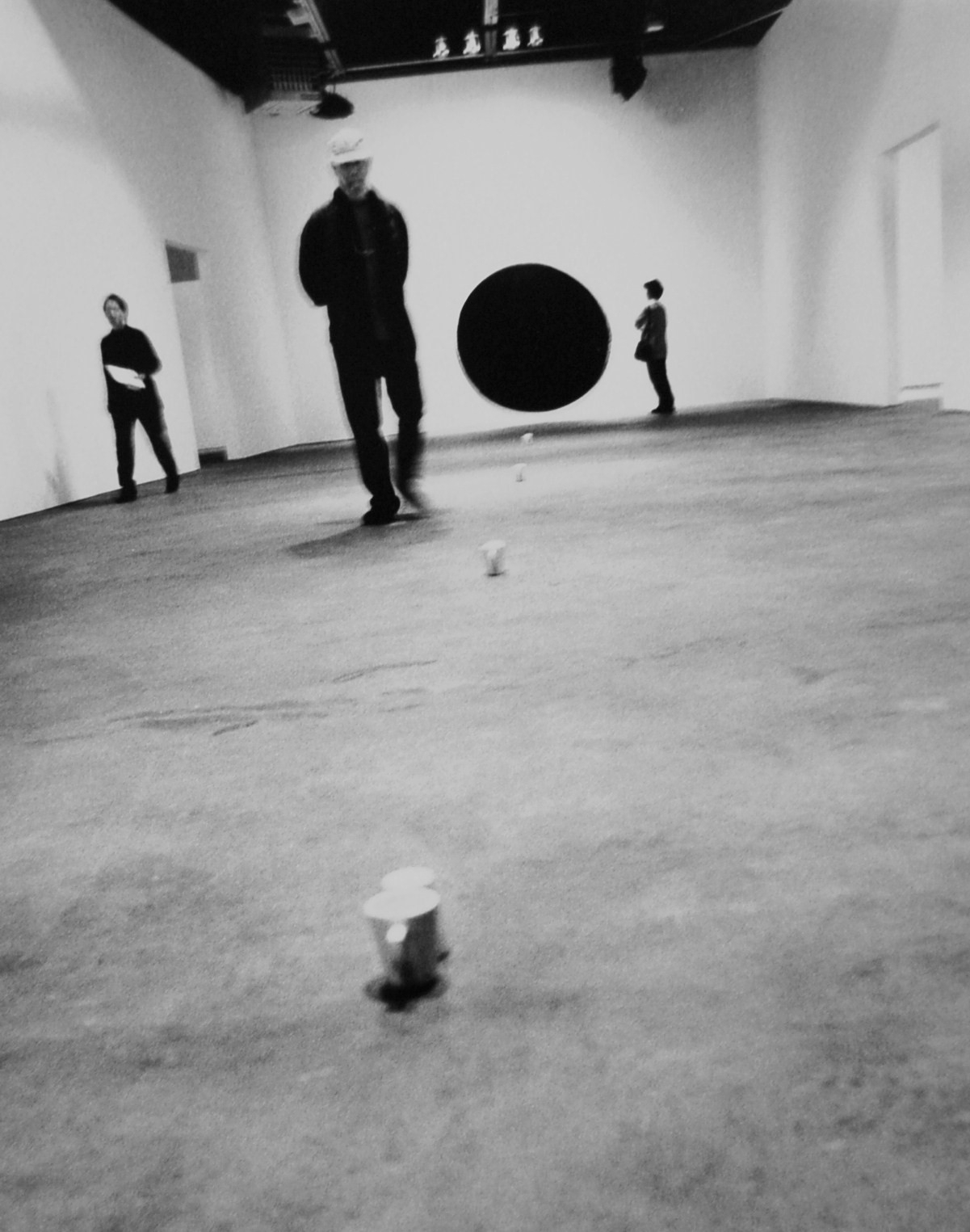
BLAISDELL, VOR DIE BERLINER MAUER — photograph by Lewis Baltz

Thirteen Ways of NOT Looking at a Gossage    

                                                                            in memory of Arnold Gassan

To use a horse to show that a horse is not a horse is not as good as

using a non-horse to show that a horse is not a horse.

                                                                                    –Chuang Tzu

            John Gossage has asked me to write a few words about what his photographs are not. I have been in love with the negative since childhood. But what a photograph is not? Not identical with its subject; not a likeness of its subject; not a representation but a projection, because the original, as Cavell says, is as present as it ever was. In a photograph we see what is not present, the subject transformed in the medium of visible absence.  

            I particularly love negation used to isolate what a thing is, like the theologians’ via negativa. Attributes are taken away till the thing sought stands naked before you. Slightly obscene this long undressing of concepts and objects, it is like clearing out a bunch of weeds to get to a bare place. Gossage is seldom about clearing out.  His photographs are often about a weedy and wasted jouissance. Whenever I look at a Gossage photograph one stanza from Wallace Stevens’ “Thirteen Ways of Looking at a Blackbird” comes to mind, the seventh:

O thin men of Haddam,

Why do you imagine golden birds?

Do you not see how the blackbird

Walks around the feet

Of the women about you?

            Gossage is always about the luxuriance of what goes unnoticed, what goes unseen until his pictures call your attention to it. Stevens’ men of Haddam have grown thin imagining golden birds when at the feet of the women all around them they do not see either the blackbird walking or the women.

            An exercise in subtraction. I will form pseudo-propositions with parentheses, negate them, and at the end, after the parens are closed, I attach the name of a major predecessor or contemporary of Gossage’s, artists with whom he shares a similarity but an even deeper difference.

NOT (atmospheric erosion like lichen clocks the head of Pan at Versailles; autumn leaves fallen on steps that descend semi-circularly to a circular landing and then continue their descent; the archaeology of streets and buildings presented after a terminal moraine has melted): Eugene Atget.

NOT (the American commonplace so quietly essential as to seem beyond the ability of photography or any other medium to capture, within the reach of nothing but admiration): Walker Evans.

NOT (the drama of the hard travellin’ road after Whitman and Kerouac, in outsider eyes where the lights are always going down, leaving only the ghostlighted stage of the photograph): Robert Frank.

NOT (still going on down, even Beat-ing it on down to its basic Beat-ness, the discovery of structure where mirrors crack the picture planes into what can be seen front and back and behind and beside, or a vegetal equivalent of an abstract-expressionist scrawl that blocks the picture surface–a genre of delirious possibility, but still anchored in the often rigid permanence of what looks like asides and throwaways): Lee Friedlander.

NOT (a gaze as steady as Buster Keaton’s wonders whether the industrial parks depicted manufacture pantyhose or megadeath; hip beyond irony or cool, where what passes for the so-called art world bleeds and leaks itself seamlessly into the so-called real world): Lewis Baltz.

NOT (a metropolis constructed by people for their discomfort, and which in turn refuses to reflect them in its curtain walls; eyes more alienated than Antonioni’s–eyes of an American veteran who returned with Vietnam locked in behind eyes that for years photographed without film or camera–eyes that stare at the traces of homelessness and the violence of wasted shooting sites where dolls’ heads hang for targets. Whether we edify or degrade we first create ruins, like Olympic sites once the games are gone and the local economy begins an unending hemorrhage): Anthony Hernandez.

NOT (the outrage rightly registered at the sight of a few trees that survive on the freeways of Los Angeles, or the stupefied faces of people on intimate terms with the thermonuclear unconscious of Colorado’s Rocky Flats): Robert Adams.

            And certainly not the lush monumentality of nature declared only photographically: Ansel Adams.  Nor the hermetic beauties of a Zen-inspired series of pictures, a variation of equivalences; but equivalent to–what?–in the world: Minor White.   

            Not far away, however. I haven’t lost Gossage; he’s been here all along. It’s just that it’s difficult to think negatively continuously (as Dylan sings, “A whole lot of nothing / Makes a man feel ill at ease”), to have cleared a space and to resist putting in it what belongs there. So I am going to give in just a little and transfer from absolute negation (since there is not much absolute negation, except for mathematical logic and Milton’s Satan who says, “I am the Spirit who Negates”) and indulge myself in some ‘not exactlys’ and ‘not quites’, and perhaps inch a little closer to what a Gossage photograph might be.

            Not far away from Weegee’s crime scenes: with the bodies and the gawkers removed, all the stains in the streets and the curbside trash remains. Nature for Gossage is a place bristling with the attractive repulsion of armpits and crotches, and it is always alive, about to declare its animation, the shrubbery almost like David Lynch’s trees tossed in a night wind, violated by a motion characteristic of anxiety, dread, and agony. Premonition and foreboding settle in around a Gossage picture as atmospherically as Atget’s groundhogs in his parks.

            I’ve come full circle, hinting what a Gossage photograph might be. Once, while making notes after years of reading Nietzsche, I abbreviated “the eternal recurrence of the same.” To my surprise the abbreviation read: “e.r.o.s.” Like Wallace Stevens in “Thirteen Ways of Looking at a Blackbird,” I collapse, loaf, and invite my soul, unable to decide which I prefer, inflections or innuendoes, “The blackbird whistling / Or just after.”

2002 — Gus Blaisdell

Originally published in John Gossage, The Romance Industry: Venezia / Marghera 1998, Tucson: Nazareli Press, 2002.
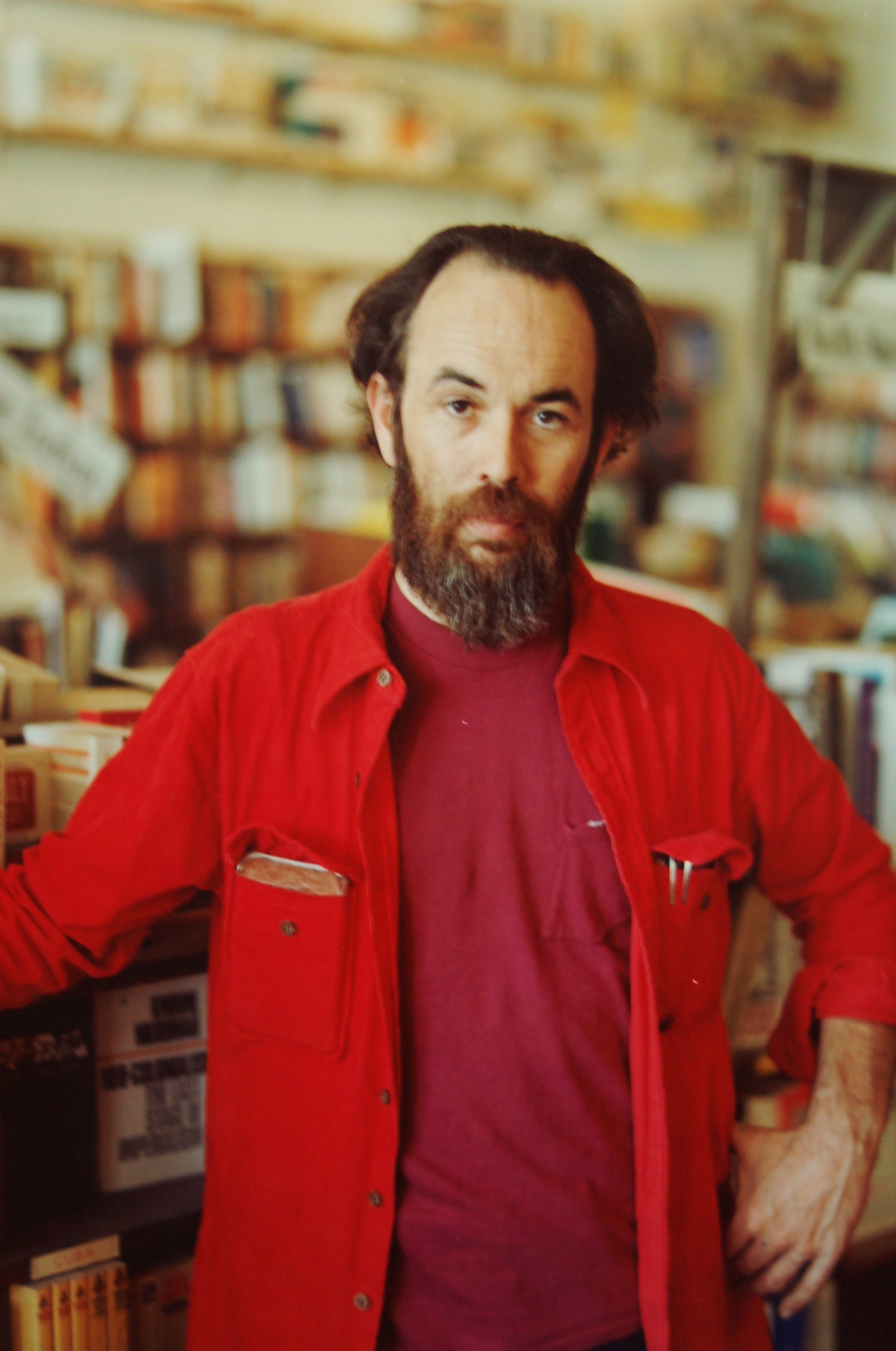
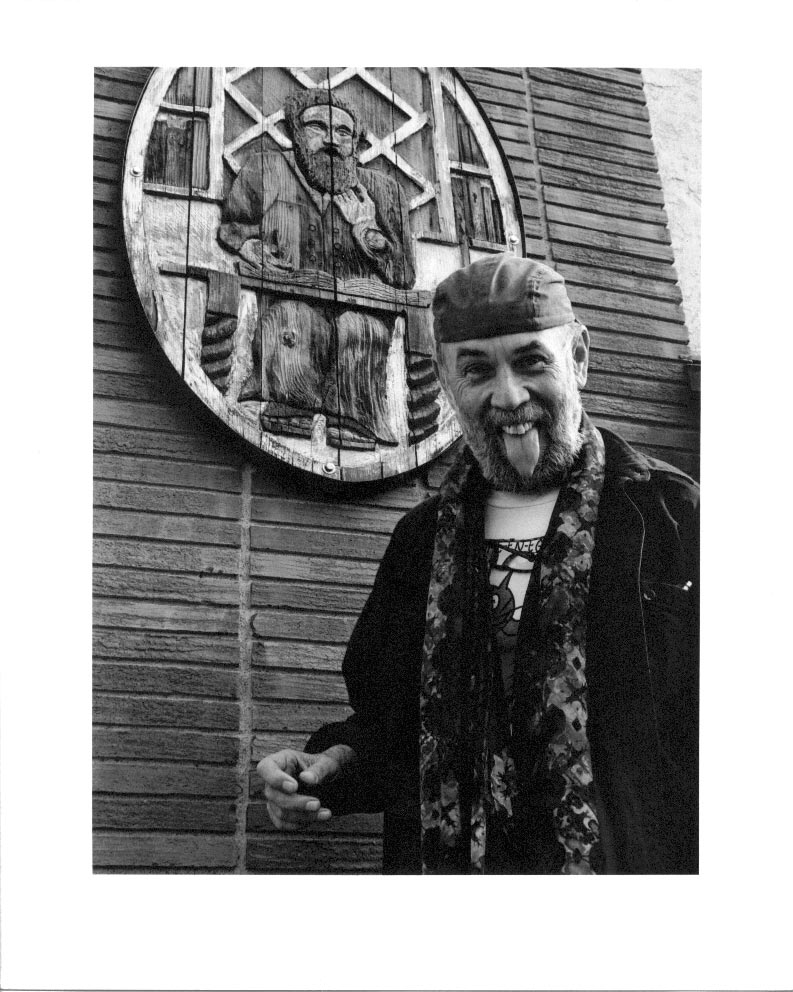
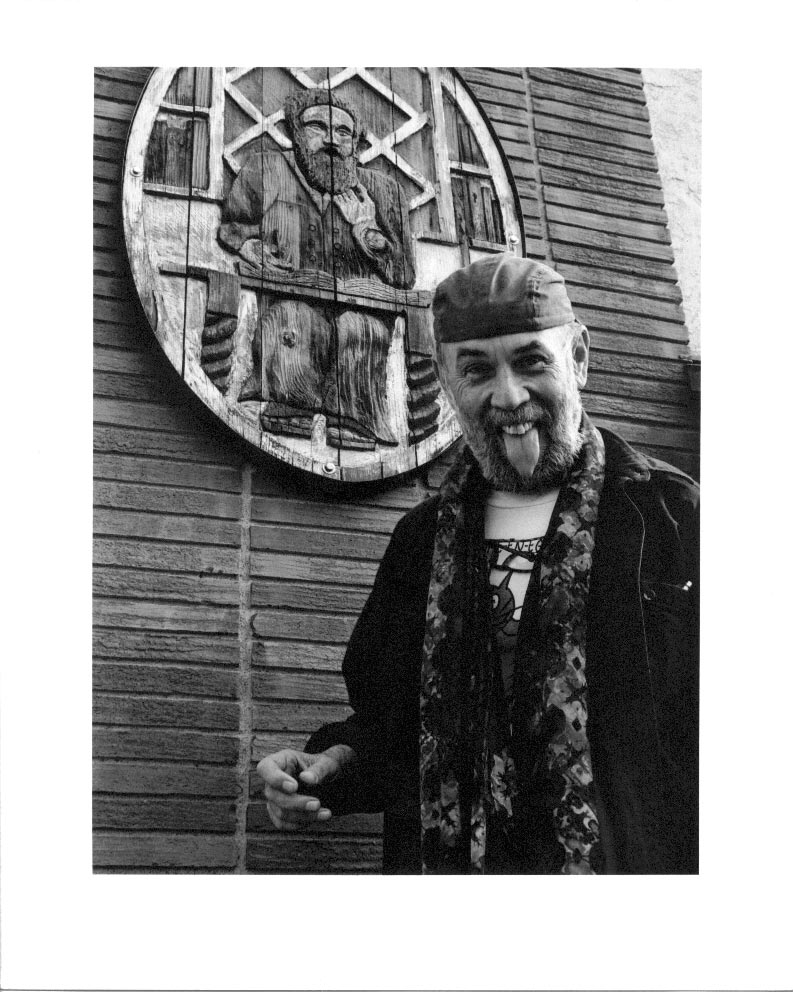
Gus Blaisdell portrait by Max Kozloff

Gus Blaisdell at the Living Batch bookstore 
Portrait by Max Kozloff
Gus Blaisdell Portrait by Max Kozloff

Max Kozloff, critic who documented move beyond formalism, 1933–2025

https://artreview.com/max-kozloff-critic-who-documented-move-beyond-formalism-1933-2025/

Max Kozloff, Influential Art Critic Who Augured a Turn Away from Formalism, Dies at 91

https://www.msn.com/en-us/arts/visual-art-and-design/max-kozloff-influential-art-critic-who-augured-a-turn-away-from-formalism-dies-at-91/ar-AA1CBKE6

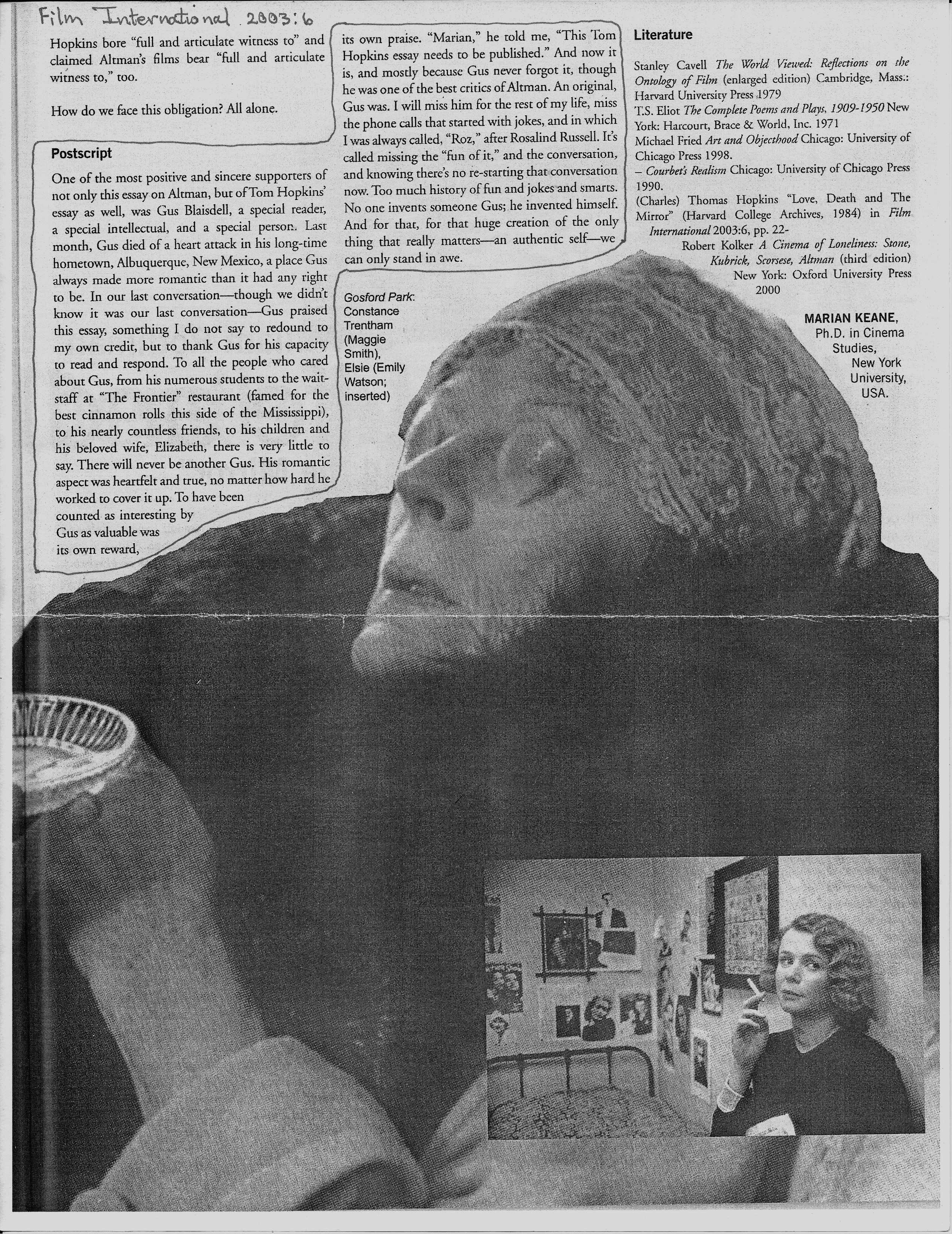
Film International 2003 – Gus Blaisdell Postscript tribute

Image

Rainy Mountain —- a journey

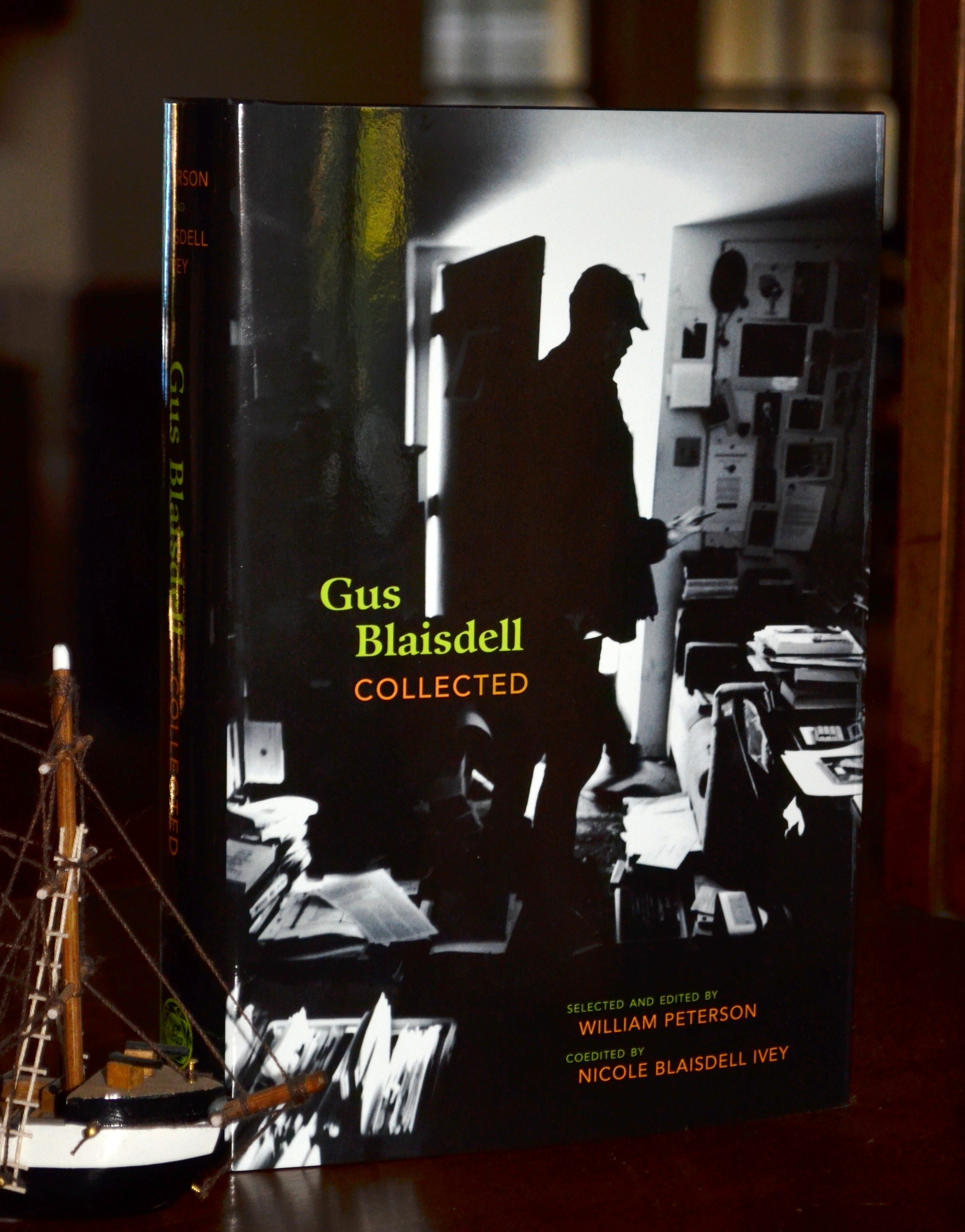
A Review ———————————————————- Gus Blaisdell Collected

His Total Heaviness Photo by Nicole Blaisdell Ivey

Saturday, February 22, 2014

a review of GUS BLAISDELL COLLECTED by George Kalamaras

Gus Blaisdell Collected
Gus Blaisdell
Selected and Edited by William Peterson
Coedited by Nicole Blaisdell Ivey
University of New Mexico Press ($40.00)
by George Kalamaras
In the current land rush for the latest, hippest poetics, caught in the web of irony that so much contemporary poetry seems hell-bent to explore, much lineage that made current movements possible is ignored. This is particularly problematic when that lineage encompasses counter-movements and personalities that served as necessary ballast to keep the ship of the art of its time from sinking. Independent thinkers often suffer obscurity for the sake of their ideals. The battle plains of poetic history are littered with such figures, whilst the monocled generals, astride white steeds on the hill, wax profoundly about the philosophical consequences of their actions.
Publisher, poet, critic, bookstore owner, and provocateur, Gus Blaisdell (1935-2003), born Charles Augustus Blaisdell II in San Diego, was such a figure. Details of his life read like jazz improvisation—from enrollment at Brown Military Academy at age eight, to his fascination with all things Japanese after the close of the Second World War, to studying at Stanford with Yvor Winters in 1953, to living in Aspen and Denver (where he was a freelance reviewer of books and films for the Denver Post and worked with publisher Alan Swallow), to his correspondence with anthropologist Leland C. Wyman, leading to his readings on Navajo culture, shamanism, and religion and his 1964 move (with family) to Albuquerque to study anthropology at the University of New Mexico, to joining the staff at UNM Press the following year and coediting the New Mexico Quarterly, to enrolling in the doctoral program in mathematics at UNM in 1971, to publishing his poems with Howard McCord’s Tribal Press in the 1970s, to becoming owner of the Living Batch Bookstore in Albuquerque (where he also operated Living Batch Press, publishing Clark Coolidge, Gene Frumkin, Ronald Johnson, and Geoffrey Young, among others). He was friends with the likes of Allen Ginsberg, Ken Kesey, Robert Creeley, and Evan S. Connell. He and his fourth wife, Janet Maher, were married by Beat poet-turned-Zen-priest Phillip Whalen.
These events suggest a man with multiple, interrelated interests, and a brilliant, penetrating grasp of the significance of subversive art and a connection to indigenous knowledge. As his daughter Nicole Blaisdell Ivey writes in “A Chronology”:
Gus’s life was like jazz. The improvisation depended greatly on the depth of the cats he was playing with and the audience of the moment. Besides being a philosopher, poet, publisher, editor, essayist, critic, and teacher, Gus Blaisdell was a collector. He collected stamps, comics, autographs, ideas, experiences, quotes, books, music, art, and friends. And he took notes on all of them. . . . He thought of life (books, art, film, friends, wives, children) as moments and serendipitously interconnected pieces on his path from here to there. (339)
Some of these interconnected pieces—just some of what Blaisdell gathered—are brought together in Gus Blaisdell Collected, a generous (nearly 400-page) offering, fittingly from University of New Mexico Press. In addition to the remarkable “A Chronology” (forty pages of a fascinating gloss of a life—almost a mini-biography), Collected includes Blaisdell’s essays on a variety of topics, with section titles “On Photographs,” “On Movies,” “On Painting,” “On Reading and Writing,” “Fiction,” and “Shorts and Excerpts from Correspondence.” Blaisdell created and taught popular courses in cinema studies such as “Teen Rebels” and “Poetry and Radical Film” for almost twenty-five years at UNM, his contributions helping to establish a program and then a department in media arts. He also taught in the Department of Art and Art History. Individual essays are intriguing, a small sampling of which includes: “Space Begins Because We Look Away from Where We Are: Lewis Baltz’s Candlestick Point,” “’Obscenity in Thy Mother’s Milk’: John Gossage’s Hey Fuckface! Portfolio,” “Highlighting Hitchcock’s Vertigo with Magic Marker,” “Vatic Writing: Evan S. Connell’s Notes from a Bottle . . .,” and “Tell It Like It Is: The Experimental Traditionalists.”
Selected correspondence includes letters to Nicholas Brownrigg, Marcy Goodwin, Geoffrey Young, Lee F. Gerlach, and others. Of these, the correspondence with Brownrigg is the most fascinating; it begins in 1960 when Blaisdell was living in Aspen, and reaches into 1962 and 1963 when he was living in Denver. Just as a chronicle of the time it has value, but the complexities with which Blaisdell deals are engrossing. We see a young man caught in between this and that—distancing himself from the Beats and his earlier travels to Mexico and elsewhere, yet committed to his private luminosities, at the time not yet affixed to any particular tribe except the uncertain encampment of maturing yet still longing for the spiritual and psychic liberations of youth. He writes:
Your letters are far from obscure. And there is a good reason. Recall the circumstances under which our original correspondence began? Yes, Dharma Gus on the blistering Highways of America and in its cities and hotels and women. Shit, that is over. The adulation of idiocy (myself then and Jack Kerouac) is passé. We, you and I, have families and responsibilities and we have hopes that we ourselves frustrate only to incur misery. We love, as unashamedly as possible and with gritted teeth, knowing the pressure in our jaw is wrong. I am not saying there is a change in the elemental structure of our souls; I am saying there is a new form in which we exercise ourselves. (288)
Later, in his correspondence with Brownrigg, he movingly critiques universities: “The university—which strengthens the ego and unintentionally fucks up the instinctual—taught us the language of the tongue so thoroughly that, when we came to learn the natural language of bodies (two, coupled) we were made to feel perverse, clandestine, and rich. How much we have to unlearn day by day . . .” (295).
Despite the powerful inclusions of Blaisdell’s essays, letters, and fiction, there is a marked absence of his poetry. His greatest contributions may, indeed, end up being his essays on film and art, as well as his ability to gather a community around his publishing activities, including his noted reading series at the Living Batch Bookstore. Furthermore, selections of a writer’s life-work understandably need to draw parameters. However, Blaisdell’s ground of being—even when he corresponds, philosophizes, and critiques—is the sensibility of a poet, and the reader deserves more of a window into that part of what gets “collected” here. 
That aside, Gus Blaisdell Collected is mandatory reading for anyone interested in the writing, film, and art of the period—and of an iconic figure in Albuquerque, in particular—as well as for those committed to valuing the contributions of independent thinkers who have helped make today’s freedoms of a daily practice of writing and art possible.

Russia Out of Ukraine—-NO WAR

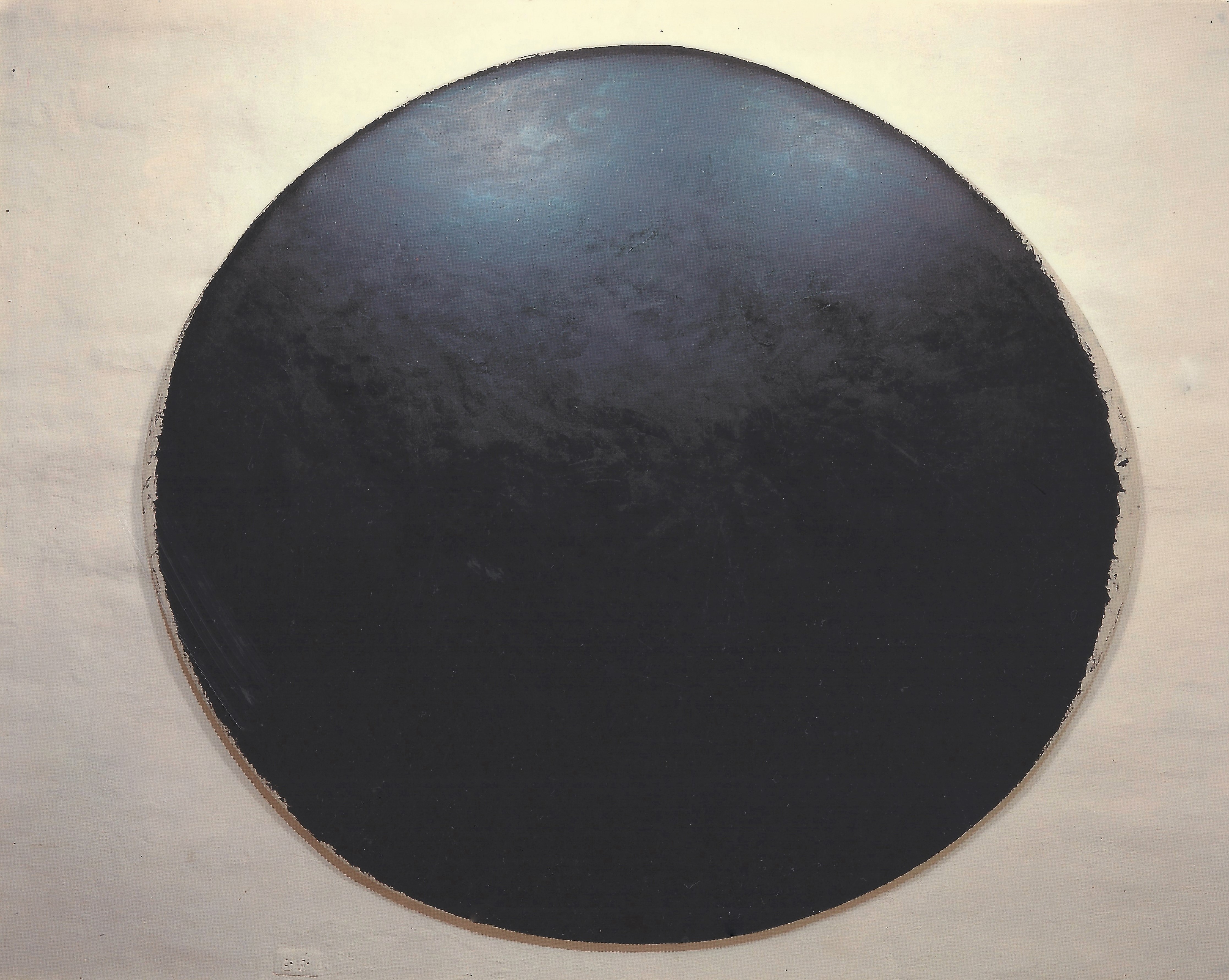
Omoide No Tsukimi             for Ronald Johnson 1935—1998

Allan Graham, Moon 2, 1986, oil on canvas, 83 in.x 91in. Private Collection

Omoide No Tsukimi             for Ronald Johnson 1935—1998

It rises to self-awareness          

Horizon that is always with us  

Black north’s direction

Risen from the belly nightsky   

Phantom blot, inkblack Heian hair

Coiled black pythoness

On moonless nights

Monk sleeves trailed through wet grasses

It hangs eternal there, never sets or climbs

Fulgent Moon 2, lightning struck through


Lightning flash

Then back to black

What seams this darklight

But black holds back, insists

At backbehindness it sustains

Unreflecting primordial companion

All phases of the moon condense

Moon 2 takes breathing, animates itself

Without horizon other than itself, irregular oval of all moons

Even when full or crescent sickle thin slice on either end


Blindspot

At last Narcissus lies faceless

Bottom of unsounded pond

Face buried in a silken muck

Thankfully in reflection I am dark to myself

Tarbaby reflections of Moon 2


Glitters in the total void

Senses steep in unsounded dark

Where darkbather mind

And sunbather eyes intersect

The heart is black and madder

The soul is fishscale black

Thunder underneath the under

Heart and soul begin a fisted journey

To the behindblackness

At our backs we always feel

Always back there behind it all

From head to heel black chrysalis

Hangman’s hood or shiny bodybag.

–Gus Blaisdell

Moon2 is an all black painting by Allan Graham. My Japanese title means remembering moonviewing. The line beginning “Thunder . . . ”, set in italic, varies a line from a manuscript, “The Imaginary Menagerie,” by the visionary poet Ronald Johnson. [Gus’s endnote.]

DAVE HICKEY blurbs Gus Blaisdell Collected

“We hear people talking all the time about Renaissance men. Gus Blaisdell was a Restoration rake, a creature of coffeehouses, bookstores, flaring arguments and happy reconciliations, crazy women and crazier experimentation. This book is a wonderful survey of his enthusiasms and complaints—and a fond memorial of his gift to New Mexico, and Albuquerque particularly. Gus was the absolute, undeniable, real thing. One of the few.”

Gus Blaisdell— Living Batch Bookstore Photograph by Nicole Blaisdell Ivey

Gus Blaisdell — Living Batch Bookstore 1978 – Albuquerque, New Mexico portrait by Max Kozloff

work a way a while in words

https://gusblaisdellcollected.files.wordpress.com/2021/09/aa-gus.pdf