My New Mexico —— Robert Creeley

Image

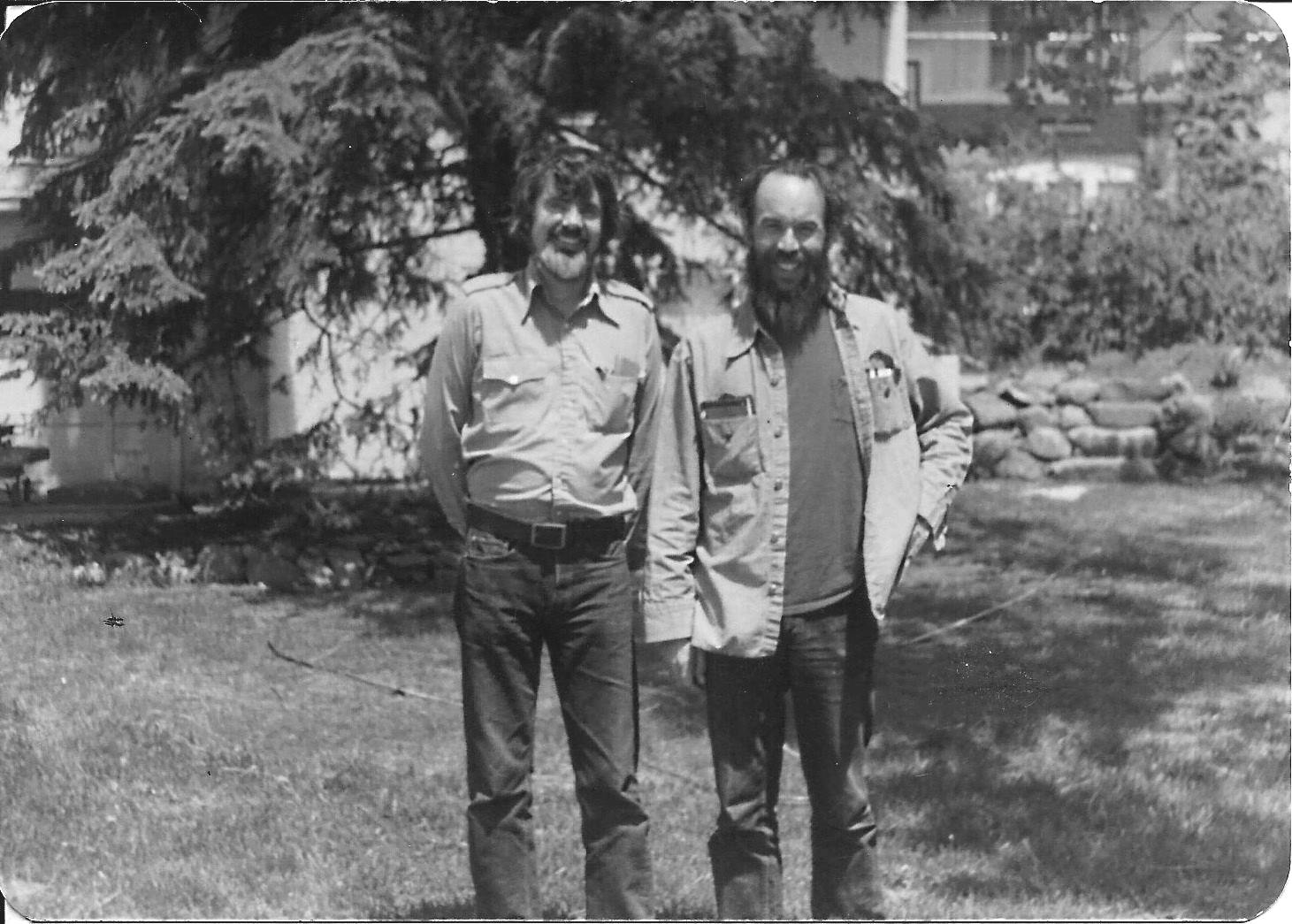
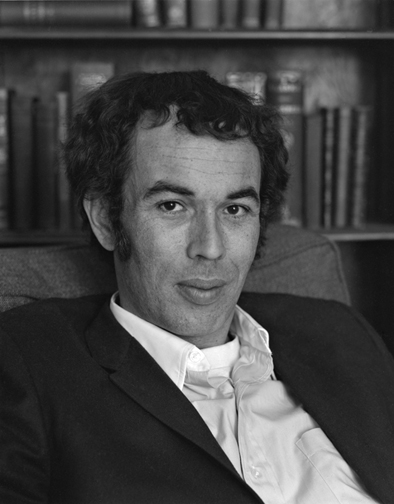
Robert Creeley reading at The Living Batch Bookstore in Albuquerque, New Mexico
Robert Creeley reading at The Living Batch bookstore Albuquerque, New Mexico

From the Editor’s Preface to Gus Blaisdell Collected

Darkness sur- / rounds us

I Know a Man

As I sd to my

friend, because I am

always talking, –John, I

sd which was not his

name, the darkness sur-

rounds us, what

can we do against

it, or else, shall we &

why not, buy a goddamn big car,

drive, he sd, for

christ’s sake, look

out where yr going.

–Robert Creeley

Gus had a special fondness for this poem by his longtime friend Robert Creeley. He took one of its key phrases for the name of one of his publishing imprints, drive he sd books. He also paid homage to Creeley’s poem at the close of the long essay “Buried Silk Exhumed.” There he presented an imaginary anecdote about two of his favorite jazz musicians, Thelonious Monk and Dizzy Gillespie, driving (presumably in a “goddamn big car,” top down, shades masking their eyes) along the California coast. “It’s always night,” Gus has Monk remark idly, gazing off to the shimmering afternoon horizon, “because it’s only light when the sun’s up.” To which he has Diz respond, “Monk, you are one deep cat.”

Gus, too, was a deep cat. And while he loved jokes, lively conversation, and tall tales with an intellectual spin, darkness, like Monk’s perpetual night, shadows much of the writing brought together in this book. It is the darkness of human finitude. While we hardly know what truly drives us, it’s a dread of darkness that jump-starts the helter-skelter getaway in Creeley’s poem, apprehension marked with that stammered line break voicing how darkness “sur- / rounds us.” Darkness, in Creeley’s rendering, hovers over us in ominous supremacy and encloses us within its limiting sphere, a nifty turn on Shakespeare’s “our little life is rounded with a sleep” that Gus surely admired.

Like Creeley, Gus brought the instincts of a poet to his philosophical confrontations with darkness. In “Original Face,” an essay about a round, black, tondo-shaped painting by Allan Graham called Moon 2, Gus explores the darkness that precedes consciousness and is our constant companion. He quotes an ancient Zen koan, “Before your mother and father were born, what was your original face?”, to recall for us the darkness of unknowing out of which we have come, and to remind us that we must always look out from behind our own faces, remaining as dark to ourselves as the far side of the moon. Ultimately, self-knowledge, and the relationship of the self to the world, is the central issue addressed in these writings.

 “Become the kind of person on whom nothing is lost.” Henry James’s advice to a young writer became a kind of mantra for Gus. It defined for him the task of the critic as well as the poet, and he felt it should be applied to everyday life. You have to observe closely and bring all that you know into your response. As a critic Gus assumes the role of an exemplary responder, showing what it’s like to attend to the work at hand. His essays frequently begin with a kind of preamble (before they take the mind for a walk), in which he tells of his difficulties in trying to come to terms with his topic, the struggle with the evolving hydra-headed implications that would occur to him as he tried to think about it conceptually and get his thoughts down on paper. “Original Face” is the most extraordinary response to a work of art that I have ever encountered. Gus simply presents himself to the work of art, confronts its singularity with his own, and engages with it as a fully embodied consciousness.

“Self-knowledge, no matter how fragmentary and tenuous,” Gus wrote in the 1960s, “is the right kind of knowledge, the dialogue between ourselves and ourselves and between ourselves and the external world.” No matter what the ostensible topic might be—movies, photographs, or the expressive qualities of various works of art, literature, or philosophy that he admired—Gus’s writing revolves around the quest for knowledge of the self and the search for understanding our human placement in the world.

There is a problem, however, at the very heart of the quest for self-knowledge. As Gus once observed about self-consciousness, “It’s interesting that the self, as a prefix, keeps its hyphen, never quite combining with the consciousness it engenders; no, that engenders it.” Consciousness of the self drops a shadow between the self and itself, just as it also intervenes between the self and the world. The black hole of solipsism is poised to suck us in, and the threat of skepticism, with its murky doubts and its despair of certainty (since our physical senses are notoriously untrustworthy and our knowledge of other minds always feels problematic), clouds our outlook on the world “out there.” Darkness “sur-rounds us” indeed.

“How does one get out of the monstrous enclosures of the egocentric self?” Gus asked, writing of his early interest in such philosophers as Descartes and Hume, who agonized over these issues. In a letter to Ross Feld he tells of his early “romance” with the mind/body dualism of Descartes: “I was in search of the idea which engendered the body in the world, as was he [Descartes]. His idea was God, one in which content leads to existence. But that doesn’t work for me. God, for me, is a name for the fruitfulness of our ignorance, a thinking in the dark that pushes us on, and on: a fruitful ignorance.”

So Gus’s God is associated with “a thinking in the dark that pushes us on.” According to Wittgenstein, a key philosopher in Gus’s development, “Thought does not strike us as mysterious while we are thinking, but only when we say, as it were retrospectively: ‘How was that possible?’ How was it possible for thought to deal with the very object itself? We feel as if by means of it we had caught reality in our net.” (Philosophical Investigations, I # 428) But the truth is that neither reality nor the thinking self can be so easily caught. Our only net is language, and our words and our thoughts form substitutes, their referents eerily undetermined. “In the actual use of expressions we make detours, we go by side-roads,” says Wittgenstein (PI, I # 426), “We see the straight highway before us, but of course we cannot use it, because it is permanently closed.” Nevertheless, Gus seems to say, since you’re in the driver’s seat, for christ’s sake, look out where yr going! The line might just be the central message of Gus’s writings, which often, in their pursuit of grace and self-knowledge, take on the sound of admonishing sermons.
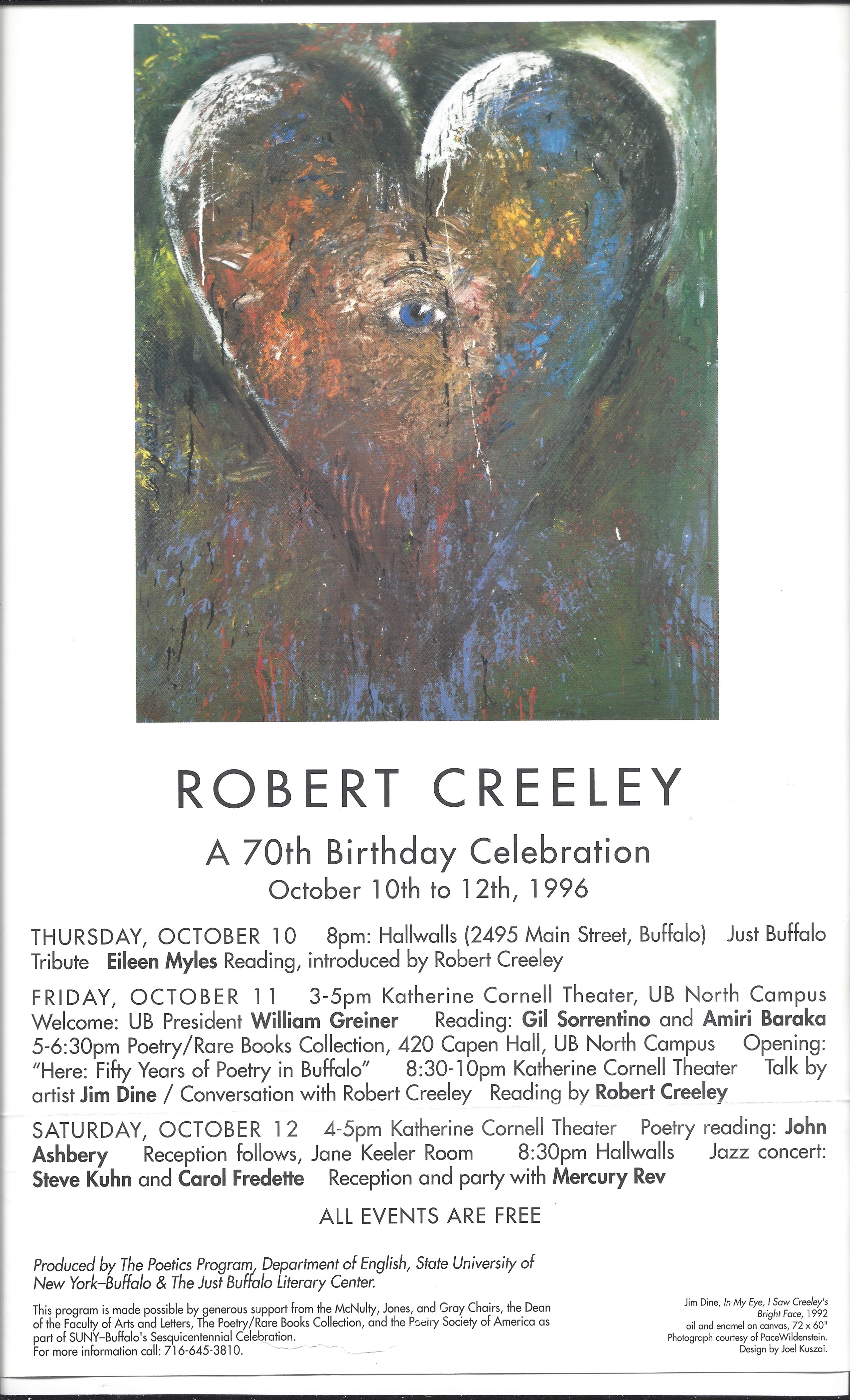
A tribute to Robert Creeley on his 70th birthday

Intro

            I began secretly studying Japanese in junior high school, military phrase books and character dictionaries, only a couple of years after the war. During the war the woodblock prints and ink-painting scrolls were removed from the walls and I had a fascination with both enemies, playing those roles whenever we played guns and war. The other kids always praised me, “Blaisdell, you really know how to die!” My father, a naval officer, served in the Pacific and again during the Korean war, having his own squadron of destroyers–I loved calling them “tin cans.” He used to send me black, hard rubber models of enemy aircraft, the kind used by spotters for identification, three-dimensional versions of those silhouettes that filled the pages of treasured manuals, and also cast-metal model ships, the kind used in war rooms to plot sea battles. In miniature I had the Japanese fleet and a model of the Nagato, the low-slung battleship whose fate it would unforgettably be to surf up the gigantic stem of the atom bomb tested at Bikini.

            My mother divorced my father after Korea. He had been at best intermittent during my childhood, disappearing immediately after Pearl Harbor; returning exhausted and raving only once during the war–they said it was “almost a complete nervous breakdown” (so I guess it was incomplete)–he would not recur in my life until we met when I was twenty-five, a graduate student making myself miserable by trying to find in positivism and mathematical logic something I might call “philosophy.”

            As an undergraduate I studied Japanese formally. My hope by this time, unknown during the secret improvisations with phrase books and character dictionaries, always happy in the search there for radicals, was that one day I wanted to read Basho’s Oku no Hosomochi in the original. Dream on! Today, forty years past those upper and lower divisions, over thiry years in our beloved New Mexico–where even conversationally there is little chance of speaking the lingo–a stumblebum among romanji, the kanas and kanji, I still re-read Basho with love and with an always aroused memory of an ambition more youthful than each aboriginal, preasurable, reawakening.

            What these flirtations with Japanese gave me, especially the more sophisticated formal one, was a lifelong passion for nikki, the Japanese poetic diary. In my ambition I saw it as a possible literary form, the condition of the prose demanding poetry, and vice-versa; the two in their mutual inspiration creating a third: neither prose nor poetry, and yet both; not something over and above, yet along side and out of, like love consummated, desire gratified, or Eve from Adam’s rib (she is our way of leaving him behind, naming his animals, while we explore the garden and discover the bad girl in ourselves—tempted, seduced and exalted—a real idea of education, in abandon).

2

Nikki: Daybook on Insistence

             “The insistence was a part of a reconciliation”

                                                            –“The Operation,” from For Love

            A couple of weeks ago I started thinking about your 70th birthday, 21 May 1926.  That’s a lot of days, twenty-four thousand, nine hundred and twenty, to be exact, like they say. But what exactness is that? Life in days and numbers, the daily and material lost in numerical abstractions.

            I know your idiom, can through ear call it to mind like having a poem by heart, line after line in the rhythm of time, unfolding.

            But this was to be a gift, one given back for the one you are: it is divine to you to give. You bless. You speak of friends as being good news–yes, gospel, and you evangelical, and by announcing names you touch them. Friendship is not just hanging out, the way circumstances stand around their possibilities, guilty as every bystander, hands in turned-out pockets–this company hand in hand, loafing most invitingly while hearing the soul in the song.

            Knowing the idiom, the lingo is always refreshed by yet another reading; in the mother tongue less chance of being a stumblebum though head over heels in love with the sound of it. I read For Love at a sitting on a hot afternoon. I began noting favorite words, phrases, diction, thinking to assemble them in a bouquet, like The Greek Anthology; but in no time I was writing down titles, acknowledging the unparaphrasable integrity of the poems, page after page, poem upon poem, my own selected bulking up. Would it be the same on another reading? I trust not: it would accumulate like a reef until all I had in hand was the book itself.

            A note: insisted: to be of use / measured sense / puts hands and candles in / minds caressed and light / let it. What need of light when love guides hands.

            Another note: wicker basket / woven, like a text, to fit what it contains / is never more than an extension of content. / Three of them brought wisdom over the highest mountains in the world: Tripitaka: one of discipline, the second of wisdom, and the third contained metaphysics. The baskets disappear beyond imagination and what remains? The poems they are / as they are.

3

            Insistence is urgent, pressing, and it lasts, compelling attention. In the interview the other guy said he thought Lacy was a wonderful original. “I do too,” you said, “He’s tough. He stays put.”

            There’s the idiomatic insistent rhythm that I hear repeatedly in Luther’s “Hier stehe ich, ich kann nichts anders.”

            That Hardy older man of Echoes’ “First Rain,” momently Catullian in “Self Portrait,” finding the composure of “Stone” (Aquinas: “Stones point toward their homes”) and the winning abandon of “Echoes”: “Say yes to the wasted / empty places. The guesses / Were as good as any.”

            Sometimes when I imagine our New Mexico I see the volcanic and flat horizon of the West Mesa, rearing eternally its arid tsunami above the Rio Grande, and as if a child dripped from its hand the sand to build its castle from the hard inshore, I see me say, “Creeley is Giacometti to this place.”

            On my fiftieth birthday I was in Cambridge for a year. It chanced that it was also the 350th anniversary of the Blaisdells’ arrival in New England in Richard Mather’s company aboard the Angel Gabriel, tossed ashore over her masts and cracking like a nut on that rocky coast. Not a soul was lost, amazingly, and all those years later the Invitation to the anniversary bid us come and drink in water a toast to our common ancestor–could that really have been the syntax! For my birthday my girlfriend went to the Concord Cemetary, climbed the hill and took a snapshot of Thoreau’s headstone:        HENRY   is all its granitic slate said.

            The locomotive dark still drives toward dawn. Henry said we had constructed an engine worthy of ourselves. He called it Atropos, a fate, one that doesn’t turn aside but keeps going. He said he would like to be a track repairer somewhere in the orbit of the earth.

            I spent years asking friends, including you, who it was had said, “a tiny piece of steel, properly placed,” and you all said, “Lew Welch.” Nobody could find it. Eventually it turned up in one of Jonathan Williams’ quote books: it was yours. It had that hard Dickinsonian ring to it. I imagined the train un-derailed, running over the tiny piece of steel, shooting it off the rail, into a poet’s hand, leaving it sharp as a burin–and the poet keys the train, from the locomotive with its slashing Mars-light to the red-eyed disappearance of the caboose.

            5/17: I was flipping through Echoes in search of a poem when my eye was caught by a poem inside that you’d inscribed but I had not previously seen: “Pure,” about how it can be an inspiration–indeed, a drawing in of breath–even when the toilet backs up through the bathtub drain while one is showering.

4

            That night I crossed over the bridge of dreams, as the nikki say. My mother’s long black hair came out of the drain hole in the tub and lashed itself around my tattooed ankle. I was not terrified, and instead of waking from my nightmare stayed asleep, walked in sleep as I had as a child, down the hall, into the living room, and woke with a book in my hand. I knew where to look even while still dreaming: Basho’s Record of a Weather-Exposed Skeleton.

            The great poet returns to his birthplace and is shocked at how everybody has aged. One of his brothers likens him to Urashima, whose hair turned white on opening a miracle box. The brother hands such a box to Basho. It contains his umbilical cord and a lock of his mother’s hair: “Should I hold it in my hand / It would melt in my burning tears / Autumnal frost.”

            I know a man whose years of blessings I am honored to return on his birthday. I am so glad he is talking all the time, talking back the surrounding darkness, putting in the candles where they need to be, forgiving and lightening my own once cyclopean dark with his friendship and his poetry.

1996 / 2001 (?)

Undated and unpublished computer-file manuscript. While it was almost certainly composed in May 1996, on the occasion of Robert Creeley’s 70th birthday,this piece was probably revised in the fall of 2001 when Gus submitted it for consideration for possible inclusion in the UNM Press collection, In Company: an Anthology of New Mexico Poets after 1960. It was not used in the anthology, however. In correspondence Gus indicated that he considered this text to be a poem in prose.

Fruit of the Loquat Tree

Gus Blaisdell's studio shelf

Gus has a shelf in his study filled with found objects.

They glow in the south window,

they resonate in memory.

Gus has a grandson named

Jack Augustus.

He twirls a phrase like other children swing

tin pails at the beach.

Jack says

bop de bop de bop de bop.

This beat is coded in his genes.


Loquat, loquat.

How many varieties can there be

of fruit from this one loquat tree?


Marshal Will Kane turns back

from retirement

each semester. Gus asks his students

Can you hear it? Do you GET it?

There’s courage in this art,

no art without courage.

It’s always nearly noon,

ask Wen Ho Lee.

Loquat, loquat.

Bop de bop de bop de bop.


A friend from Socorro days asks me

are you related to Gus

by marriage?


Let’s skip a survey of the intervening decades

and turn to objects that glow in memory.

Gus taught a class there.

Are you related to Gus by

learning?

Loquat, loquat.

Bob de bop de bop de bop.

How many varieties can there be

of fruit from this one loquat tree?


Translate loquat from Mandarin: Rush Orange.

Pronounce its taxonomic name:

Eriobotrya japonica.

Follow it hanging in the western sky,

round burnt orange disk.

Follow it to the first tree

rooted in oriental earth, rooted in Adam’s memory.

Seeds from this one tree blew across oceans,

flowered in strange, distant worlds.

Can you hear the rhythm that carried these seeds?

Do you GET it?

Loquat, loquat.

Bop de bop de bop de bop


16 Sept 2000

Mark Ivey

“Written for Gus” Sixty-Fifth Birthday


Invitation to a Ghost

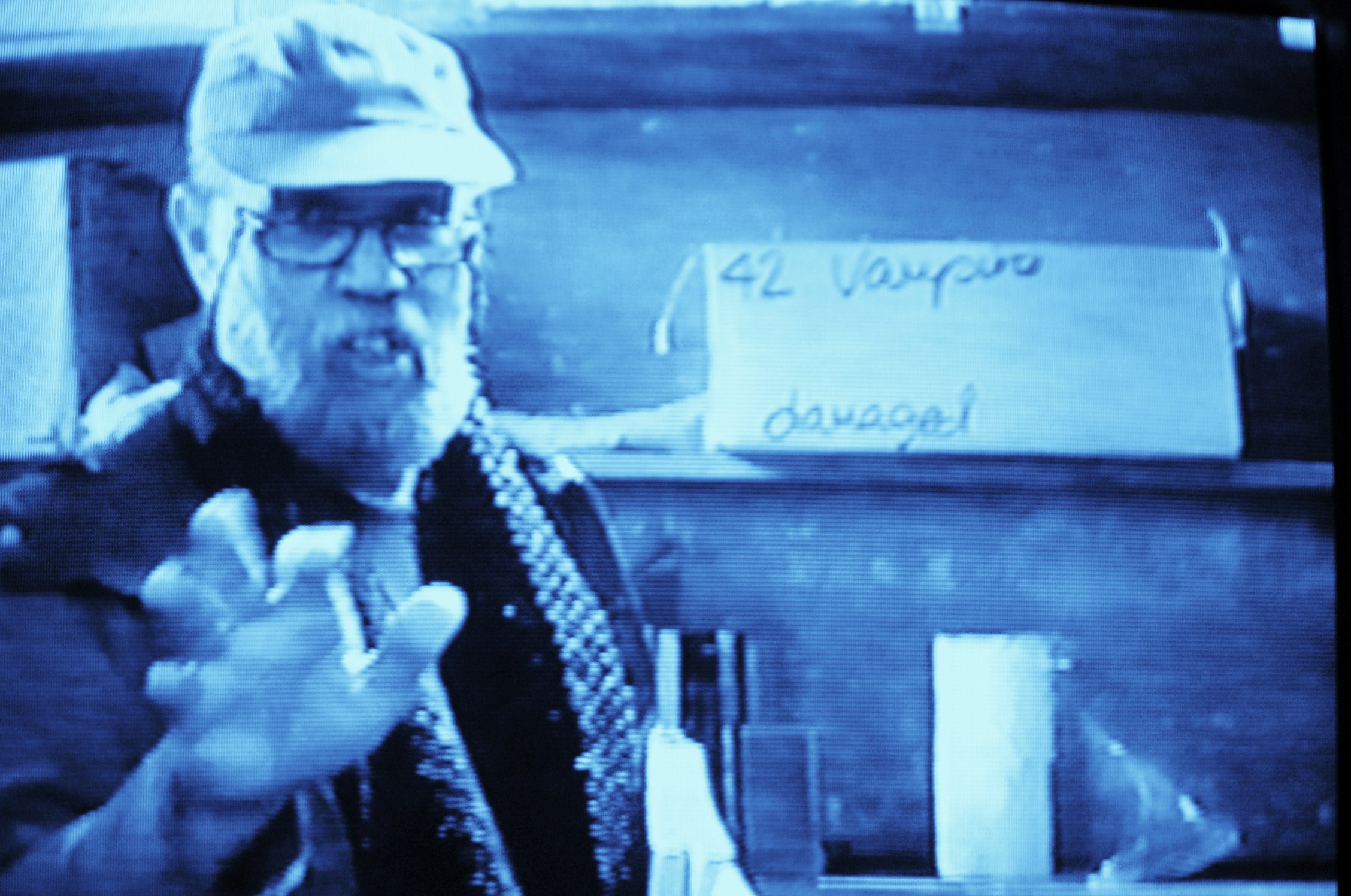
My Vampire

                            ©Nicole Blaisdell Ivey

Ray Waddington and Gus Blaisdell 1973?

                     Ray Waddington and Gus Blaisdell 1976

Invitation to a Ghost

for Henri Coulette(1927-1988)

I ask you to come back now as you were in youth,

Confident, eager, and the silver brushed from your temples,

Let it be as though a man could go backwards through death,

Erasing the years that did not much count,

Or that added up perhaps to no more than a single brilliant

forenoon.

Sit with us. Let it be as it was in those days

When alcohol brought our tongues the first sweet foretaste of

oblivion.

And what should we speak of but verse? For who would speak of

such things now but among friends?

(A bad line, an atrocious line, could make you wince: we have all

seen it.)

I see you again turn toward the cold and battering sea.

Gull shadows darken the skylight; a wind keens among the chimney

pots;

Your hand trembles a little.

What year was that?

Correct me if I remember it badly,

But was there not a dream, sweet but also terrible,

In which Eurydice, strangely, preceded you?

And you followed, knowing exactly what to expect, and of course

she did turn.

Come back now and help me with these verses.

Whisper to me some beautiful secret that you remember from life.

Donald Justice

*Read by Raymond Waddington at Gus Blaisdell’s memorial celebration Feb 2005

Email from Ray in 2007

I can’t remember just when I first met Gus.  It wouldn’t have been 

our freshman year at Stanford (I was in a dorm on campus; he was in 

Stanford Village, Menlo Park).  Probably the second year, either 

through Vic Lovell or in Charles Allen’s American lit. class.  Allen 

was an eccentric (didn’t get promoted), whom we both liked; he gave 

Gus a magical stone for a (first) wedding present.  Curiously, 

although he hung out with creative writers, Gus didn’t take C.W. 

classes.  That year I lived in three different places, each with 

different people.  For the third year, fall quarter, I rented a 

cottage in the Los Altos hills and called Gus to see if he wanted to 

share.  I warned him that, since it was ten miles from campus, it 

wouldn’t work if he didn’t have a car.  Without missing a beat, he 

said, “That’s cool.  I’m buying a motorcycle.”  He lied, of course. 

The motorcycle never materialized, and in the end it didn’t work. 

For a while, it was fine.  We both were late sleepers and arrived at 

an elaborate wake-up system.  The alarm would go off; I would get up, 

put a record on the phonograph (Charlie Parker for noise or Mozart 

for annoyance) and go back to bed.  When the sound got to Gus, he 

would get up, swearing, and wake me up.  Eventually, we would go off 

in time for the 10:00 class.  Once we completely lost a day.  Went 

down for our Wednesday classes and found it was Thursday.  We 

explained it as a time warp, but more likely we just slept through. 

At this time, Gus’s particular enthusiasms were Catholic 

intellectualism (much to do about Etienne Gilson, Jacques Maritain, 

et al; and he talked me into taking a course on Christian 

Existentialism with him) and samurai movies.  He was taking beginning 

Japanese, and did a very impressive Toshiro Mifune imitation (he 

always was a great mimic).  I couldn’t believe it when he failed the 

course.  He was already keen on Yvor Winters (although the story of 

Winters rescuing him from expulsion is completely bogus); and we may 

have been the only two undergraduates in one of his classes.  I 

remember that he introduced me to Pat Madden (a Kentuckian who smoked 

cigars and sometimes wore white suits) and his bohemian set of 

hangers-on.  (Bohemian because this preceded the Beat era a few 

years)  Anyway, I got tired of having to wait around campus until Gus 

was ready to go home; but the deal-breaker was when he brought Phil 

Wilson, this weird ex-football player, in to live with us.  Wilson 

was broke, so paid no rent; big (he had been a guard) and took up a 

lot of space, just lying around in his fleece-lined sleeping bag. 

Sometimes his rich girl friend J.J. would show up, playing Lady 

Bountiful, to distribute food and clean house, but that was rare. 

So, at the end of the quarter, we agreed to go our separate ways, but 

stayed good friends.  Of course, we used each other: I always had 

transportation (he didn’t) and he had great entertainment value, both 

in himself and in the people he collected by charming them.  After 

that intense fall, I saw him more intermittently.  Although girls 

were amused by him, there was no girl friend until Carol Gay 

Eichelberger (she of the blank, Little Orphan Annie stare) for a 

while.  Then suddenly there was the really strange thing of the 

marriage.  Five minutes with Glennis and you knew it wasn’t going to 

work.  When I went off to graduate school in Texas and on to my first 

job in Kansas, I lost track of Gus.  But Charles Allen told me that 

he was managing a movie theatre in Craig, Colorado.  We were driving 

through, so stopped to see.  There was the movie theatre on the main 

street and through the window I saw Gus, with his feet on the desk, 

poking his finger through a bullet hole in a WWI German army helmet. 

A good reunion (met Sally, three little kids, of whom you must have 

been one), and we never lost touch again.  He would visit from time 

to time (in Madison WI with Felice, here in Davis); and I last saw 

him at the Yvor Winters Conference—a nice day together at a now 

unrecognizable Stanford.  Mainly we communicated by letters until he 

switched to Sunday morning phone calls.  I still miss them (as does 

Kathie).  I could give you more names conjured from the past (Mike 

Miller, mathematician and jazz pianist), funny stories (his method 

for getting Vic out of the bathtub), one-liners we always shared “I 

theenk it’s gonna be a heet, mon”), but maybe this is enough. I don’t 

know if it’s any help to you, but do let me know if you have 

questions or need follow-up.  Email or phone (530-662-0703) is fine. 

I work at home, so am usually around.  Best,

Ray

The Intellectuals at Okie’s Bar

Gus Blaisdell NM 1969 ©Arthur Lazar

Gus 1969 © Arthur Lazar

The Intellectuals at Okie’s Bar                                                                                                 for Gus Blaisdell

They are lovers of their own distortions                                                                               who sit in such darkness    music                                                                                     steaming about them                                                                                                                                                     beer swelling                                                                                       their muscles / sense and temperance                                                                                   tortured into hours of speech                                                                                                 to dowse their minds’ reflection                                                                                                                                                                  Ocean at night                                                     leaps up in tongues of green illuminated                                                                                 spume    and dies on sand                                                                                                       A residual humor flaps its wings                                                                                             evacuates into air                                                                                                                                                     The bar is                                                                                       headquarters for difficult gymnastics

There is nothing outside but stars                                                                                       and a sliced moon    cold now in Novermber that                                                                     arrogant Heaven peopled by the dead                                                                               Cars wearing holsters cruise                                                                                                   the boulevard                                                                                                                                                      at one with those harmonious                                                                         seasons and cycles to which                                                                                                   the balls of drunks aspire:                                                                                                                                                        to be contained                                                                           in Purpose     molten fluid pouring                                                                                 through strict cylinders                                                                                                                                                        to arrive at                                                                                       the laurel bush at last     completely relieved                                                                         done with hessian duty      into the arms                                                                                 of a goddess more woman than ghost

We are not the mob that coils                                                                                           around Fortune’s rim     Snake eyes                                                                                     inhabit our bones                                                                                                                                                             seeing fumes                                                                             canopy all gay processions (prophesy also                                                                         the pit where brains are buried)                                                                                                                                                      so we refuse                                                                       to march                                                                                                                                                         hippity-hop through Hell instead                                                                       our toes quick                                                                                                                                                           as red coals                                                                                             spend our laughter in heads of foam                                                                               matching the need for                                                                                                                                                                    bright occasions

Gene Frumkin (1928-2007)                                                                                                  from Clouds and Red Earth     Swallow Press

***First published in The Only Journal of the Tibetan Kite Society, 1969                                    edited by Howard McCord , The Tribal Press

Ken Fields poem for Gus

Gussy Gus
Albuquerque, NM

“Earth angel, earth angel, the one I adore”
–The Penguins

Ten months after your death I got the news.
All that time you were still alive.  Each week
I thought of you or told a Blaisdell story,
The way I saw you first, at my front door,
Six hours late, the middle of the night, festooned
With leaves in your hair from the back yards you’d crashed through
As curly haired as Bacchus and as stoned:
“Your neighbors don’t know you, man”—you kept shouting,
“Professor Fields, goddamn it.”  The next three days
We talked and drank around the clock, the only
Trace of that conviviality, the phrase
“Far fuckin’ out!”  We said it a thousand times,
Late sixties eloquence, we never looked back.
We burned our lives to the rail, in a few years,
You sobered up and in a few more, me too.
From then on we remembered what we said.

You got to Stanford through a pachuco gang
In San Diego, tattoos on the backs of your fingers.
Arrested for stealing a book, you finished high school
In a bad boys joint run by the nuns.  The bookseller
(Later your trade) thought about what you’d done—
He’d never had a thug steal Wallace Stevens,
So he sent you all the Stevens in his store
And In Defense of Reason, strange remorse.
This Winters is smart, you said.  You came to Stanford
Where Uncle Lumpy, as you called him, loved you.
Your master and mine, he called you his wild boy.
One day the dean of men confronted you.
He’d just found out about your tattoos.  “This school
Is a gentleman’s school, and I expect you to act
Like one, at least, and not come back next term.
We’ve never had anyone like you.”  When you told Winters,
He stood up, pushing his chair into the wall,
And stumped across the quad.  “I never knew
What he said to the dean.”  Hell, you know what he said,
“This boy is ten times smarter than you.  He stays”

You only taught the best:  Mrs. Bridge,
Basho’s Narrow Road, Kurosawa,
Chris Marker and Descartes’ Meditations:
“Wrong in every one of them, but read them
Like a French New Novel, narrated by a man
Trying to keep from going mad, and failing.”
You were my only intellectual.
Your charm,
Your beautifully vulgar equanimity,
Brought learning to the table and the street,
“Where the rubber meets the chode,” I hear you laugh,
The rude road Strode rode.  In that quick riff
You’d hear John Ford, Woody, and Sonny Rollins,
And the Duke holding court at The Frontier,
The all-night diner where you said good night.
When you described a round bed with a bedspread
Printed with a target—“it was like ground zero
At a fuckathon”—my wife fell in love with you,
“The funniest man alive.”  And you still are.

“Not too many words between myself
And the world outside,” you wrote.
Well, more than you let on.  A single room
Is overflowing with them, “Some white puff
Just beyond our mouth.”  I want to phone you
When a doctor tells me of a patient complaining
Of fireballs in her universe, another
Suffering immaculate degeneration,
And a man controlling his rage by taking something
He called Hold Off.  But no one’s home.
Gus,
Fireball, immaculate degenerate, you hold off,
You’re somewhere out there, as they say at Acoma
(Simon Ortiz recalls you at Okie Joe’s),
You’re somewhere out there, Gus, or as you’d say it,
(Corazon, baby) you are far fuckin’ out.

Ken Fields