FILM IS A FINE ART

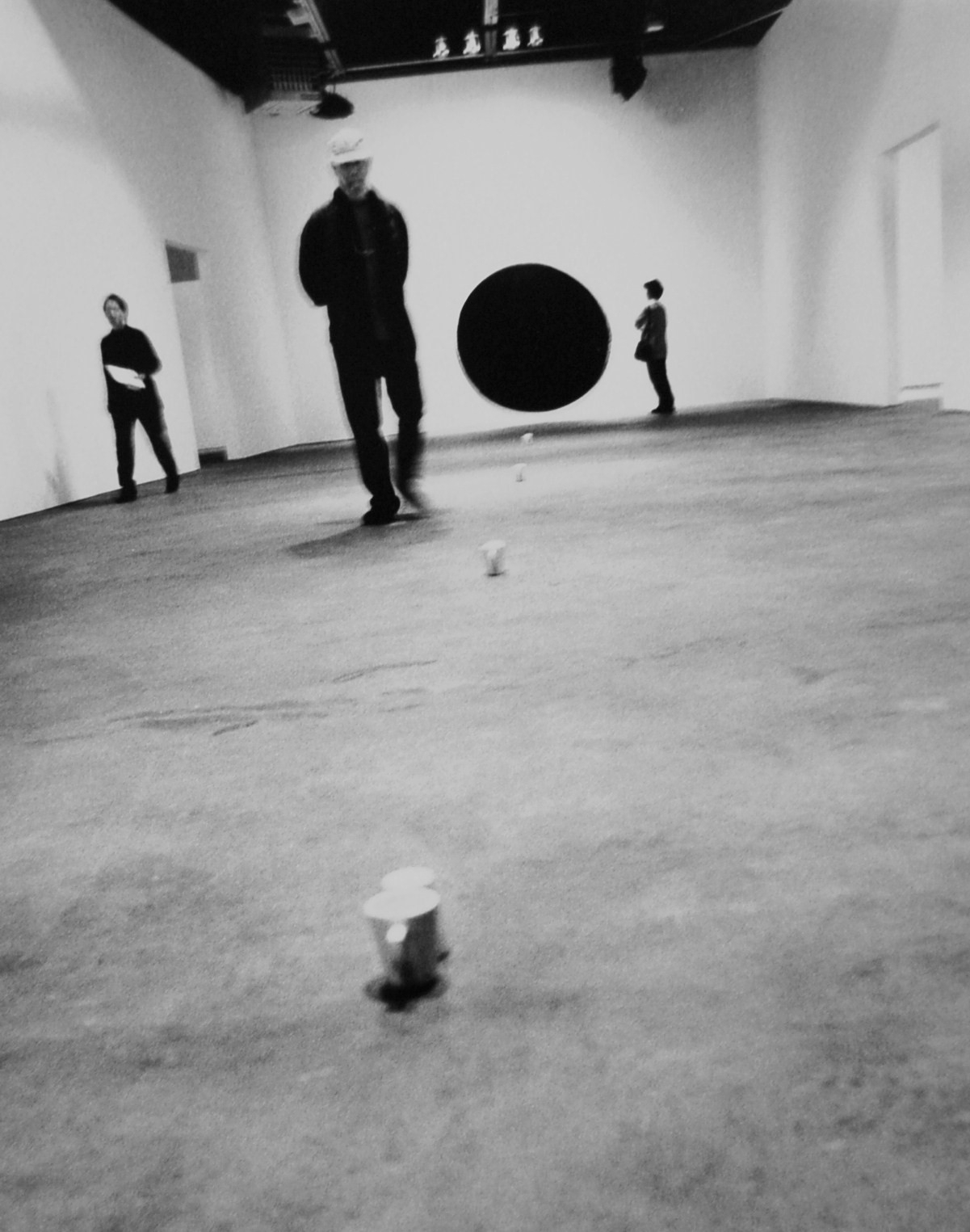
Gus Blaisdell SITE Photo by Nicole Blaisdell Ivey

 Writings of Gus    *note to the department

 
Film is a fine art – those like music and painting that are goals or ends in themselves- – and a liberal art, the study of those reflective and critical skills necessary to freedom. Film must not be taught in isolation from the humanities and the other arts; nor must it be taught in isolation from history and politics. Given that this newest of our arts draws on so many other major arts in our culture – – on drama, opera, poetry, painting, literature – – it is reasonable to consider any of the humanities or the arts as film’s academic home.Today new voices are demanding to be heard, seriously challenging the canon and the curricula based on it. Given film’s appetite for the arts and its individuality or autonomy as a new art, film is as naturally crossgrained as it is “interdisciplinary”: it offers a radical focus for questions of cultural plurality (it is international in scope, naturally crossing cultural boundaries and declaring both similarities and differences between cultures). Film also questions stereotypes and other social constructions, for a stereotype is indeed a “social construction”, and it can be questioned. Film focuses such challenges, projects and screens them, and discovers the mechanisms in our culture that enables some voices while silencing others, that allow some subjects while relegating others to the margins. Moreover, if our culture has shifted from the word to the image- – I don’t believe this but I entertain the hypothesis- – then why be wail the fact when a film curriculum can obviously reverse this direction. In my experience of teaching and learning from film, movies motivate texts, lead naturally to reading and writing. I require my students to read a great deal, and texts central to our culture and of real difficulty; and even though I have only one assistant for the several hundred students in my classes I also require them to write.Film is presently uncanonical. Those whose work contributes toward a curriculum in any subject know that we cannot in advance design what we can only discover in practice. But film’s uncanonical nature is one of its great assets. We do not know what it can bear and to date we do know that putting it together with the best that a culture can produce is an unending and critical apposition, one worth serious, humanistic study. Unlike scraping the hulls of years of interpretations, film is in the process of discovery and revelation where interpretation is concerned.One principle of my teaching takes its inspiration from Henry James admonishing aspiring writers to, Yes, write from experience. But before that there is something even more important:  “become one upon whom nothing is lost.” But given the nihilisms and fashionable skepticisms of the day don’t we begin by believing that if we are anything at all then we are ones upon whom, if not everything, then surely most important things are lost? Then teaching might be inspired to recover from this despair the self that is best; and learn again how to have a voice in one’s own experience; to stop the incessant voice of rediscover and readmit voices lost and denied.In exposing my students to the best in the other arts and humanities, and to the best in film, it is my hope that these first impressions might prove of sufficient force that they would one day return to the films and texts. By not providing film the best environment we can, we are missing opportunities as teachers and we are missing them at the sacrifice of our students. My fantasy? If students arrive with literacy in images film can help to teach them other articulations, the critical challenge of finding words, the best words, for something, like any masterpiece, that we know is better than anything we can say about it – that this piece of music, story, poem, play or movie offers what any art, liberal or fine, promises: a view of immediate reality, even one that competes with it on the best terms.  Moreover, film offers a student a critical reflective voice in his own experience, surely a place to begin education.  If we deny the student this voice we are as teachers missing one of the great opportunities our democratic culture offers, an art that appeals to the many and can in its greatest instances hold its own with similar achievements in the other arts. I shall end by quoting from some private correspondence from my friend and mentor Stanley Cavell: (should film be denied admittance to a serious, humanistic study and there be no honorable reasons for its rejection – – I can see none – then such denial) “expresses an indifference to the education of a region of our students’ interests and sensibilities that not only directs a significant portion of their times of choice and conversation but which, among all such current times, is the region most likely to persist throughout their lives, whatever their careers.” My fantasy is that film, our new art, is bidding fair and should be heard in its bid for equal treatment among the liberal and the fine arts.

Film requires for its study a socially and intellectually coherent and expansive place rather than one defensive and cultish. If there is any institution in our democracy which denies that there is but one game in town, it must be the university. It is a church permitting, even encouraging, heresy, a constant redress of what we believed were our basic values.
 
*comments welcome

IN THE BEGINNING IN THE END

My father Gus Blaisdell dropped dead from a heart attack in Albuquerque, New Mexico in the alleyway behind the Frontier restaurant and what used to be, until it’s closing in late 1996, his regionally famous Living Batch Bookstore. His heart attacked on a Wednesday night shortly after teaching his Horror film class where he’d screened and lectured (“brilliantly”, according to his longtime graduate assistant Bubbles) on the 1926 Japanese film Pages of Madness. Inside his worn, canvas Living Batch book bag, which he carried with him everywhere, filled with his current readings, notes, and journal writings, was a letter that began; Dear Beth, The untitled collection of my essays I propose falls, natch, into three sections: 1) essays on photography; 2) on painting; and 3) on movies.
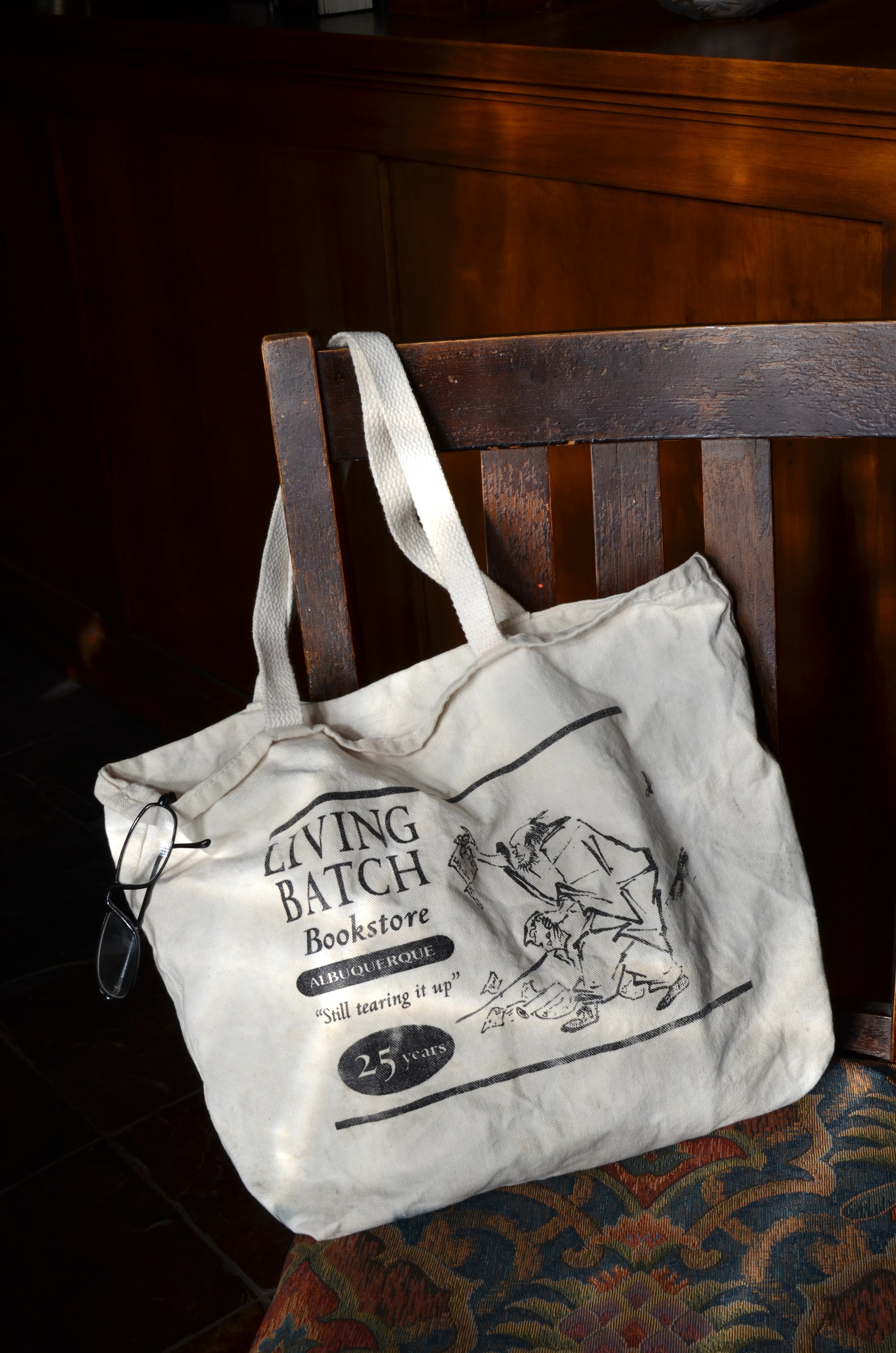
When I received this bag from his widow (fifth wife), a year and a half after his death, along with 40 boxes of his papers, I was elated to have some instruction, some guidance, from “His Heaviness” (a title I bestowed and he relished), on how best to proceed in honoring this brilliant, difficult and fascinating man. Hence, the book begins.
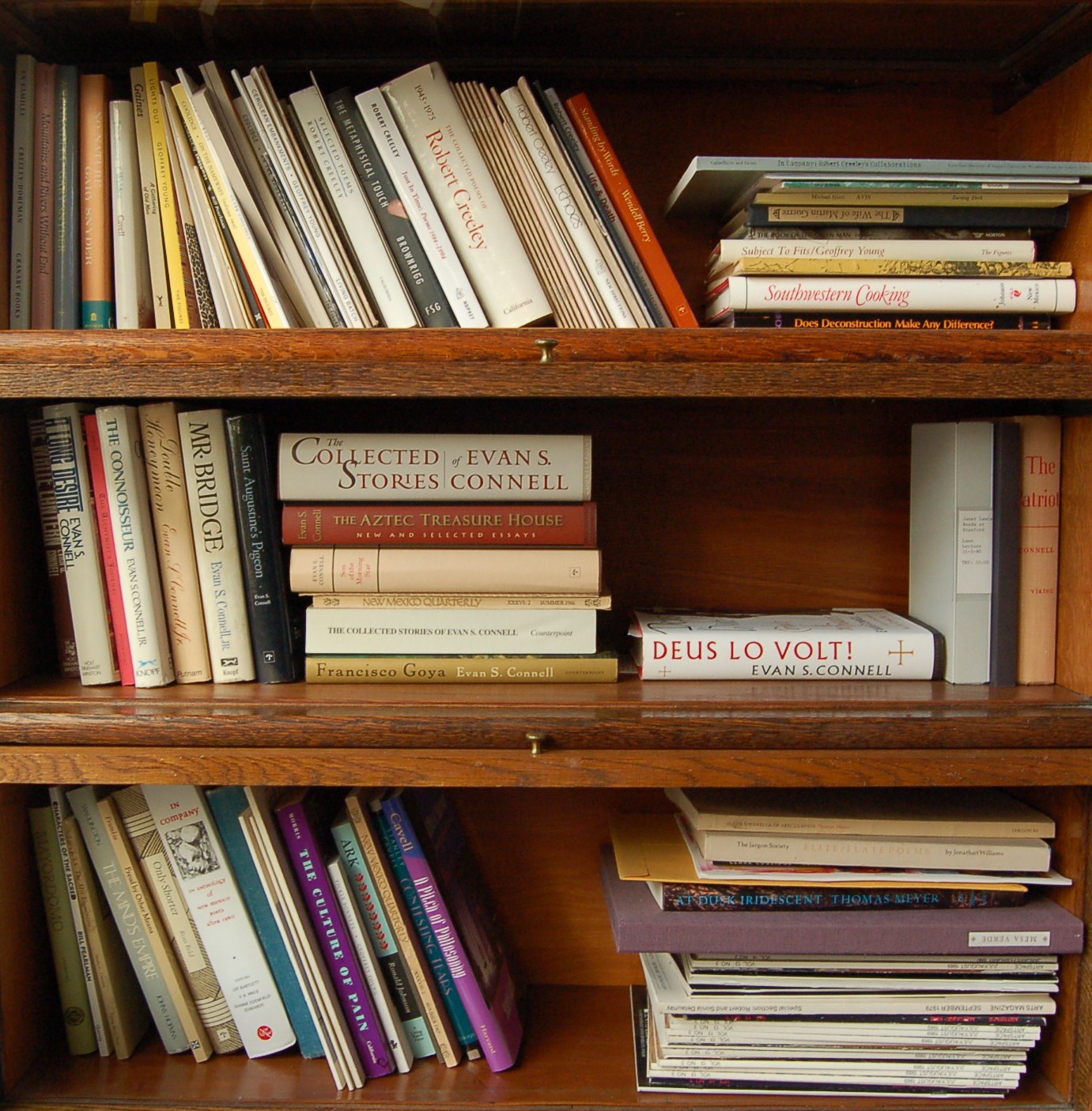
THE GIVING OF BOOKS

A message from N. Scott Momaday:
Dear Nicole,The book is a clear mirror of the man. It is beautiful and moving. Gus and I made a legendary journey to Rainy Mountain in the hard weather that shapes mind and memory. It was a quest, a journey eminently worth making.With deepest thanks.Scott


         The Living Batch bookstore in Albuquerque, New Mexico was a haven in the desert southhwest for poets, writers, readers, photographers and artists from 1970-1997.

By Patricia A. Nelson, manager of the Living Batch Bookstore
(this lovely piece was incorrectly attributed to Writings of Gus)
  ( an excerpt from a holiday edition of the Living Batch NEWS)
…In giving books, we proffer a deep solicitude. We focus our attention on the solitude of another in an intimate speculation which yields a quaintly formal gift. Our gift is full of our generous pride in how well we’ve ‘read’ another: how we’ve discerned their taste; pondered a confidence; thoughtfully packages our advice, praise, criticism; celebrated a kindred spirit or tried sweetly to please an alien one.
We try to give ourselves objectified in another’s words. Bookgiving is a discrete form of self exposure. We often think we should sprinkle little trail markers through important books we give away. ‘Right here! Read this! My soul is bared!’ Alas, we can give the book but not our unique reading of it.
Every new reader gives a book a new reading. The exclamatory babble of happy booktalk is an exchange, a mutual enthusiasm mediated by books.  We suppose our giftbooks are meant to spark such talk. Perhaps we give essays we found full of glad affinity or a marvelous gnashing of teeth. Or a cookbook, our own copy spattered & stained with the preparation of happy communal feasts. Or a simple sing-song storybook that read our children to sleep night after reliable night. We might articulate a turning point in our understanding, pass on a spiritual guidepost, replay the thrill of ideas once startled awake by words which did not lead us gently but urged us hotly in pursuit.
We are, of course famous for giving books to all save one soulless obligatory nod who once responded peevishly, ‘Please! No more books, I already got one last year.’ We’re sending him socks.

BOOK RELEASE

Saturday September 22nd from 3pm to 5pm at THE BOOK STOP

and lovely adjoining  courtyard.

3216 Silver Ave. Albuquerque, New Mexico        505-268-8898

GUS BLAISDELL COLLECTED

Image

Writings on Lewis Baltz, John Gossage, Evan Connell, Frank Stella, Terry Conway, Guy Williams, Hitchcock, Wim Wenders, Kubrick, Joel-Peter Witkin, Thomas Barrow, Stanley Cavell, Robert Creeley, Plato’s Phaedrus, Ross Feld, Rachel Whiteread, James Baldwin, Allen Graham, Don Dudley, Carroll Dunham, …and then some…

GUS BLAISDELL COLLECTED

Cover photo by Nicole Blaisdell Ivey

CONTENTS:

Editor’s Preface: by William Peterson

Foreword: by Stanley Cavell

Introduction:  “On Slipping Across: Reading, Friendship, Otherness” by David Morris

On Photographs:

  1. Absorbing Inventories: Thomas Barrow’s “Libraries Series”
  2. Afterworld: Photographs of Joel-Peter Witkin
  3. BLDGS: Photographs of Lewis Baltz
  4. Space Begins Because We Look Away From Where We Are: Lewis Baltz, Candlestick Point
  5. Buried Silk Exhumed: The Lewis Baltz Retrospective, Rule Without Exception
  6. From Obscenity in Thy Mother’s Milk: John Gossage’s “HF!” Portfolio
  7. Thirteen Ways of NOT Looking at a Gossage Photograph

On Movies:

Passion Misfits Us All: Wim Wenders’ Paris, Texas

  1. Death’s Blue-Eyed Boy: Stanley Kubrick’s Full Metal Jacket
  2. Still Moving
  3. Highlighting Hitchcock’s Vertigo with Magic Marker


On Painting:

  1. Frank Stella’s The Whiteness of the Whale
  2. Passion and the Pine Breeze: The Paintings of Terry Conway
  3. Guy Williams: On In: Outside
  4. Original Face: Allan Graham’s Moon 2
  5. Poem: Omoide No Tsukimi


On Reading & Writing:

  1. A Gloss Annexed
  2. Vatic Writing: Evan Connell’s Notes from a Bottle . . .
  3. Tell It Like It Is: The Experimental Traditionalists
  4. Rebus
  5. What Was Called A Thought Echoed in Sight: Yvor Winters’ Centennial
  6. Poem: Occasional Loquats: For Janet Lewis
  7. For Robert Creeley on his 70th Birthday
  8. A Nobler Seduction
  9. Slipping Across

Fiction: Radical Philosophical Reclamation & Wrecking, The TLP Hotel (4 Excerpts)

Shorts & Excerpts from Correspondence

Envoi: by Ira Jaffe

Chronology: by Nicole Blaisdell Ivey

Bibliography


His Heaviness in cyber space

For those of you living in the digital age Gus Blaisdell Collected is out and available on Kindle.
For those of us who need the heft of the good book in hand it will be arriving in early September.
For all who want a preview and to read the wonderful editor’s preface just click on the link below  then click on the handsome book cover and voila’ .
best,
Nicole

Welcome to the FOG

Friends of Gus,

The countdown has begun. Gus Blaisdell Collected is nearly upon us. Due out in September. The launch party details coalescing. I will keep you posted.

Art • Film • Literature • New Mexico/Southwest • Photography

Gus Blaisdell Collected


William Peterson
Nicole Blaisdell Ivey


From the moment he arrived in New Mexico in 1964, Gus Blaisdell (1935–2003) was a legendary presence. Famous in Albuquerque as a writer, teacher, publisher, editor, and especially as the proprietor of the Living Batch bookstore, Blaisdell was also a brilliant critic whose essays influenced readers throughout the country and across the Atlantic. This long-awaited collection of Blaisdell’s critical writings includes essays on literature, art, and film, along with moving tributes by some of the distinguished writers who numbered Blaisdell among their friends. Introductory essays by philosopher Stanley Cavell and literary critic David Morris join colleague Ira Jaffe’s poignant memoir to provide perspectives on the man by friends who knew him well. Glimpses of Blaisdell’s vivid personality can be had from the many photographs included, and the diligently researched chronology compiled by Nicole Blaisdell Ivey tracks the course of her father’s complicated life.


ABOUT THE CONTRIBUTORS

Art critic William Peterson lives in Albuquerque, where he is an adjunct instructor in the Department of Art and Art History at the University of New Mexico. Longtime editor of ARTSPACE magazine, he has also been a correspondent for ARTnews and an associate editor at the J. Paul Getty Museum.

Nicole Blaisdell Ivey is a photographer and writer. Her work has appeared in The Sun magazine, New Mexico Photographer, and others. She lives in Albuquerque.