HepCats

Gus published Clark's book NOW ITS JAZZ

Gus Blasidell and Clark Coolidge    Albuquerque, New Mexico    © Nicole Bliasdell Ivey

Gus published Clark Coolidge’s     NOW ITS JAZZ       Writings on Kerouac & The Sounds

*Excerpt from SPD website–  “Music. Cultural Writing. Perhaps no living American poet has taken Kerouac, jazz and bop prosody into as many original directions as Clark Coolidge. In his inimitable prose, Coolidge recalls and explores the role Kerouac (Part 1) and jazz (Part 2) have played in his artistic development. A book of tremendous energy from the very first sentence: ON THE ROAD was first handed to me by somebody in a dorm at Brown, my sophomore year, 1957-58. ‘Here, read this.”

Art on the Edge

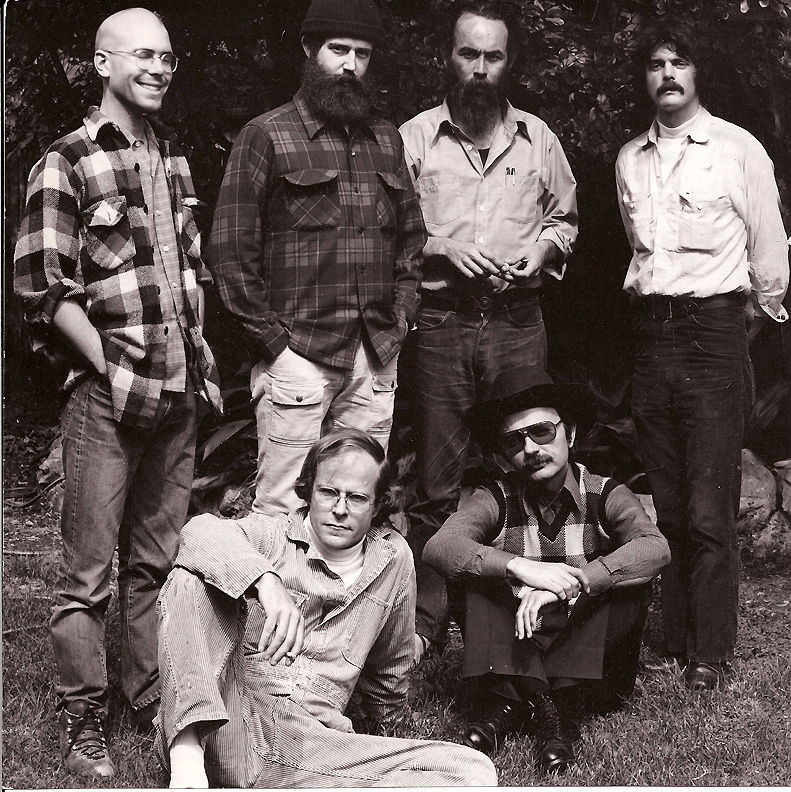
Gus and Group

Claremont 1971 (standing left to right Hap Tivey, James Turrell, Gus Blaisdell, Lewis Baltz, seated Mowry Baden, Guy Williams)

“It Happened at Pomona: Art at the Edge of Los Angeles 1969-1973 — Part 3: At Pomona”

By Sneha Abraham 2:30 pm February 24, 2012 Campus EventsThe Arts

Chris Burden, Untitled, 1966.Chris Burden, Untitled, 1966. Bronze. 6 1/2 x 5 in. (16.5 x 12.7 cm). Collection of the artist. © Chris Burden. Photograph courtesy of the artist.
Hap Tivey, Sunpainting, 1971Hap Tivey, Sunpainting, 1971. Window frame, paint, paper, tape, and incandescent light. 24 x 24 x 3 in. (61 x 61 x 7.6 cm). © Hap Tivey. Photograph courtesy of the artist.

“Part 3: At Pomona” demonstrates how Pomona College’s extraordinary community, inspired by the atmosphere created by curators Hal Glicksman and Helene Winer, developed some of the most important aesthetic currents of the late 20th century. These artists, both faculty and students, engaged the developing legacies of Conceptualism and Minimalism and forged transformations of these ideas that became prototypes for future generations. This exhibition chronicles the experimental art that emerged in the late 1960s and the role played by Pomona College in advancing these practices.

The period covered by “Part 3” roughly equates with a renaissance in Pomona’s arts community that can be traced to Mowry Baden’s ’58 arrival as chairman of the art department in 1968 (he served as professor until 1971), and which ended, in 1973, with the mass departure of the arts faculty in protest over, among other causes, Helene Winer’s dismissal due to the notorious Wolfgang Stoerchle performance seen in “Part 2.” During this period, Pomona faculty and alumnus James Turrell was performing his first ganzfeld experiments and conducting flare performances; Lewis Baltz was at work on his legendary Tract Houses series; and Mowry Baden was creating interactive sculptures that would have a profound effect on his students, among them Chris Burden ’69, Michael Brewster ’68 and Peter Shelton ’73.  Burden was transitioning from architecture to sculpture to performance. Brewster was exploring the potential of light and sound as an artistic medium, while Shelton was experimenting with corrosion as a painterly medium, which would have a lasting effect on his eventual career as a sculptor.

Central to this group is the under-recognized work of Mowry Baden. His interest in movement and its impact on perception clearly echoes many of the aesthetic concerns that informed works produced through Hal Glicksman’s Artist’s Gallery exhibition program. Baden’s particular articulation of these concerns in works that require viewers to interact and physically operate the sculptures demonstrate a more performative and collaborative approach to audiences that prefigures much contemporary work today. 

Telling it like it is / Review of GBC

5.0 out of 5 stars the writer as cultural Hero, November 7, 2012
By
dan noyes (New Mexico) – See all my reviews
This review is from: Gus Blaisdell Collected (Hardcover)

This book is a look at the writing,the life, and the letters of an exceptional writer who lived the zeitgeist of his time by writing, editing and selling books. He also helped other
writers get published and noticed. He also taught. And he also loved loquats.And women. And he writes about all of these-and more- in this wonderful book.The intellectual life he engaged was from The Beats to Postmodernism. Blaisdell was a writer and thinker who had interests in the Classics, Asian poetry, art, culture, psychology and philosophy. He created a rich world in his writing and that is here in a collection of essays, poems and letters that explore art, photography, philosophy, and film.

Blaisdell’s talent as a writer and thinker in these engaging essays is evident in how he uses words, structure, metaphor and image in writing about culture and meaning.
The essays about his life and his letters-along with an excellent timeline of his life-round out the book. The photographs in the book are an excellent counterpoint that capture the hero as he ages, travels and investigates art and culture. A photograph in the book of Gus Blaisdell encountering a Matisse exhibit taken by Nicole Blaisdell Ivey is a truly great photograph that shows a man encountering art and caught in the experience of art. In fact-the whole book is related to how Blaisdell wrote about that encounter.gus-studio-shelf-nicole1.jpg

Gus and Evan Connell R.I.P.

DSC_3197

Farewell, Evan Connell

Evan-ConnellFrom Counterpoint Press

January 10, 2013

Berkeley, CA: Counterpoint Press is sad to announce the death of author Evan S. Connell. Mr. Connell died Wednesday night after several years of declining health. He was 88.

Evan Connell has long been recognized as one of the most important American voices of contemporary letters. A novelist, short story writer, and poet, Connell is the author of seventeen books, including Deus lo Volt!The Aztec Treasure House,Points for a Compass RoseLost in Uttar Pradesh, and the bestselling Son of the Morning Star, which was made into a 1991 miniseries.

His novels Mrs. Bridge (1959) and Mr. Bridge (1969) were adapted into the critically acclaimed 1990 Merchant-Ivory film Mr. and Mrs. Bridge starring Paul Newman and Joanne Woodward. Wallace Stegner said of Mrs. Bridge that “[It] is a hell of a portrait…She’s as real and as pathetic and as sad as any character I have read in a long time.”

Connell was awarded the Robert Kirsch Award (a Los Angeles Times Book Prize) for “a living author with a substantial connection to the American West, whose contribution to American letters deserves special recognition.” Counterpoint Press will publishing a new edition of his book of prose poems, Notes From a Bottle Found on the Beach in Carmel, in February 2013.

In 2009 Evan Connell was nominated for the Man Booker International Prize, for lifetime achievement. He was born on 17 August, 1924, in Kansas City, Missouri and attended Dartmouth College and the University of Kansas. Connell is also an alumni of Stanford and Columbia universities.

Evan Connell lived and worked in Sante Fe, NM.

Gus wrote an extended essay called “After Ground Zero: The Writings of Evan Connell, Jr.” New Mexico Quarterly (Summer 1966). An excerpt is published in Gus Blaisdell Collected titled VATIC WRITING Evan S. Connell Notes from a Bottle… p.185

DISCUSSING GUS Saturday January 5th 3:00 pm at Bookworks 4022 Rio Grande Albuquerque, New Mexico

DSC_3982Join editors William Peterson and Nicole Blaisdell Ivey                                               for the final GBC book event.

Film Studies Gus’ Notes on Remarriage Comedies

        Notes on Remarriage Comedies aka comedies of equality or dailiness…

P1010110

     Classical comedy (cc) involves a young pair overcoming obstacles who get together for the first time. Ends in festival, feast, wedding; the old ratify the young, the young acknowledge the old, and society is assured of continuing.

    Remarriage comedy (henceforth, rem.) involves an older pair, seeking a divorce, who end up getting back together, together again. Privacy (rem) is studied as opposed to the public ( classical comedy).

Freud asks, What does the woman want? Consider inflections: peevish, exasperated, impatient. Better, rephrase as, Given male desire is figured dramatically by the Oedipus complex, What is the form of female desire?

(Note. Freud argued that the Oedipus complex was universal, applying to humans regardless of sex. Questionable.)

Rem answers, what the woman wants is education. Education means leading out the best self, not indoctrination—seeking the attainable but as yet unattained self(of both). Who has education to give?

Men do, and the form this takes in rem is that the men endlessly lecture the women. (Possible shadow: the man could be pretending to provide education but really be [ seducing ] the woman, turning her into his private toy for his pleasure.) So the creation of the new woman is the business of men. But in truly transforming the woman the man must himself undergo change—such that the couple transformed is a new birth or vision of the human.  That a man can walk in the direction of his dreams we all know; but that a woman can, and with the right man, is some of the news this genre brings.

This is accomplished in Cavell’s and Milton’s terms only through a meet and happy conversation, where “meet” means “just”: helpmeet, as in Genesis, not helpmate. These conversations (and lectures) take enormous amounts of time. The price for the woman is that no sense of “mother” applies to her: she is not one and her own is not present. (Sexuality between the two trying to divorce is a displaced issue; in cc it is central issue.)

Part of the change required of the man is humiliation. Essential to this is the fact of what I will call mutual forgiveness (a form of Gratified Desire?), acknowledgment.

The father is always on the side of the woman’s desire, unlike cc where he can be the first obstacle.

Since privacy is studied, often in a place of perspective called a green world, or in the rem genre, Connecticut; the marriage to work is beyond the sanction or church, state, or society. The real scandal is love, the outlaw status of its truth (p. 31) (Sherwood forest is a green world, as is Eden—to which we can’t quite return; and Shakespeare’s Arden). The feature of the green world allows the couple to feel that they have grown up together(p.31). An incestuous relationship is changed into one that can stand public scrutiny. Questioning this is one reason why Amanda Bonner takes their [private] marriage to court.

A constant threat to rem is that at any moment it can become melodrama. Adam’s Rib frames the Bonner’s marriage with the melodrama of the Attinger’s marriage. It is from Adam’s Rib that Cavell will derive the melodrama of the unknown woman.

*from Gus’s computer

Gus Blaisdell Collected editors William Peterson and Nicole Blaisdell Ivey will be DISCUSSING GUS Saturday January 5th 3:00 pm at Bookworks 4022 Rio Grande  Albuquerque, New Mexico

GBC reader’s comments

DSC_2749
Poet and publisher Howard McCord:
Nicole–Am savoring every page, but especially admire your marvelous chronology. I see back in 1955, when Gus was at Stanford, I was living in Santa Clara and driving the bookmobile for the country. I had just gotten out of the Navy. Only a few miles away! Thank you so much for all the work!
                                                                                                                                              TV producer and writer Mary Ann Hatchitt:
Dear Nicole,
Keeping Gus book by my bed.
Reading it with the iPad so I can look stuff up.
Skipping around…entranced.
Lives like his make me want to have several more……
                                                                                                                                           Jane Crawford Morlino:                                                                                                 Dear Nicole,                                                                                                                  Today’s mail brought The Book. When I called last week to order it,                                  the sweet guy who answered asked if I was one of Gus’ wives…
                                                                                                                              Counterpoint publisher and friend Jack Shoemaker: I am loving the book. It arrived from Amazon on your dad’s birthday and I spent the whole evening with it.I hope this is giving you as much pleasure as it is me. Congratulations, Jack
                                                                                                                                                 Fine art bookseller Vincent Borrelli -finished the photography section last night, reading the film section… brilliant and eloquent, Gus takes you along with him as he works his way through all of the issues you may have intuited, but never rigorously thought through (as only Gus could have).
   

Saturday January 5th 3:00pm editors discuss and sign                                            GUS BLAISDELL COLLECTED at BOOKWORKS in ALBUQUERQUE                       4022 Rio Grande Blvd. NW (505)-344-8139

Some wonderful history of poets and writers and a community bookstore.

larry goodell's avatarlotsa larry goodell

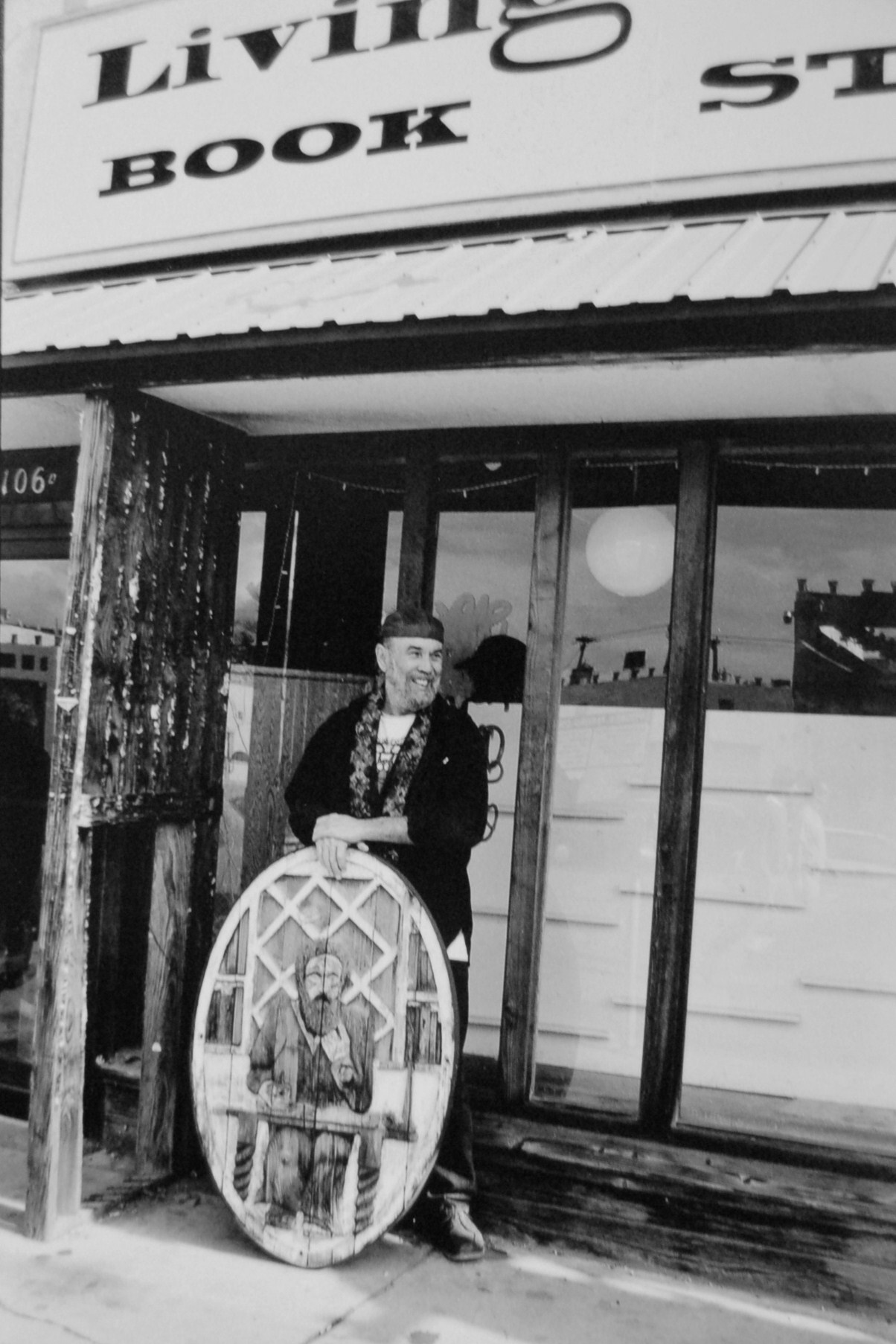
When I received the email from Nikki Blaisdell-Ivey and Larry Goodell about their proposed Living Batch book, I had just been indulging in a Living Batch moment. I was reading my used paperback copy of The Good Soldier Schweik, remembering how I’d bought it—ostensibly at the one dollar used cost, but forty percent discounted because I was a Living Batch employee way back there in the 70s. Funny, I’d read the book soon after I purchased it, and now, almost forty years later, I am reading it again and the past comes rushing in on me like a pack of unfed dogs. I’d been thinking often lately of the Batch, how it had been an important part of my life for a large amount of time—two tours as an employee (eight years in the 70s, and then after a two-year hiatus of hiding out in Arkansas, a six-year stint…

View original post 2,199 more words