
John Gossage Thu, Jun 3, 2004 at 12:41 PM
Nicole,
Finally, in the way of ” I’m finally getting a moment when I can
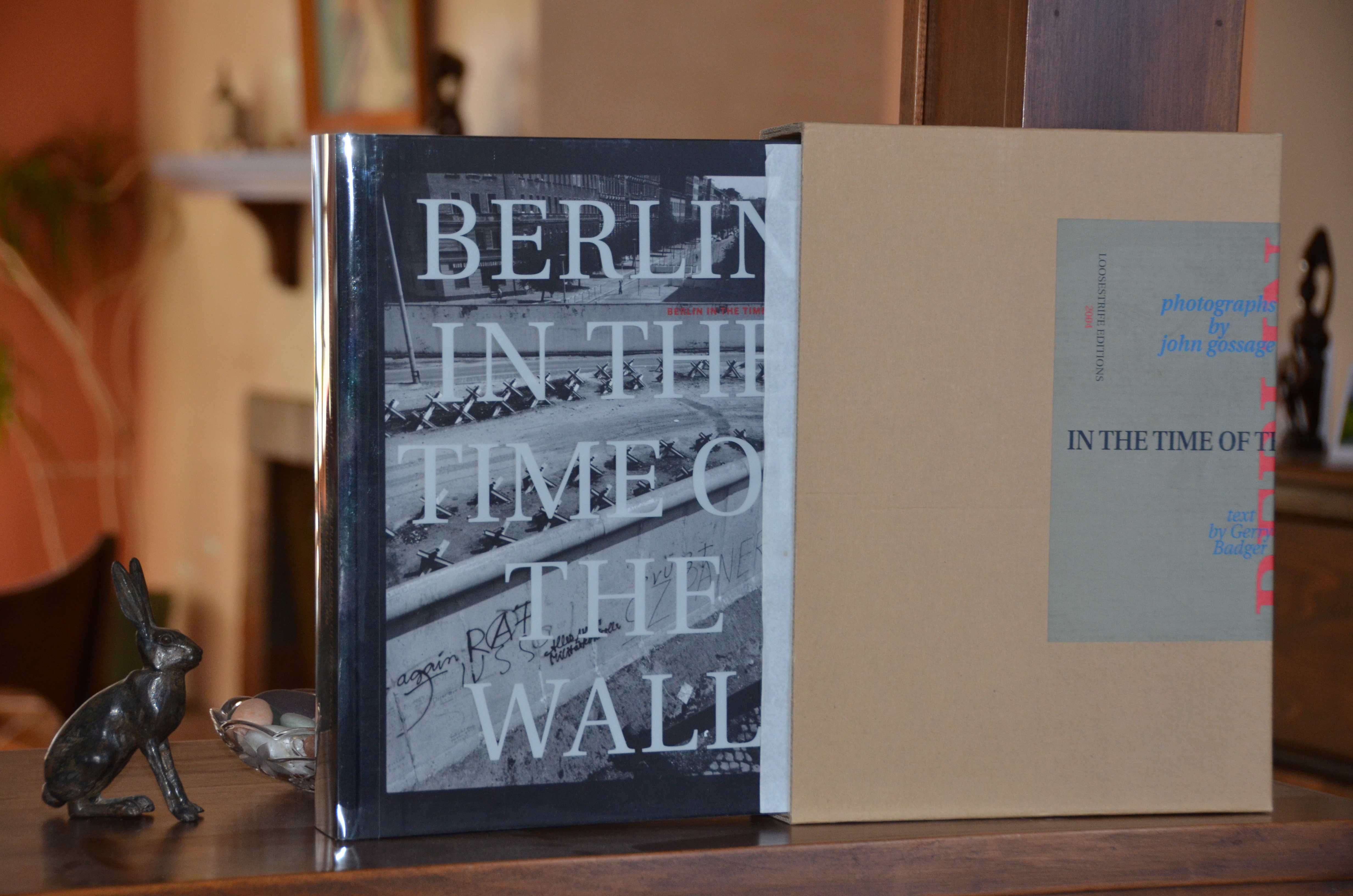
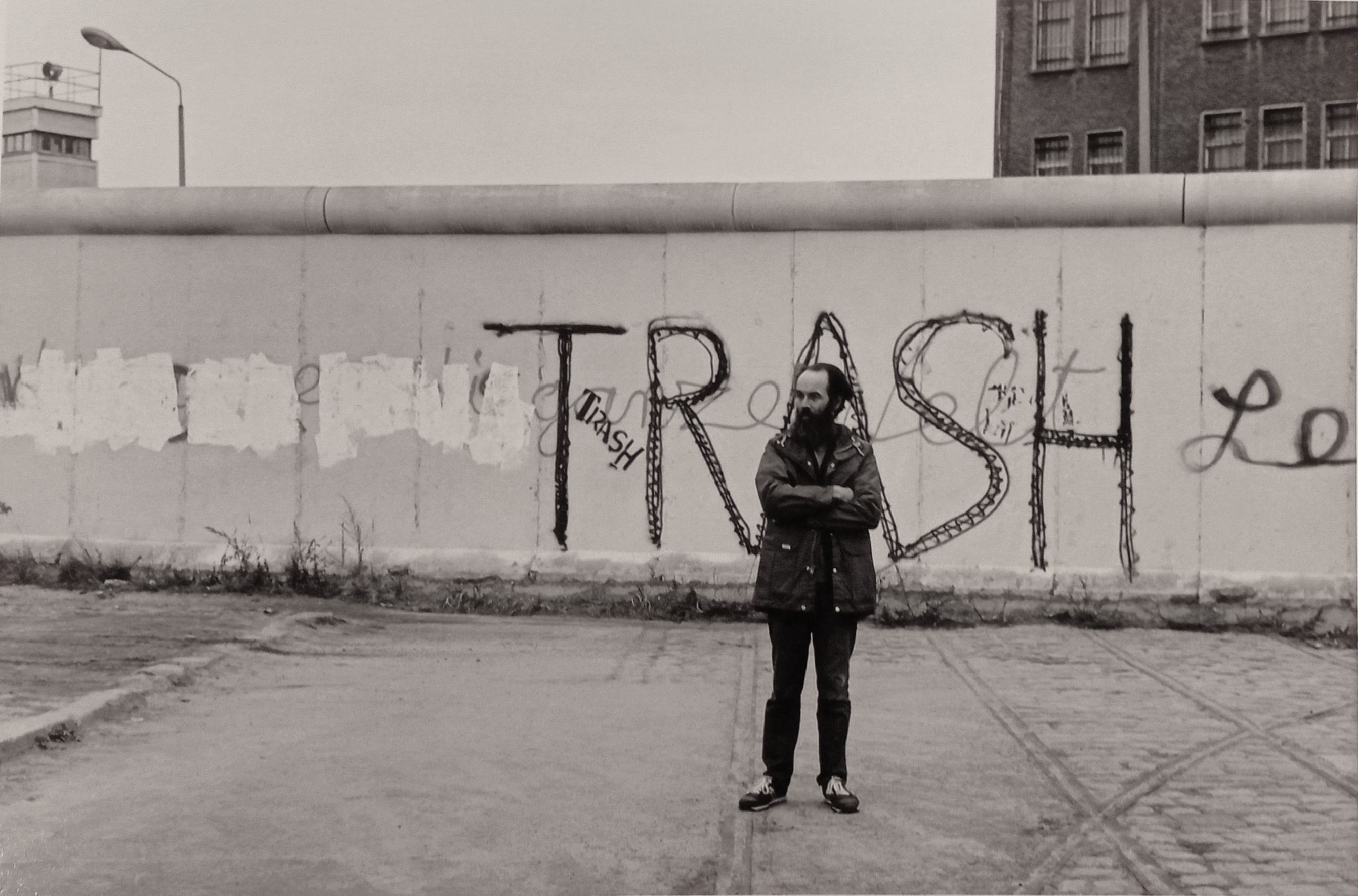
think”. I am awash with details for my next book “Berlin in the time of
the Wall”. I designed the book as well as made the photographs, so
every printing detail falls on me. It is something I’ve done before and
should expect, but it’s always something new ( ei. the slipcase won’t
hold the book correctly, since the book weights nine pounds and the
slipcase falls apart under that weight). But so much for complaints
about silly details. Thank you so much for the pictures of Gus and the
information about the service. I’m not a comfortable writer, as with
many photographers, but I would love to keep in touch with you…
… I have included the text for the Berlin book by Gerry Badger as
attachments to this since he quotes your dad a fair amount. I thought
some of it you might find of interest, as well as by sending it, it
makes me feel like I’ve sent you a long e-mail. Read what you find
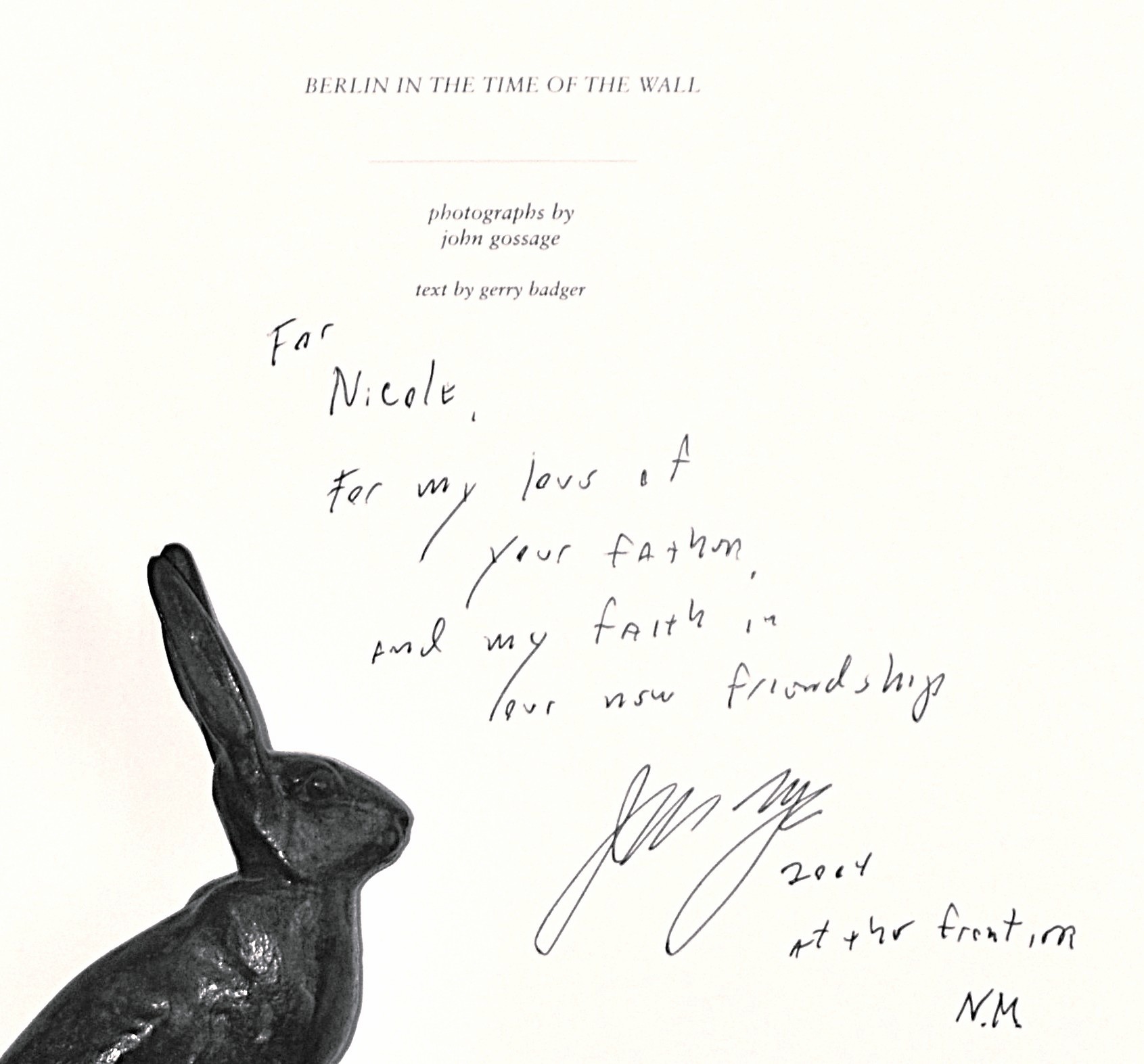
interesting and forget the rest. A book will be in the mail by the end
of the year.
All my Best,
John
John Gossage
Thirteen Ways of NOT Looking at a Gossage
in memory of Arnold Gassan
To use a horse to show that a horse is not a horse is not as good as
using a non-horse to show that a horse is not a horse.
–Chuang Tzu
John Gossage has asked me to write a few words about what his photographs are not. I have been in love with the negative since childhood. But what a photograph is not? Not identical with its subject; not a likeness of its subject; not a representation but a projection, because the original, as Cavell says, is as present as it ever was. In a photograph we see what is not present, the subject transformed in the medium of visible absence.
I particularly love negation used to isolate what a thing is, like the theologians’ via negativa. Attributes are taken away till the thing sought stands naked before you. Slightly obscene this long undressing of concepts and objects, it is like clearing out a bunch of weeds to get to a bare place. Gossage is seldom about clearing out. His photographs are often about a weedy and wasted jouissance. Whenever I look at a Gossage photograph one stanza from Wallace Stevens’ “Thirteen Ways of Looking at a Blackbird” comes to mind, the seventh:
O thin men of Haddam,
Why do you imagine golden birds?
Do you not see how the blackbird
Walks around the feet
Of the women about you?
Gossage is always about the luxuriance of what goes unnoticed, what goes unseen until his pictures call your attention to it. Stevens’ men of Haddam have grown thin imagining golden birds when at the feet of the women all around them they do not see either the blackbird walking or the women.
An exercise in subtraction. I will form pseudo-propositions with parentheses, negate them, and at the end, after the parens are closed, I attach the name of a major predecessor or contemporary of Gossage’s, artists with whom he shares a similarity but an even deeper difference.
NOT (atmospheric erosion like lichen clocks the head of Pan at Versailles; autumn leaves fallen on steps that descend semi-circularly to a circular landing and then continue their descent; the archaeology of streets and buildings presented after a terminal moraine has melted): Eugene Atget.
NOT (the American commonplace so quietly essential as to seem beyond the ability of photography or any other medium to capture, within the reach of nothing but admiration): Walker Evans.
NOT (the drama of the hard travellin’ road after Whitman and Kerouac, in outsider eyes where the lights are always going down, leaving only the ghostlighted stage of the photograph): Robert Frank.
NOT (still going on down, even Beat-ing it on down to its basic Beat-ness, the discovery of structure where mirrors crack the picture planes into what can be seen front and back and behind and beside, or a vegetal equivalent of an abstract-expressionist scrawl that blocks the picture surface–a genre of delirious possibility, but still anchored in the often rigid permanence of what looks like asides and throwaways): Lee Friedlander.
NOT (a gaze as steady as Buster Keaton’s wonders whether the industrial parks depicted manufacture pantyhose or megadeath; hip beyond irony or cool, where what passes for the so-called art world bleeds and leaks itself seamlessly into the so-called real world): Lewis Baltz.
NOT (a metropolis constructed by people for their discomfort, and which in turn refuses to reflect them in its curtain walls; eyes more alienated than Antonioni’s–eyes of an American veteran who returned with Vietnam locked in behind eyes that for years photographed without film or camera–eyes that stare at the traces of homelessness and the violence of wasted shooting sites where dolls’ heads hang for targets. Whether we edify or degrade we first create ruins, like Olympic sites once the games are gone and the local economy begins an unending hemorrhage): Anthony Hernandez.
NOT (the outrage rightly registered at the sight of a few trees that survive on the freeways of Los Angeles, or the stupefied faces of people on intimate terms with the thermonuclear unconscious of Colorado’s Rocky Flats): Robert Adams.
And certainly not the lush monumentality of nature declared only photographically: Ansel Adams. Nor the hermetic beauties of a Zen-inspired series of pictures, a variation of equivalences; but equivalent to–what?–in the world: Minor White.
Not far away, however. I haven’t lost Gossage; he’s been here all along. It’s just that it’s difficult to think negatively continuously (as Dylan sings, “A whole lot of nothing / Makes a man feel ill at ease”), to have cleared a space and to resist putting in it what belongs there. So I am going to give in just a little and transfer from absolute negation (since there is not much absolute negation, except for mathematical logic and Milton’s Satan who says, “I am the Spirit who Negates”) and indulge myself in some ‘not exactlys’ and ‘not quites’, and perhaps inch a little closer to what a Gossage photograph might be.
Not far away from Weegee’s crime scenes: with the bodies and the gawkers removed, all the stains in the streets and the curbside trash remains. Nature for Gossage is a place bristling with the attractive repulsion of armpits and crotches, and it is always alive, about to declare its animation, the shrubbery almost like David Lynch’s trees tossed in a night wind, violated by a motion characteristic of anxiety, dread, and agony. Premonition and foreboding settle in around a Gossage picture as atmospherically as Atget’s groundhogs in his parks.
I’ve come full circle, hinting what a Gossage photograph might be. Once, while making notes after years of reading Nietzsche, I abbreviated “the eternal recurrence of the same.” To my surprise the abbreviation read: “e.r.o.s.” Like Wallace Stevens in “Thirteen Ways of Looking at a Blackbird,” I collapse, loaf, and invite my soul, unable to decide which I prefer, inflections or innuendoes, “The blackbird whistling / Or just after.”
2002 — Gus Blaisdell
Originally published in John Gossage, The Romance Industry: Venezia / Marghera 1998, Tucson: Nazareli Press, 2002.
 blaisdell Ivey collected